Carbon Peak and Carbon Neutralization Information Support Platform
碳达峰碳中和情报支持平台
Именной указатель: Михаил Владимирович Мишустин
发布时间:2026-08-22 Правительство России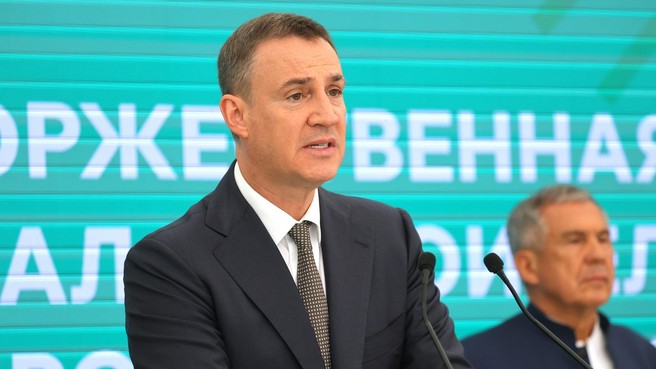
Дмитрий Патрушев дал старт строительству завода по производству метионина в Республике Татарстан. Справа - глава республики Рустам Минниханов 21 августа 2026 Дмитрий Патрушев на торжественной церемонии, посвящённой старту строительства завода по производству метионина 21 августа 2026 Дмитрий Патрушев дал старт строительству завода по производству метионина в Республике Татарстан. Справа - глава республики Рустам Минниханов 21 августа 2026 Участники торжественной церемонии начала строительства завода по производству DL‑метионина (совместный проект «Татнефти» и китайской компании Harise). Среди присутствующих: вице-премьер Дмитрий Патрушев и Рустам Минниханов (Раис Республики Татарстан), а также представители руководства «Татнефти», китайской стороны и профильных структур 21 августа 2026 Участники торжественной церемонии начала строительства завода по производству DL‑метионина (совместный проект «Татнефти» и китайской компании Harise). Среди присутствующих: вице-премьер Дмитрий Патрушев и Рустам Минниханов (Раис Республики Татарстан), а также представители руководства «Татнефти», китайской стороны и профильных структур 21 августа 2026 Капсула времени в ознаменование старта строительства завода по производству метионина в Республике Татарстан 21 августа 2026 Предыдущая новость Следующая новость Дмитрий Патрушев дал старт строительству завода по производству метионина в Республике Татарстан. Справа - глава республики Рустам Минниханов Заместитель Председателя Правительства Дмитрий Патрушев посетил Республику Татарстан с рабочей поездкой. Вместе с главой республики Рустамом Миннихановым вице-премьер принял участие в торжественной церемонии, посвящённой старту строительства завода по производству метионина. Проект реализуется компанией «Татнефть» совместно с китайскими партнёрами. Мероприятие прошло на новой площадке особой экономической зоны «Зелёная долина». «Проект имеет стратегическую значимость для нашего агропромышленного комплекса, поскольку без этой критически важной добавки невозможно эффективное животноводство. Появление в Республике Татарстан новых производственных мощностей позволит полностью удовлетворить наш внутренний спрос на метионин. Конечно, это большой шаг к обеспечению технологической независимости отечественного агропромышленного комплекса. Более того, запланированные объёмы производства позволят нам решать задачу по расширению экспорта продукции с высокой добавленной стоимостью», – сказал Дмитрий Патрушев. Вице-премьер отметил, что завод станет крупнейшим объектом, созданным в рамках национального проекта «Технологическое обеспечение продовольственной безопасности». Общий объём инвестиций должен составить порядка 130 млрд рублей. Большая часть средств – это одобренный при поддержке Правительства России льготный кредит на приоритетных условиях. Планируется, что в дальнейшем на площадке этой особой экономической зоны будет запущено производство и других важных аминокислот. Дмитрий Патрушев подчеркнул, что Правительство продолжит поддержку подобных значимых для отрасли начинаний. Вице-премьер также поблагодарил за участие в проекте партнёров из Китая. Проект предполагает строительство завода по производству кормовой добавки – DL-метионина для животноводства и рыбоводства. Это незаменимая аминокислота, от наличия которой в рационе напрямую зависит продуктивность и полноценное развитие сельхозживотных. Кроме того, Дмитрию Патрушеву представили разработки компании «Татнефть» – передовые практики переработки отходов, в том числе полимерных, а также замасленной бумаги и древесной щепы. Такие технологии способствуют формированию экономики замкнутого цикла и помогают снижать нагрузку на окружающую среду.
发布时间:2026-08-22 Правительство России
Дмитрий Григоренко в рамках рабочей поездки в Саратовскую область ознакомился с результатами выполнения федеральной программы комплексного развития городского электротранспорта в регионе 21 августа 2026 Дмитрий Григоренко в рамках рабочей поездки в Саратовскую область ознакомился с результатами выполнения федеральной программы комплексного развития городского электротранспорта в регионе 21 августа 2026 Реализация федеральной программы комплексного развития городского электротранспорта в Саратовской области 21 августа 2026 Реализация федеральной программы комплексного развития городского электротранспорта в Саратовской области 21 августа 2026 Дмитрий Григоренко в рамках рабочей поездки в Саратовскую область провёл совещание по вопросам развития информационных технологий в регионе 21 августа 2026 Предыдущая новость Следующая новость Дмитрий Григоренко в рамках рабочей поездки в Саратовскую область ознакомился с результатами выполнения федеральной программы комплексного развития городского электротранспорта в регионе Заместитель Председателя Правительства – Руководитель Аппарата Правительства Дмитрий Григоренко в рамках рабочей поездки в Саратовскую область ознакомился с результатами выполнения федеральной программы комплексного развития городского электротранспорта в регионе. На сегодняшний день в Саратове на маршруты запущено свыше 60 современных низкопольных трамваев, а в Энгельсе пассажиров перевозят 6 электробусов отечественного производства. Всего в рамках программы в регионы России поставлено порядка 280 электробусов и 480 трамваев, установлено более 100 зарядных станций. Обновление городского электротранспорта осуществляется при поддержке государственной корпорации «ВЭБ.РФ». Федеральная программа реализуется под кураторством вице-премьера. Новые трамваи и электробусы оснащены системой контроля и видеонаблюдения, которая обеспечивает безопасность пассажиров во время поездки. В частности, оператор диспетчерского центра может следить за ситуацией в салоне и быстро реагировать на возможные происшествия. Особое внимание уделено комфорту пассажиров: подвижной состав оборудован климат-контролем с функцией очистки воздуха и USB-разъёмами для зарядки мобильных устройств. В Саратове обновлённые трамваи курсируют по реконструированному в рамках программы участку трамвайных путей. На данный момент его общая протяжённость составляет более 60 км – это 100% от запланированного показателя. Всего по программе в регионах обновлено свыше 328 км трамвайных путей. При модернизации трамвайных линий применялись инновационные решения: использовались бесшовные рельсовые соединения и специальные шумопоглощающие технологии. В результате трамваи передвигаются по маршруту практически бесшумно, а по комфортности передвижения не уступают современным электробусам. Такое технологическое решение не только повышает комфорт пассажиров, но и улучшает экологическую обстановку в городе. «Саратовская область – лидер проекта по объёмам поставок и масштабам строительства. И важно, что горожане уже могут ощутить результат этой работы. За счёт запуска новых трамваев и электробусов, обновления маршрутов среднее время в пути сокращается на 30%, а поездки становятся комфортнее. На сегодняшний день принято решение о запуске новой концессии в Саратовской области и дальнейшем расширении программы. Всего же в регионы поставлено порядка 280 электробусов и 480 трамваев, установлено более 100 зарядных станций», – сказал Дмитрий Григоренко. Он также отметил, что в рамках программы в регионах используется цифровая платформа по управлению общественным транспортом. Она состоит из 8 модулей, выполняющих различные функции – от информирования пассажиров до контроля пассажиропотока. Эти функции позволяют оптимизировать движение на дороге и повышают пропускную способность общественного транспорта. Комплексная программа обновления городского электротранспорта реализуется в ряде крупных регионов России, в том числе в Курской, Липецкой, Ярославской, Саратовской, Нижегородской, Волгоградской областях, Пермском, Краснодарском краях.
发布时间:2026-08-22 Правительство РоссииИменной указатель: Марат Шакирзянович Хуснуллин Регионы: Удмуртская Республика (Удмуртия)
发布时间:2026-08-22 Правительство РоссииВ России продолжается системная работа по модернизации объектов теплоснабжения. Для строительства и обновления котельных – от небольших модульных до крупных квартальных – в том числе применяются механизмы инфраструктурных бюджетных (ИБК), специальных казначейских (СКК) и казначейских инфраструктурных кредитов (КИК), сообщил Заместитель Председателя Правительства Марат Хуснуллин. «Приоритетные цели строительного комплекса России неразрывно связаны с повышением комфорта проживания людей, который, в свою очередь, во многом определяется надёжностью коммунальной инфраструктуры. В процессе подготовки к осенне-зимнему периоду особенно важно держать на контроле состояние объектов теплоснабжения, чтобы обеспечить людям бесперебойную подачу тепла. Обновление устаревшего оборудования, строительство современных котельных, повышение устойчивости объектов теплоснабжения ведётся с помощью различных федеральных инструментов поддержки регионов, в том числе с привлечением инфраструктурных кредитов. С 2021 года благодаря этому механизму построена и обновлена 81 котельная. В целом работы предусмотрены на 211 объектах. Важно наращивать темпы в этом направлении, чтобы повысить качество предоставляемых людям коммунальных услуг», – сказал Марат Хуснуллин. Программу инфраструктурных кредитов курирует Минстрой, а её оператор – Фонд развития территорий. «Инфраструктурные кредиты зарекомендовали себя как один из эффективных инструментов, позволяющих регионам решать скопившиеся проблемы в сфере жилищно-коммунального хозяйства, в том числе в теплоснабжении. Больше всего котельных модернизировано в Еврейской автономной области – 23. Также в лидерах Владимирская область – 13, Забайкальский край – 11, Мурманская область – 9 и Республика Коми – 8», – сообщил генеральный директор Фонда развития территорий Василий Купызин. В текущем году в Республике Коми завершено строительство трёх блочно-модульных котельных в Сысольском районе, в Архангельской области – строительство двух котельных в Архангельске и в посёлке Строитель Плесецкого района. Кроме того, в Мурманской области проведён капитальный ремонт пароводяных подогревателей котельной. Отслеживать состояние коммунального комплекса и возникающие инциденты помогает автоматизированная информационная система – АИС ФРТ.
发布时间:2026-08-22 Правительство РоссииМинистерства и ведомства, органы при правительстве: Правительственная комиссия по ликвидации последствий разлива нефтепродуктов в Керченском проливе Министерство Российской Федерации по делам гражданской обороны, чрезвычайным ситуациям и ликвидации последствий стихийных бедствий (МЧС России) Именной указатель: Александр Вячеславович Куренков Регионы: Краснодарский край Республика Крым
发布时间:2026-08-22 Правительство России21 августа в Калуге состоялось торжественное открытие финала чемпионата «Профессионалы» по компетенциям промышленного блока. Организатор – Минпросвещения при поддержке Правительства, федеральный оператор – Институт развития профессионального образования, регион-организатор – Калужская область. Комментарий Участникам и гостям чемпионата по профессиональному мастерству «Профессионалы» Приветствие участникам направил Председатель Правительства Михаил Мишустин. «Сегодня стране нужны квалифицированные специалисты, умеющие решать сложные производственные задачи, применять современные инструменты и создавать инновации. Правительство уделяет приоритетное внимание развитию системы профессионального образования, усилению взаимодействия между учебными заведениями и работодателями, помогая молодым людям выбирать востребованные специальности и строить успешную карьеру. Именно такие мероприятия, как чемпионат “Профессионалы„, открывают перед молодёжью широкие возможности, позволяют продемонстрировать мастерство и начать трудовую деятельность в ведущих компаниях», – подчеркнул Михаил Мишустин. Соревнования будут проходить по 14 компетенциям. В основном зачёте примут участие студенты колледжей и техникумов, в индустриальном – молодые специалисты промышленных предприятий, в международном – представители дружественных государств. «Чемпионат “Профессионалы„ – одна из ярчайших звёзд в созвездии чемпионатного движения по профмастерству нацпроекта “Молодёжь и дети„. Эти соревнования помогают раскрыть потенциал участников и показывают, что они востребованы ведущими предприятиями страны. Финал чемпионата “Профессионалы„ по промышленным компетенциям объединит в Калуге 14 тысяч талантливых юношей и девушек со всей России и 30 дружественных стран. Ребята будут соревноваться по 14 передовым компетенциям: от промышленной робототехники и инженерии космических систем до мехатроники и оптоэлектроники. Желаю финалистам ощутить здоровый азарт, увидеть новые возможности и найти единомышленников», – подчеркнул Заместитель Председателя Правительства Дмитрий Чернышенко. Финал в Калуге объединит конкурсантов, экспертов-наставников, представителей компаний-партнёров, участников деловой, выставочной и профориентационной программ. «В финал чемпионата “Профессионалы„ выходят лучшие из лучших, и каждый из конкурсантов уже по праву носит имя победителя, подтвердившего высокий уровень мастерства. Внимание к чемпионату со стороны ведущих предприятий страны огромное. Работодатели сами готовят для ребят конкурсные задания и видят в финалистах своих будущих сотрудников. Число предложений о стажировках и трудоустройстве растёт из года в год. Те навыки, которые демонстрируют участники, востребованы российской промышленностью. Движение “Профессионалы„ формирует кадровый авангард технологического развития нашей страны», – отметил Министр просвещения Сергей Кравцов. Соревновательная программа стартует 22 августа и пройдёт на площадке Федерального технопарка профессионального образования. Торжественная церемония награждения победителей и призёров состоится 26 августа. В торжественной церемонии открытия финала чемпионата «Профессионалы» по промышленным компетенциям принял участие заместитель Министра просвещения Владимир Желонкин. Он подчеркнул, что сегодня стране нужны молодые, инициативные, квалифицированные специалисты. «Вам предстоит развивать современные производства, создавать новые решения и укреплять технологическое лидерство России. Я желаю вам быть открытыми новому опыту. Помните: финал чемпионата “Профессионалы„ – это возможность найти своё место в профессии, заявить о себе ведущим работодателям и получить реальный карьерный старт», – обратился он к конкурсантам. Владимир Желонкин также поблагодарил правительство Калужской области за поддержку движения «Профессионалы» и выразил признательность экспертам-наставникам. Приветствие участникам соревнований направил губернатор Калужской области Владислав Шапша. «Наш регион неслучайно выбран площадкой для этих престижных соревнований по промышленным компетенциям. Мы понимаем: рынок труда стремительно меняется. Мы обязаны адаптировать систему образования под запросы работодателей. За пять лет мы увеличили число бюджетных мест в колледжах на 20%, открываем новые специальности, необходимые экономике региона. Уровень трудоустройства наших выпускников – один из лучших в стране. Уверен, что чемпионатное движение будет развиваться и станет ещё привлекательнее для молодёжи. Участие в таком событии – это хороший стимул не только показать, на что вы способны, но и продемонстрировать сверстникам ценность, востребованность выбранной специальности», – отметил он. Деловая программа финала чемпионата пройдёт в формате Форума среднего профессионального образования (СПО) и будет посвящена теме «Окно возможностей: бизнес и СПО». Дискуссии пройдут по четырём тематическим блокам: «Воспитание человека труда», «Кадры и образование», «Технологии и инновации», «Глобальное сотрудничество». Помимо соревновательной части и деловой программы, на площадке Федерального технопарка профобразования будет организована профориентационная программа для школьников, включающая мастер‑классы от ведущих специалистов, встречи с экспертами и интерактивные сессии, помогающие ребятам определиться с выбором будущей профессии. Гости финала также смогут посетить выставку, на которой будут представлены стенды компаний‑партнёров с новейшими промышленными разработками. Победители и призёры финала, а также их наставники получат установленные Правительством премии от 100 тыс. до 300 тыс. рублей в зависимости от занятого места. Свыше 10 тыс. компаний и предприятий поддерживают участников движения «Профессионалы». В этом году они уже предложили более 50 тыс. стажировок и вакансий конкурсантам. Движение «Профессионалы» направлено на поддержку талантливой молодёжи, укрепление кадрового потенциала и обеспечение технологического лидерства России. Оно организовано при поддержке Минпросвещения и реализуется в рамках федерального проекта «Профессионалитет» нацпроекта «Молодёжь и дети». Федеральный оператор – Институт развития профессионального образования. Чемпионат «Профессионалы» – самое масштабное событие в системе среднего профессионального образования. Перечень компетенций формируется в соответствии с запросами реального сектора экономики. В 2026 году финал чемпионата проходит в трёх городах: Нижнем Новгороде, Калуге, Санкт-Петербурге.
发布时间:2026-08-22 Правительство России
Александр Новак провёл совещание по ситуации на внутреннем рынке топлива 21 августа 2026 Александр Новак провёл совещание по ситуации на внутреннем рынке топлива 21 августа 2026 Предыдущая новость Следующая новость Александр Новак провёл совещание по ситуации на внутреннем рынке топлива Заместитель Председателя Правительства Александр Новак провёл совещание по ситуации на внутреннем рынке топлива с участием представителей Минэнерго, Минсельхоза, ФАС, Совета Федерации, Государственной Думы, глав регионов, отраслевых компаний. Участники обсудили ход выполнения комплекса мер по насыщению внутреннего рынка топливом, сохранению справедливых цен и повышению прозрачности реализации горючего как в оптовом, так и в розничном сегменте. Отдельно рассмотрели ситуацию в Республике Тыва, Чувашской и Удмуртской Республиках, Белгородской области. Минэнерго доложило об исполнении нефтяными компаниями рекомендаций по увеличению поставок автомобильного бензина и дизельного топлива на внутренний рынок, в том числе за счёт наращивания импортных поставок, выпуска в обращение топлива экологических классов К2, К3 и К4. Была подчеркнута необходимость равномерного распределения имеющегося ресурса топлива между регионами и на территории регионов. Поставлена задача по оптимизации графиков плановых ремонтов НПЗ для минимизации рисков сокращения предложения на рынке. Участники обсудили механизм реализации топлива экологических классов К2, К3 и К4, контроля качества, ценообразования и маркировки такого топлива. Было отмечено, что информация о классе топлива должна быть указана на информационном табло топливораздаточной колонки, в уголке потребителя и в кассовом чеке. Участники совещания сообщили, что продолжается мониторинг топливного рынка совместно с Минсельхозом по поставкам сельхозтоваропроизводителям и с Минвостокразвития в рамках северного завоза. Александр Новак поручил продолжить системную работу по насыщению внутреннего рынка топливом, справедливому распределению имеющихся ресурсов внутри страны и обеспечению обоснованной цены на топливо для конечных потребителей.
发布时间:2026-08-22 Правительство РоссииИменной указатель: Александр Валентинович Новак Регионы: Иркутская область
发布时间:2026-08-22 Правительство России
Julius Gorton pushes a rectangle-shaped rock into the ground then shakes it. Still loose. He takes the pick axe next to him and hammers it down. “OK, maybe it just needs to dig out a little bit,” Ella Marshall says. She moves the rock aside and starts digging a gap into the dirt, her hands protected by purple gardening gloves. They wedge the rock back in and hammer it down a few times. Satisfied, they start adding more rocks around it. They play Tetris with the rocks gathered from the mountain, filling gaps and turning each one to see how it fits best. Gorton puts a rock down; Marshall hammers it into place. They’re building a rock rundown, a type of erosion control structure, along a natural drainage on Mount Lemmon. Gorton and Marshall were among 10 volunteers who spent a recent Sunday on Mount Lemmon with Sky Island Alliance, building erosion control structures to help keep soil and water on the mountain. Some of the volunteers arrived Friday night and camped at nearby Spencer Canyon Campground, working Saturday and Sunday. Sky Island Alliance is a 35-year-old nonprofit organization whose mission is to protect and restore the diversity of life and land in Arizona, southwestern New Mexico, and northern Sonora, Mexico. Sky Islands refer to isolated mountain ranges separated from other mountains and surrounded by drastically different environments on lower lands, in Arizona’s case, the desert. The erosion control structures are a low-tech restoration technique that creates tiny dams to slow water down as it moves off the mountain, said Emily Burns, Sky Island Alliance’s program director for northern sky islands. Related Stories Authorities arrest arson suspect in connection with one of the devastating Spokane wildfires 1 MIN READ France’s forest management may need to change to prevent more wildfires in Les Landes 1 MIN READ Canada puts the military on standby as British Columbia wildfires kill 1 and displace thousands 1 MIN READ The structures also catch soil and debris that would otherwise run down the mountain along streams and into city washes and rivers. Stopping burned debris was a priority for the Coronado National Forest and organizations like Sky Island Alliance after the Bighorn Fire burned almost 120,000 acres of the Santa Catalina Mountains in the summer of 2020. Once the Bighorn Fire was contained, Sky Island Alliance partnered with the Coronado National Forest and started mapping out locations that needed erosion control. Since 2023, Sky Island Alliance and its volunteers have built more than 500 erosion structures near springs on Mount Lemmon, said Bryon Lichtenhan, stewardship manager with Sky Island Alliance. Unemployed rocks On Aug. 2, the 10 volunteers followed Sky Island Alliance field technicians Becca Thompson and Andres Martinez, up the Crystal Spring trail, sometimes wading through dense deer grass, small branches crunching below their feet. Before starting, Thompson gave the newer volunteers some direction. “There’s a bunch of places up there where I would like to put more in because this whole side of the drainage up there is basically bare soil,” Thompson told the group. “How do we know what rocks to pick up and which ones not to pick up?” someone asked. “Great question. We like to look for unemployed rocks, rocks without jobs,” Thompson said. Lifting a rock that requires some digging to get it out will probably create a new point at risk of erosion, she said. The group scattered on the hill along the drainage joining the seasoned volunteers. Thompson had placed small red flags where a structure should be built. Some volunteers worked in pairs, others alone, finding loose rocks around the mountain to fill in the drainage. “Water!” someone yelled. Others repeated the call. “Water!” It was the group’s way of reminding each other to take a break and stay hydrated. If someone sees a rock rolling downhill, they yell “Rock!” in an alarming tone to warn the others. That only happened once on the trip. Thompson approached Marshall to map the run rock dam she was finishing up. Sky Island maps every structure, collecting data so they can revisit sites and keep track of where they’ve already built. “I’m gonna mark this because you did such a beautiful job on it,” Thompson said. “Thank you, I think it might need some more rocks,” Marshall said. Thompson took a closer look. “I think where it’s gonna fail is right here.” “Yeah, that’s exactly where,” Marshall agrees. “You want me to go find you an unemployed rock?” Thompson offers. “Sure. I need some like chinking rocks too, for underneath,” Marshall says, pointing out an awkward gap under some of the larger rocks. “A large impact on the mountain” Marshall’s first volunteer trip was about a year ago, when she joined Sky Island building erosion control structures on Mount Lemmon. That weekend, in August 2025, the group made about 40 erosion control structures, Marshall said. Seeing how vast the Catalinas were, and how much damage the Bighorn Fire had left in its wake, Marshall left the mountain that weekend wondering whether those 40 structures would make much of a difference on the mountain. Then she thought, “part of me doesn’t really care because I had a lot of fun,” she said. “And so if we even helped this one drainage, then that’s fine.” Marshall has joined about 10 volunteer trips since then. A few months later during another volunteer trip, they revisited some of the work Sky Island volunteers had done, and she was able to see how much of a difference the erosion structures could make. “They’d actually caught a lot of debris,” she said, adding that another structure a Sky Island volunteer had made in the past had a small oak tree growing out of it, already a few feet tall. “I think it’s cool that just putting down some rocks has such a large impact on the mountain,” Marshall said. “And if you scale that up to a few weekend trips a year, you can cover a lot of ground. And it’s very natural. We’re just moving some rocks around. Nothing too crazy is happening.” It only takes one storm for a newly built erosion structure to fill in with sediment, creating a terracing effect of the water, Lichtenhan said. Building a structure starts a natural process. The rock structure holds back sediment which slows down water, creating a microclimate that allows vegetation to start to grow, Lichtenhan said. “The roots from those plants hold the soil together even better than our rock structure ever could, and as that vegetation grows, it helps to shade the soil around, and that cuts down on evaporation, and that cools the soil, and that means more moisture is held in the soil over time,” Lichtenhan said. “These processes compound upon themselves and help to create a more vibrant, a more biodiverse, a more lush, and a more moist ecosystem. So the work we’re doing it’s in response to a fire, but ultimately, when this work is successful, it can decrease the frequency or intensity of burns in the future.” Six years after the fire The Bighorn Fire started with a lighting strike on June 5, 2020. It had been months since COVID changed the way people worked and experienced everyday life. Masking, social distancing and working from home had become the norm. People were isolated. Mount Lemmon is consistently about 20 degrees cooler than Tucson, making it a popular recreational space where people go to escape the constant triple-digit heat in the summer months. Public health leaders at the time said the outdoors were safe, as long as people practiced social distancing. But when the Bighorn Fire spread across the mountain range, finding reprieve from the heat and the isolation became more difficult for Tucsonans. The forest burned for seven weeks before the fire was contained on July 23. In its wake, it left burned debris, downed trees and bare soil, most of which is still visible on the mountain six years later. Without as many trees and plants on the mountain, there was a high risk for flooding below, especially in the midst of monsoon season in Arizona, which runs from June 15 to September 30. The rain would also likely bring with it the soil and debris. “We’ve all seen those videos after a fire and then floodwaters come down and it’s just black and carrying all this stuff with it,” said Burns, referring to videos that went viral in 2020 of black sludge running through the Cañada del Oro wash – a mix of ash and debris from the mountain. Michelle Ort, a volunteer with Sky Islands who lives on the west side of Tucson, said she remembers seeing the light of the fire and smelling the smoke when she walked her dog. In the spring of 2021, Ort took a woman from El Salvador up to Mt. Lemmon. They went to the Butterfly Trail, one of Ort’s favorites. But the trail looked different, Ort said. There were fallen, burnt trees everywhere. “I was sad that a lot of the trees that had been there for a long time were gone, and that it looked so different,” they said. “But there was also a lot of new growth, like a lot of fern. So I think there was sadness and appreciation for the regrowth at the same time.” Bearing witness to a wildfire On a summer night in June 2020, Bryon Lichtenhan grabbed his binoculars, got in his Nissan Xterra and drove north to the end of Campbell Avenue. He parked along the street and watched from the base of the Santa Catalina Mountains as the Bighorn Fire ravaged through the forest, engulfing trees in flames. Sometimes his girlfriend joined him. They were rarely alone, as others would also drive to the foothills and watch the fire, he said. Together, they were bearing witness to a wildfire that would change the way they experience Mount Lemmon. “I think it’s that kind of awe-inspiring nature of it, in a way,” Lichtenhan said. “Like, it’s just these forces that are so beyond our natural or our normal experience of the world. And you know that you’re witnessing a big change happening that’s going to affect … in my case, the rest of my life, that forest is going to be different.” As he looked up at the flames, he worried about how big the fire was getting, about what places would burn, about the wildlife that were losing their homes — and about the flooding that would inevitably follow. “At that moment there’s not anything any of us could really do to stop it or to change the fact that it was burning,” he said. “But I think just kind of bearing witness to it was a part of my growing to accept it, and also a part of my grieving process for all that we were losing.” Arizona has been in a sustained drought since the mid- to late-1990s, according to the Arizona Department of Water Resources. Under the arid conditions, the risk of wildfires remains high in the Catalinas. This summer, on Aug. 7, a lightning strike sparked the Finger Ridge Fire. It was 90% contained by Aug. 11, after burning 67 acres of land, a Coronado National Forest update said. The Mule Deer Fire in the Rincon Mountains within the Santa Catalina Ranger District was much smaller, burning 8 acres in one day before it was fully suppressed on Aug. 11, according to the Coronado National Forest. Lichtenhan understands that the work Sky Island does won’t replace what is lost in a wildfire, and it could all be undone by another wildfire. Still, he plans to keep helping forests recover and grow. “There’s nothing else I’d rather be doing. Anything I can do to make anything better for the natural world and for people, that’s what I want to be doing,” he said. “Despite everything, we still have this amazingly beautiful planet. A big way I deal with grief is by spending my time in the world and enjoying what we still have. Connecting with nature, those are the things that help me stay happy. Motivated to keep doing this work.” Four sacred mountains Orion Leslie’s mother moved their family from the Four Corners region of the Navajo Nation to Tucson when he was a child. In his Diné, Navajo culture, they have four sacred mountains in the Four Corners, he said. “In bringing us to the city of Tucson, she also brought in, kind of interweaved our heritage with that, and explained to us that you know Tucson has its own four sacred mountains that surround this valley,” he said. “We have the Catalinas, the Rincons, the Santa Ritas, and the Tucson Mountains, and those now act as our own boundaries now in kind of rehoming, since we’re not on the reservation anymore, not within our own homelands.” His mom would take them sledding and hiking on Mount Lemmon. Leslie continued those traditions with his own two children when they were younger, taking his family camping in Mount Lemmon, at Spencer Canyon Campground, the same campground where Sky Island stays when they do erosion control work. He also runs some of the trails, and has noticed many of them, like Marshall Gulch to Aspen Trail, or the Butterfly Trail, have far fewer trees and less shade to keep him cool during those runs. He was drawn to volunteer with Sky Island because he enjoys camping and wanted to give back to the environment he has treasured his whole life. “It’s really critical you know as an individual to help sustain the environment and give my time back to the landscape that’s really helped me grow and be the person that I am,” Leslie said. Without the hundreds of volunteers that help Sky Island on all its projects, and those who donate to the organization to keep projects going, none of the restoration work would be possible, Lichtenhan said. “If it was just the 14 or 15 of us doing this work in the region we would be getting nowhere,” he said. “The fact that there are so many hundreds of people in Tucson and in the region that feel the same way and are willing to give their time and energy to these projects is what makes it at all possible.” With only a small area left to cover, the volunteers team up to build two more structures for the day. Gorton carries a heavy rock up the hillside, working with Skyler Elzy on a dam. A few feet downhill, Leslie pushes a rock the size of a large watermelon into a corner. Thompson and Marshall helped him fill in the dam which they were building against the edge of a boulder, where water would otherwise quickly fall off. Below them, Martinez cuts logs and branches and wedges them sideways against the hillside. “Nice beaver work,” Thompson tells her coworker. As the group walks back to the Crystal Springs trail, ready to jump in a swimming hole nearby to cool off, they pass a burned tree trunk a couple feet tall that threatens to fall over and into the drainage. It’s a reminder of what was lost in the Bighorn Fire, and what they’re working to bring back to the forest. ___ This story was originally published by Arizona Luminaria and distributed through a partnership with The Associated Press.
发布时间:2026-08-22 The Associated Press (AP)