
NATIONAL INDUSTRY ALLIANCE FOR MARINE DRUGS AND BIOPRODUCTS
To date, more than 800 million tonnes of fossil fuel-derived plastics have been produced worldwide, around 20% of which are used in food and beverage packaging (Meng et al., 2025; Shi et al., 2025). Although such synthetic films possess favourable mechanical and barrier properties, their poor biodegradability poses a substantial environmental burden through long-term plastic accumulation, making fully bio-based and biodegradable packaging films an important direction for sustainable packaging research. Natural polymers, particularly polysaccharides and proteins, are renewable, film-forming and structurally tailorable, and can therefore be engineered into functional materials for sustainable food-packaging applications (Tzoumaki et al., 2013). Among them, sodium alginate (SA), a natural polysaccharide derived from brown algae, has been widely used to extend food shelf life because of its moderate gas barrier performance, low cost, and favourable scope for chemical modification. However, neat SA films suffer from limited extensibility and pronounced softening at high humidity, which greatly restricts their commercial potential and practical applicability (Yang et al., 2023; Zhang et al., 2026). As another important marine resource, chitin is the principal structural polysaccharide in crustacean shell waste and the second most abundant natural polymer on Earth. Owing to its cellulose-like mechanical strength together with richer acetamide and amino functionalities, it has attracted increasing attention in biomedical and industrial fields (Sun et al., 2025). Chitin nanocrystals (ChNCs), rigid rod-like nanoparticles obtained by disrupting intermolecular hydrogen bonding in chitin, exhibit a high aspect ratio, high crystallinity and good colloidal stability in aqueous media, making them suitable nanoscale building blocks for materials engineering. When incorporated as a filler into hydrophilic polymer matrices, the hydroxyl- and partially amino-rich surface can form multiscale networks with the matrix through hydrogen bonding or electrostatic interactions, which is beneficial for crack deflection and uniform stress transfer (Yin et al., 2025; Zannat et al., 2025).
In our previous work, dendritic colloidal substitutes for the linear SA matrix were prepared by Ca2+ induced crosslinking combined with ultra-high speed homogenisation. ChNCs with defined degrees of deacetylation were produced efficiently and greenly using ferric chloride hexahydrate (FeCl3·6H2O)-assisted microwave digestion. When combined, these components formed spatially interconnected cement–mortar bioplastics through electrostatic and hydrogen bonding interactions, thereby overcoming the conventional trade-off between strength and extensibility in SA-based films (Zhang et al., 2025, 2026). However, this reinforcement system mainly provides passive barrier functionality and exhibits very limited capacity to regulate microbial activity and physiological metabolism responsible for the spoilage of fruit and vegetables with high respiration rates.
Active packaging films have attracted widespread attention in food preservation owing to their ability to retard quality deterioration through the controlled release of functional compounds (Pham et al., 2026). Among the various active agents available, plant-derived bioactives are of particular interest because they generally exhibit superior compatibility with food systems. This stands in clear contrast to inorganic antimicrobial additives, which may raise concerns regarding migration and long-term safety (Li et al., 2025). Even so, the stable incorporation of predominantly hydrophobic bioactives, while simultaneously preserving the mechanical integrity of bio-based films and ensuring sustained biological functionality, remains a considerable challenge. Eugenol has attracted considerable attention by virtue of its capacity to disrupt enzymatic activity and quench free radicals, and has been shown to retard spoilage and off-odour development in fruit and vegetables. Yet its inherent hydrophobicity, coupled with the oxidative liability associated with its free phenolic hydroxyl group, severely constrains its direct incorporation into hydrophilic film matrices (Li et al., 2025; Wang et al., 2023). When introduced by simple physical blending, the limited compatibility between eugenol and the matrix frequently undermines microstructural homogeneity and thus compromises the long-term retention of bioactivity within the films. Pham et al. (2026) directly incorporated eugenol into chitosan and SA films, but the resulting films exhibited a tensile strength of only 6.3 MPa and a water solubility as high as 60.09%, reflecting poor structural integrity. Wang et al. (2023) incorporated eugenol into pectin films at different loadings and observed droplet separation together with increased surface roughness. Moreover, release had essentially reached equilibrium within 4 h, indicating that the antibacterial and preservation effects were largely confined to the early stage.
Pickering emulsions offer a highly promising route for the encapsulation of hydrophobic compounds, as amphiphilic solid particles can assemble into a dense interfacial layer at the oil–water interface and thereby markedly enhance droplet stability (Zhang et al., 2025). ChNCs have been explored as Pickering stabilisers. However, their excessively hydrophilic wettability and highly rigid nature constrain the integrity of interfacial coverage. Chen et al. (2025) reported that emulsions stabilised by ChNCs exhibited relatively large and nonuniform droplets, with phase separation evident from day 0, and the emulsification index fell below 70% after 15 d. Accordingly, strategies such as carboxylation, cationisation, and complexation with proteins or polysaccharides have become effective approaches for prolonging the stability of ChNC-based Pickering emulsions (Xiong et al., 2025; Yin et al., 2025). Propylene glycol alginate (PGA) is likewise a marine-derived anionic polysaccharide produced by partial esterification of SA carboxyl groups (-COOH). Owing to its hydrophilic chains and hydrophobic ester groups, it has been widely used in food emulsions and flavour systems (Wang et al., 2025). Yet PGA remains a flexible polymer and cannot readily form an irreversibly anchored interfacial layer like solid particles, so emulsions stabilised by PGA alone are generally more susceptible to coalescence and cargo leakage.
Given the obvious complementarity between PGA and ChNCs in terms of opposite surface charges, rigid support, and flexible hydrated chain wrapping, we hypothesised that their combination would form a compact composite structure. The present study examined how the additional viscosity contribution and steric hindrance provided by PGA at different mixing ratios influence the proposed soft-hard interfacial organisation. Meanwhile, existing studies have focused predominantly on optimising the macroscopic properties of films, whereas how emulsion interfacial characteristics govern their dispersion and synergistic behaviour within film-forming matrices remains insufficiently understood. We therefore selected two representative eugenol-in-soya oil emulsions stabilised by different composite particles and incorporated them at varying levels into the previously established “cement–mortar” SA dendritic colloids (DCSA) network matrix. As a common edible oil phase previously reported to improve the dilutability, droplet size control and storage stability of essential oil emulsions, and to be used in eugenol-loaded emulsion systems, soya oil was used here as the carrier phase to solubilise hydrophobic eugenol and support its emulsion-based incorporation into the hydrophilic film matrix (Abd Hamid et al., 2025; Ma et al., 2015). This allowed systematic evaluation of how emulsion interfacial structure and loading influenced matrix dispersion state and functional performance, including preservation efficacy during broccoli and strawberry storage (Fig. 1). This work not only provides a theoretical basis for the design of marine biomass-based active packaging films, but also offers new insights into the possible interaction mechanisms between emulsions and networked polysaccharide solutions.
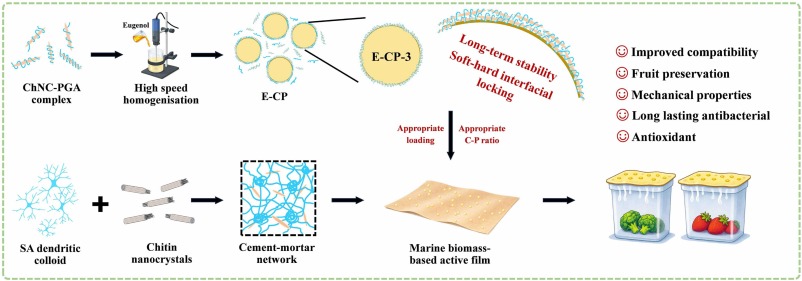
Fig. 1. Schematic illustration of the fabrication of ChNC-PGA Pickering emulsions, the hypothesised soft-hard interfacial locking mechanism, and their incorporation into the cement–mortar marine biomass-based ultra-strong film-forming system to yield active films with effective preservation performance.
Chitin (from shrimp shells, CAS No. 1398-61-4), eugenol (≥99%), FeCl3·6H2O (≥99%), calcium chloride dihydrate (CaCl2·2H2O, ≥99%), and glycerol (≥99.5%) were purchased from Aladdin Biochemistry & Technology Co., Ltd. (Shanghai, China). PGA (98%, CAS No. 9005-37-2) and soya oil (99%) were obtained from Yuanye Biotechnology Co., Ltd.(Shanghai, China). SA (M/G ratio = 2:1, 140–150 kDa), and hydrogen peroxide (H2O2, 6 wt% in H2O) were supplied by Macklin Biochemical Co., Ltd. (Shanghai, China). Deionised water (18.2 MΩ·cm, Millipore, Billerica, MA, USA) was used throughout. All reagents were of analytical grade and used as received.
ChNCs were synthesised using the FeCl3·6H2O-assisted microwave digestion method reported in our previous work (Zhang et al., 2025). Briefly, FeCl3·6H2O (20 g) was dissolved in deionised water (20 mL) and transferred to a high-throughput microwave digestion system (MDS-15, Shanghai Xinyi Microwave Chemical Technology Co., Ltd., China). 2 g of chitin was then added, and the mixture was treated at 280 W and 80 °C for 0.75 h under constant power. The resulting dispersion was subsequently centrifuged, dialysed, and ultrasonicated to obtain the ChNC suspension. The commercial PGA was dispersed in an aqueous H2O2 solution (2 wt%) and stirred in a 95 °C water bath for 3 h to reduce its molecular weight without excessively sacrificing the degree of terminal esterification (Lin et al., 2022). Appropriate amounts of concentrated ChNC suspension and PGA solution were mixed to obtain composite suspensions with a total polymer content of 1 wt% at ChNC:PGA mass ratios of 1:1, 4:1, 7:1, 10:1, 13:1, 16:1, 19:1, and 22:1. The mixtures were magnetically stirred at 25 °C for 30 min. The first five formulations were designated CP-1 to CP-5, respectively, and the pH was adjusted to and maintained at pH 6.0 ± 0.1.
Molecular dynamics simulations were performed to investigate the molecular association between PGA and ChNCs. The ChNC model was constructed with a degree of deacetylation of 33%, while the PGA model had a propylene glycol substitution degree of 80%. The two components were initially placed apart in a periodic simulation box, solvated with explicit TIP3P water and neutralised with counterions. Following energy minimisation and sequential equilibration under constant-volume and constant-pressure conditions at 310 K and 1.0 bar, respectively, a 200 ns production simulation was conducted with a time step of 2 fs using GROMACS 2024.0 with the CHARMM36 force field and TIP3P water model. The adsorption configuration was visualised at 0 and 200 ns. The structural stability of ChNC was evaluated from the root-mean-square deviation (RMSD), while hydrogen bonds formed between PGA and ChNC were analysed throughout the trajectory. The interaction energy was further decomposed into van der Waals, electrostatic, polar solvation and nonpolar solvation contributions using the molecular mechanics-Poisson-Boltzmann surface area (MM/PBSA) approach.
The CP-1 to CP-5 aqueous mixtures were combined with soya oil containing eugenol (6% v/v, relative to the oil phase) at an aqueous phase:oil volume ratio of 7:3, followed by high shear homogenisation (T25 digital ULTRA-TURRAX, IKA-Werke GmbH & Co. KG, Staufen, Germany) at 15,000 rpm for 3 min to obtain the Pickering emulsions denoted E-CP-1 to E-CP-5 (Su et al., 2025). For comparison, control emulsions were prepared using either ChNCs or PGA alone (each adjusted to 1 wt% in the aqueous phase) under the same oil–water ratio and homogenisation conditions, and were labelled E-C and E-P, respectively.
The films were fabricated following our previously reported method (Zhang et al., 2026). 1.8 g of SA was dissolved in 58.2 g of water and rapidly injected via syringe into an aqueous CaCl2·2H2O solution (13.6 mM). After high speed homogenisation, the dispersion was centrifuged and washed to obtain SA dendritic colloids (DCSA). The formulations of the composite films and emulsion-loaded films are summarised in Table 1. To prepare the control nanocomposite film, denoted DC, 0.1 g glycerol, ChNCs at 6 wt% of the SA mass, and DCSA at one-fifth of the SA mass were added to 58.1 g of water with 1.5 g SA, forming a cement–mortar architecture.
Table 1. Formulations of nanomaterial dispersions for composite film preparation.
| Sample code | Weight of SA powder (g) | Weight of ChNCs (g) | Weight of water (g) | Weight of DCSA (g) | Weight of emulsion (g) | Weight of glycerol (g) | Emulsion content (w/w, %) |
|---|---|---|---|---|---|---|---|
| DC | 1.5 | 0.09 | 58.1 | 0.3 | 0 | 0.1 | 0 |
| DC-EA1 | 1.5 | 0.09 | 55.1 | 0.3 | 3 | 0.1 | 5% |
| DC-EA2 | 1.5 | 0.09 | 52.1 | 0.3 | 6 | 0.1 | 10% |
| DC-EA3 | 1.5 | 0.09 | 49.1 | 0.3 | 9 | 0.1 | 15% |
| DC-EA4 | 1.5 | 0.09 | 46.1 | 0.3 | 12 | 0.1 | 20% |
| DC-EB1 | 1.5 | 0.09 | 55.1 | 0.3 | 3 | 0.1 | 5% |
| DC-EB2 | 1.5 | 0.09 | 52.1 | 0.3 | 6 | 0.1 | 10% |
| DC-EB3 | 1.5 | 0.09 | 49.1 | 0.3 | 9 | 0.1 | 15% |
| DC-EB4 | 1.5 | 0.09 | 46.1 | 0.3 | 12 | 0.1 | 20% |
To prepare emulsion-loaded films, the selected Pickering emulsions E-CP-2 and E-CP-3 were incorporated at 5, 10, 15, and 20% (w/w), while keeping the combined mass of emulsion plus aqueous phase constant at 58.1 g. The resulting films were denoted DC-EA1 to DC-EA4 (E-CP-2) and DC-EB1 to DC-EB4 (E-CP-3), respectively. All film-forming dispersions were cast into polystyrene petri dishes (125 mm × 125 mm) and left at ambient temperature for 3 h to allow bubble release, followed by drying at 40 °C for 12 h. The dried films were sealed in aluminium foil zip-lock bags and stored at 4 °C, protected from moisture, light, and heat.
PGA is obtained via partial esterification of alginate -COOH with propylene glycol and thus retains a net negative charge. The particle size and ζ potential of PGA and CP complexes were measured using a nanoparticle size and ζ potential analyser (SZ-100 V2, Beijing Horiba Precision Instruments Co., Ltd., Beijing, China). Before measurement, the dispersions were appropriately diluted with deionised water and adjusted to pH 6.0 ± 0.1 using 0.1 M HCl or NaOH.
The average molecular weight of PGA after H2O2 treatment was measured using a high performance liquid chromatography system (Waters 1525, Waters Corporation, Milford, MA, USA) with 0.1 M NaNO3 as the mobile phase at a flow rate of 0.5 mL min−1, a column temperature of 40 °C, and an injection volume of 10 μL (Chen et al., 2026).
The microstructures of ChNCs, CP complexes, and film samples were examined by SEM (Merlin, Carl Zeiss, Oberkochen, Germany). Before observation, the samples were dried and sputter-coated with a thin layer of gold. For film samples, both surface and cross-sectional morphologies were examined. The morphology of the emulsion droplets and their distribution in the DCSA dispersion were examined using an optical microscope (CX31, Olympus Corporation, Tokyo, Japan).
The droplet size distribution of the emulsions was measured using a laser diffraction particle size analyser (LA-960 V2, Horiba, Ltd., Kyoto, Japan). Measurements were performed immediately after preparation and after 14 d of quiescent storage at 4 °C. The pH of the aqueous CP systems was adjusted to 6.0 ± 0.1 before emulsification. Before measurement, the emulsions were appropriately diluted with deionised water. The interfacial architecture of the Pickering emulsions was visualised by confocal laser scanning microscopy (CLSM, TCS SP8, Leica Microsystems GmbH, Wetzlar, Germany) after staining with Nile red (0.1%) and Calcofluor white (1%), gently mixed and equilibrated in the dark for 10 min before observation at room temperature.
Three-phase contact angles of freeze-dried, compressed pellets and water contact angles (WCA) of films were measured using a contact angle goniometer (DSA25, KRÜSS GmbH, Hamburg, Germany). For three-phase contact angle measurement, the pellet was immersed in oil in a cuvette, and a deionised water droplet was deposited onto the pellet surface using a stainless steel dosing needle. The droplet profile was recorded with a high speed camera. For WCA measurement, a deionised water droplet was placed on the film surface using the same dosing needle, and the contact angle was recorded within 10 s.
After centrifugation at 6000 rpm for 15 min, the cream layer of the eugenol-loaded emulsions was collected, demulsified with absolute ethanol (1:4, v/v), and extracted with n-hexane (Li et al., 2024). After n-hexane removal by evaporation, the residue was redissolved in absolute ethanol, and the absorbance was measured at 281 nm using a UV–Vis spectrophotometer (U 3900H, Hitachi High-Tech, Tokyo, Japan). EE was calculated as:(1)
The retention of eugenol in the emulsions after 14 d of storage was calculated according to Ma et al. (2023), and demulsification was performed as described above. Eugenol retention was calculated as:(2)where Ct and C0 denote the eugenol contents in the emulsion after storage and at initial preparation, respectively.
The turbidity of the film-forming solutions was determined using the same UV–Vis spectrophotometer. Each sample was transferred into a quartz cuvette with a 10 mm optical path length, and the absorbance spectrum was recorded from 200 to 800 nm at room temperature, using deionised water as the blank. Film transparency and appearance were documented by photography.
XRD patterns were recorded on an X-ray diffractometer (D8 DISCOVER, Bruker, Billerica, MA, USA) over a 2θ range of 2–50° at a scanning rate of 10° min−1. FTIR spectra were collected in transmission mode from 400 to 4000 cm−1 using an iS50 spectrometer (Thermo Nicolet, Waltham, MA, USA) at 4 cm−1 resolution, averaging 32 scans per sample.
The thermal behaviour of the samples was analysed using a simultaneous thermal analyser (HQT-4, Beijing Hengjiu Co., Ltd., Beijing, China) under a nitrogen atmosphere. Samples were heated from 25 to 600 °C at a heating rate of 10 K min−1.
Rheological measurements were carried out at 25 °C using an MCR 702e rotational rheometer (Anton Paar GmbH, Graz, Austria) fitted with a 25 mm cone plate and Peltier temperature control. Viscosity curves were obtained from shear rate sweeps over 0.1–100 s−1, and the viscoelastic response was characterised by frequency sweeps from 0.1 to 100 rad s−1 to determine the storage modulus (G′) and loss modulus (G″). Samples were rested for 3 min after loading before each run to minimise handling artefacts.
The swelling ratio (SR) of the films was determined with minor modifications to the method of Zhang et al. (2022). Films of fixed dimensions were weighed to obtain the initial mass (M0), immersed in distilled water for 10 min, gently blotted to remove surface water, and then weighed accurately (M1) after placement on filter paper. The SR was calculated as follows:(3)
Film water vapour permeability (WVP) was evaluated based on the procedure of Li et al. (2025). Glass vials containing deionised water were covered with film samples of measured thickness and sealed along the vial rim (opening diameter 25 mm). Each sealed vial was weighed and then placed in a climate controlled chamber set to 25 °C and 50% relative humidity. The reduction in vial mass was recorded at defined intervals, and the evaporation rate was obtained from the gradient of the best-fit line relating mass loss (g) to time (s). The WVP was calculated using Eq. (4):(4)where A represents the exposed area of the vial mouth (m2), b is the average film thickness (m), and Δp is the water vapour partial pressure difference between the two sides of the film (Pa).
The oxygen permeability (OP) test was estimated with minor modifications to the protocol described by Zhang et al. (2025). An antioxidant mixture (2 g, reduced iron powder and ascorbic acid) was placed in a vial, and the film was fixed over the vial mouth with a rubber band and stored at 75 ± 5% relative humidity. The mass change was recorded every 12 h until equilibrium, with three replicates per sample. The OP was calculated using the following equation:(5)where ΔG is the mass change at equilibrium (g), S is the test area (m2), and Δt is the time interval (s).
The mechanical properties of the composite films were measured using a universal testing machine (Instron 5967, Instron, Norwood, MA, USA). Before testing, the films were cut into rectangular strips of 85 mm × 12 mm, and their thickness was measured at several random positions. The strips were stretched at a crosshead speed of 20 mm min−1. Young's modulus (E), tensile strength (TS) and strain at break (ε) were calculated from the stress-strain curves. Prior to testing, all film samples were conditioned at 25 °C and 50% relative humidity for 48 h.
The apparent release behaviour of eugenol from DC-EA3, DC-EB3 and DC-EB4 was evaluated under sealed humid conditions. Film specimens of equal area (30 mm × 30 mm) were fixed in sealed containers containing 10 mL deionised water at the bottom to maintain humidity without direct contact with the films, and stored at 25 °C. At predetermined intervals, the films were collected and immersed in ethanol to extract residual eugenol, which was quantified by UV–vis spectrophotometry at 281 nm. The apparent cumulative film depletion percentage was calculated from the decrease in residual eugenol relative to the initial encapsulated eugenol amount in each film, with the emulsion encapsulation efficiency taken into account. The resulting time course data were further fitted using the Higuchi equation and an empirical power-law equation of the Ritger–Peppas form:
Higuchi equation:(6)
Ritger–Peppas equation:(7)where y is the percentage of initial eugenol no longer recovered from the film at time t, k is the fitted coefficient, and n is the empirical power law exponent. The fitting quality was evaluated using the coefficient of determination (R2).
A DPPH radical scavenging assay kit (Shanghai Yuanye Bio Technology Co., Ltd.) was used to measure the DPPH scavenging activity of the films and thus verify their antioxidant capacity. Briefly, film samples of 60 mm × 60 mm were incubated with the DPPH working solution under dark conditions for 15 min. The reaction mixture was then filtered to remove the film samples and any insoluble residues, and the absorbance of the filtrate was measured at 517 nm using a UV–Vis spectrophotometer. The DPPH radical scavenging activity was calculated according to the kit protocol.
Staphylococcus aureus (S. aureus), Escherichia coli (E. coli), and Botrytis cinerea were selected as test strains to evaluate the antimicrobial activity of the films. For the contact phase antibacterial assay, films were added to bacterial broth (~106 CFU mL−1) and incubated at 37 °C and 200 rpm for 2.5 h, after which the treated bacterial suspension was spread onto agar plates and incubated at 37 °C for 16 h, followed by colony counting. The inhibition rate was calculated based on CFU reduction according to the following equation:(8)where N0 and Nt are the viable bacterial counts of the control and film-treated groups, respectively.
In parallel, untreated bacterial suspensions were spread on agar plates, the lids lined with a 60 mm × 60 mm film piece were applied, and the inhibition zone was recorded after incubation. For the fungal test, the mould was inoculated at the centre of PDA plates and incubated inverted at 28 °C for 96 h using lids lined with film samples, and mould growth was observed.
Broccoli and strawberries were selected as model produce to evaluate the preservation performance of the films, owing to their rapid postharvest quality deterioration. Samples with uniform size, colour and maturity and without visible mechanical damage were selected for the storage experiments. The produce was packaged with different film samples and stored at 25 °C and 75% relative humidity. For the original film comparison, the emulsion free DC film was used as the control film. To further clarify the effects of no packaging, commercial plastic wrap, free eugenol and emulsion structure without eugenol on preservation performance, four additional comparison groups were established and denoted as UP, PE, DC-FE and DC-BE, respectively. These groups were compared with the optimal DC-EB3 film to evaluate the overall preservation effect. Changes in visual appearance were recorded using a digital camera at predetermined storage intervals (Zhang et al., 2025).
The initial mass of each broccoli or strawberry sample was recorded before storage as W0. At each sampling time, the samples were weighed again to obtain Wt. Weight loss was calculated using Eq. (9):(9)
The chlorophyll content of broccoli was determined according to Zhang et al. (2025) with minor modifications. Briefly, broccoli tissue was homogenised and extracted with acetone extraction solution under dark conditions. After centrifugation, the absorbance of the extract was measured at 645 and 663 nm using a UV–Vis spectrophotometer. Chlorophyll content was calculated using Eq. (10):(10)where V is the total volume of the extract (mL), M is the sample mass (g), and A645 and A663 are the absorbance values of the extract at 645 and 663 nm, respectively.
The ascorbic acid content was determined using the 2,6-dichlorophenolindophenol titration method. Fresh tissue samples were homogenised with oxalic acid solution and made up to 50 mL in a volumetric flask. After filtration, 30 mL of filtrate was titrated with standardised 2,6-dichlorophenolindophenol solution until a light pink colour appeared and persisted for 15 s. A blank control was prepared using 30 mL of oxalic acid solution. The ascorbic acid content was calculated using Eq. (11):(11)where V1 and V0 are the volumes of dye solution consumed by the sample and blank titrations, respectively (mL), ρ is the mass of ascorbic acid equivalent to 1 mL of dye solution (mg mL−1), and M is the sample mass (g).
The firmness of strawberries was measured using a TA.XTC-18 texture analyser (Shanghai Bosin Industrial Development Co., Ltd., Shanghai, China). Each sample was placed on the platform, compressed twice using a spherical probe with a radius of 5 mm. The pre-test, test and post-test speeds were set at 4, 2 and 4 mm s−1, respectively, and the compression strain was set to 60%. The peak force was recorded as firmness. Measurements were performed at different positions for each sample.
All data were processed in SPSS (version 22.0, IBM, Chicago, IL, USA) and are reported as mean ± standard deviation. Statistical significance among groups was evaluated by one-way analysis of variance (ANOVA), followed by Duncan's multiple range test for post hoc comparisons. All physicochemical measurements were conducted with at least three independent replicates. Graphical outputs were produced using Origin 2025b (OriginLab, Northampton, MA, USA).
Prior to emulsion preparation, the intrinsic properties of the molecular weight-reduced PGA were systematically characterised, both before and after complexation with ChNCs. Oxidative treatment induced chain scission without causing extensive loss of ester groups. As presented in Fig. 2(a, b), the chromatograms of PGA before and after H2O2 treatment both exhibited a single main peak, and the molecular weight decreased from 377 kDa to 131 kDa, indicating partial cleavage of the PGA main chain. In the FTIR spectra, the ester-related bands at 1733 cm−1, assigned to C O stretching, and 1240–1290 cm−1, assigned to CO stretching, showed only limited intensity changes, suggesting that most ester groups were retained (Fig. 2(c)) (Lin et al., 2022). By contrast, the hydroxyl (-OH) stretching region at 3200–3600 cm−1 became broader, which may arise from rearrangement of the hydrogen bonding network.
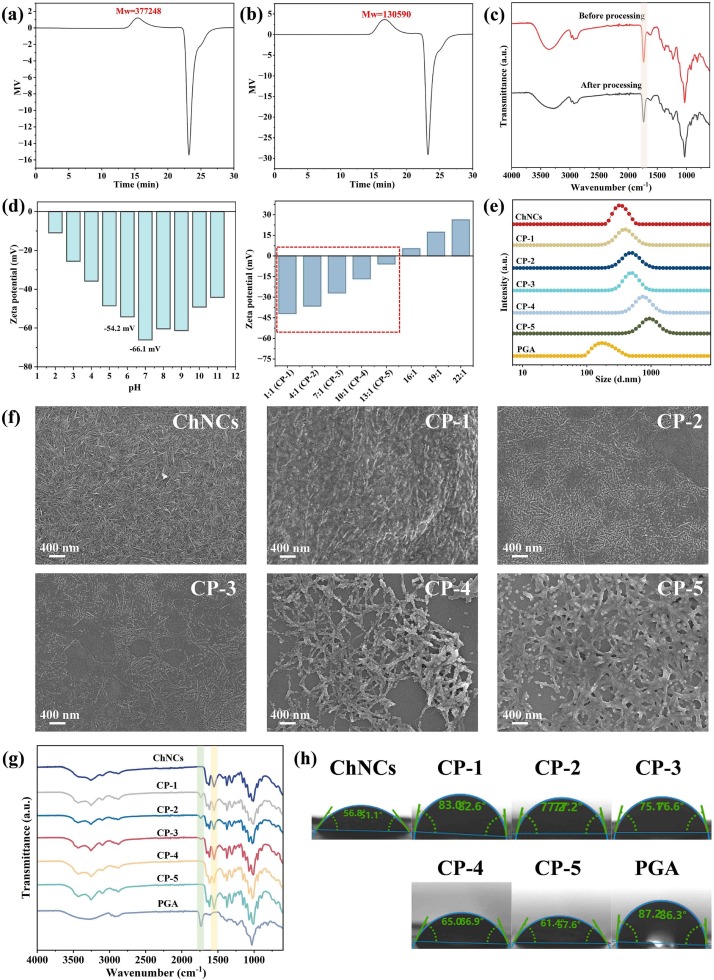
Fig. 2. Molecular weight (a, b) and FTIR spectra (c) of PGA before and after treatment; ζ potentials of treated PGA at different pH values and of ChNC-PGA complexes at a fixed pH with different ChNC/PGA ratios (d). Particle size (e), SEM images (f), FTIR spectra (g), and three-phase water contact angles (h) of the ChNC-PGA complexes at different ChNC-PGA ratios.
Across the tested pH range, degraded PGA remained negatively charged (Fig. 2(d)), with the most negative value observed near neutral pH (pH 6, ζ = −54.2 mV). As reported in our previous study, ChNCs exhibited a ζ potential of approximately +25 mV at pH 6, supporting electrostatic complexation between PGA and ChNCs. As the ChNC proportion increased, the ζ potential of the CP complexes at pH 6 shifted from −41.9 mV for CP-1 (1:1) towards the isoelectric region, reaching −5.9 mV for CP-5 (13:1), and then became positive, indicating progressive weakening of the PGA-dominated negatively charged outer layer. This charge evolution was accompanied by marked changes in particle size and morphology. ChNCs and PGA exhibit distinct colloidal conformations in water, with PGA adopting a random coil configuration characteristic of flexible chains, whereas ChNCs display a high aspect ratio anisotropic morphology. Dynamic light scattering (DLS) exhibited hydrodynamic diameters of 155.20 nm for PGA and 342.47 nm for ChNCs (Fig. 2(e)). Under strongly negative ζ conditions, where PGA was relatively excessive, a PGA-rich outer region was likely formed around ChNCs and provided combined electrostatic and hydration-related steric stabilisation, yielding relatively small hydrated complexes among the CP complexes, namely 446.08 nm for CP-1 and 506.74 nm for CP-2. SEM supported this interpretation (Fig. 2(f)). CP-1 still exhibited a discernible rod-like framework embedded in a polymer-like matrix, consistent with PGA-rich surface coverage, while CP-2 and CP-3 showed weakened coating features and more clearly resolved slender bundles. As the ChNC content increased further, charge compensation reduced electrostatic stabilisation and promoted interparticle contact, so that the hydrated size increased to 531.79 nm for CP-3 and then rose sharply to >700 nm for CP-4 and CP-5. Correspondingly, SEM revealed increasing clustering and bundle thickening, and by CP-4 and CP-5, extensive reticulated aggregates and interparticle interconnections were observed, indicating intense flocculation. These results suggest that the CP complexes evolved from PGA-rich, electrostatically stabilised rod-like assemblies to weakly stabilised flocculated aggregates as the system approached the low |ζ| region. SEM captures drying induced rearrangement rather than the hydrated sizes measured by DLS, but the aggregation patterns in the dry state still align with the size increase trend observed in dispersion.
As shown in Fig. 2(g), ChNCs exhibited characteristic amide I and amide II bands at 1620–1660 cm−1 and 1550–1560 cm−1, respectively, together with the typical polysaccharide backbone vibrations in the 1200–900 cm−1 region (Chen et al., 2024). PGA exhibited an additional ester CO band at 1733.2 cm−1. Although PGA was initially present in excess, the CP spectra were still dominated by the amide features of ChNCs, as the characteristic amide bands of ChNCs are more prominent, whereas most PGA bands overlap with the polysaccharide backbone region, and the -COO− related bands are largely masked. Nevertheless, the ester CO band remained visible and gradually weakened from CP-1 to CP-5. Meanwhile, the amide II band of ChNCs shifted from 1555.8 cm−1 to 1556.8 cm−1 in CP-1 and 1553.4 cm−1 in CP-5, showing that the local environment of ChNC surface nitrogen-containing groups changed after complexation with PGA -COO−, with the extent of electrostatic coupling varying with the ChNC:PGA ratio (Wang et al., 2025).
The apparent wettability of the compressed composite pellets was evaluated by the three-phase contact angle. As illustrated in Fig. 2(h), ester groups introduced by propylene glycol esterification reduced surface polarity and increased oil wetting, giving PGA a θ value of 86.8°. As the ChNC content increased (θ = 54.0°), more polar groups were exposed at the pellet surface, and θ decreased from 82.8° for CP-1 to 59.5° for CP-5, with values of 77.2°, 75.9°, and 66.0° for CP-2, CP-3, and CP-4, respectively, indicating a progressive shift towards more water-wet behaviour. According to Pickering's theory, particle wettability governs interfacial anchoring and emulsion type. Particles with θ < 90° preferentially stabilise oil in water (O/W) emulsions, whereas overly hydrophilic particles tend to remain in the aqueous phase, which lowers the interfacial anchoring energy and hinders the formation of a dense particle layer at the interface (Yin et al., 2025). Accordingly, the tunable decrease in θ from 82.8° to 59.5° provides a key wettability basis for interpreting the subsequent interfacial assembly of the composite particles and the associated differences in emulsion stability.
To elucidate the molecular basis of PGA-ChNC complexation, a 200 ns molecular dynamics simulation was performed (Fig. 3). PGA progressively approached and adsorbed onto the ChNC surface, producing a more compact associated configuration at 200 ns (Fig. 3(a, b)). Energy decomposition showed that electrostatic and van der Waals interactions were the major favourable contributions, whereas polar solvation partially opposed association. Nevertheless, the total interaction energy remained negative (−40.73 kJ mol−1), indicating that formation of the associated state was energetically favourable. Intermolecular hydrogen bonds formed intermittently and became more frequent during the later simulation stage (Fig. 3(c, d)). Meanwhile, the RMSD remained predominantly within 0.3–0.5 nm without sustained drift, indicating overall structural stability (Fig. 3(e)). These results provide molecular level evidence for favourable noncovalent association between flexible PGA chains and rigid ChNC surfaces.
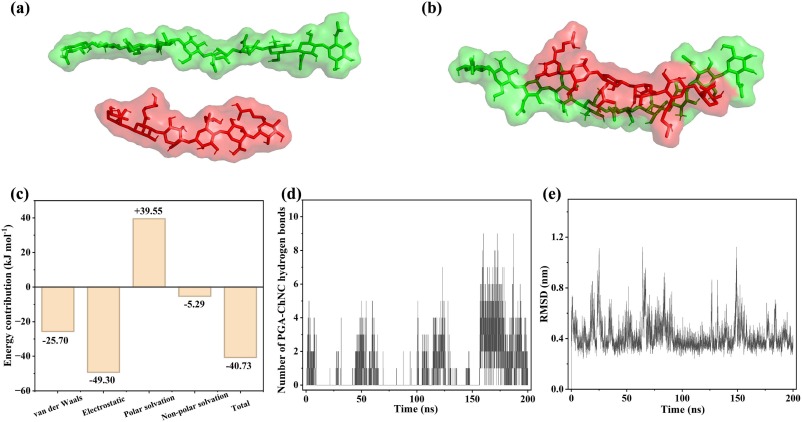
Fig. 3. Molecular dynamics analysis of PGA-ChNC interactions. Representative configurations of PGA and ChNC at 0 ns (a) and 200 ns (b); MM/PBSA energy contributions to PGA-ChNC association (c); time evolution of the number of hydrogen bonds between PGA and ChNC (d); and RMSD of ChNC during the 200 ns simulation (e). Green represents ChNC, and red represents PGA. (For interpretation of the references to colour in this figure legend, the reader is referred to the web version of this article.)
Taken together, the ChNC/PGA ratio governed the colloidal state, interparticle association and apparent wettability of the CP complexes. The molecular dynamics results further supported favourable PGA-ChNC association through electrostatic, van der Waals and hydrogen bonding interactions. Although these findings do not directly reproduce the complete oil–water interfacial architecture, they provide a physicochemical and molecular basis for interpreting the subsequent interfacial assembly and emulsion stability of the CP complexes.
All systems formed O/W emulsions, and no phase separation was observed immediately after preparation (Fig. 4(a)), although clear differences in droplet size and uniformity were already evident. Laser diffraction analysis showed that E-CP-1 had the smallest droplet size (3.46 ± 0.12 μm). E-P, E-CP-2, and E-CP-3 were comparable at 3.47 ± 0.11, 3.63 ± 0.09, and 3.68 ± 0.15 μm, respectively, whereas E-C and E-CP-5 both exceeded 4 μm, and E-CP-4 increased to 5.24 ± 0.06 μm (Fig. 4(b)). Optical micrographs corroborated these trends, with E-CP-1 to E-CP-3 dominated by dense, relatively uniform small droplets, while E-CP-4 and E-CP-5 contained more large droplets and a broader size distribution (Fig. 4(d)).
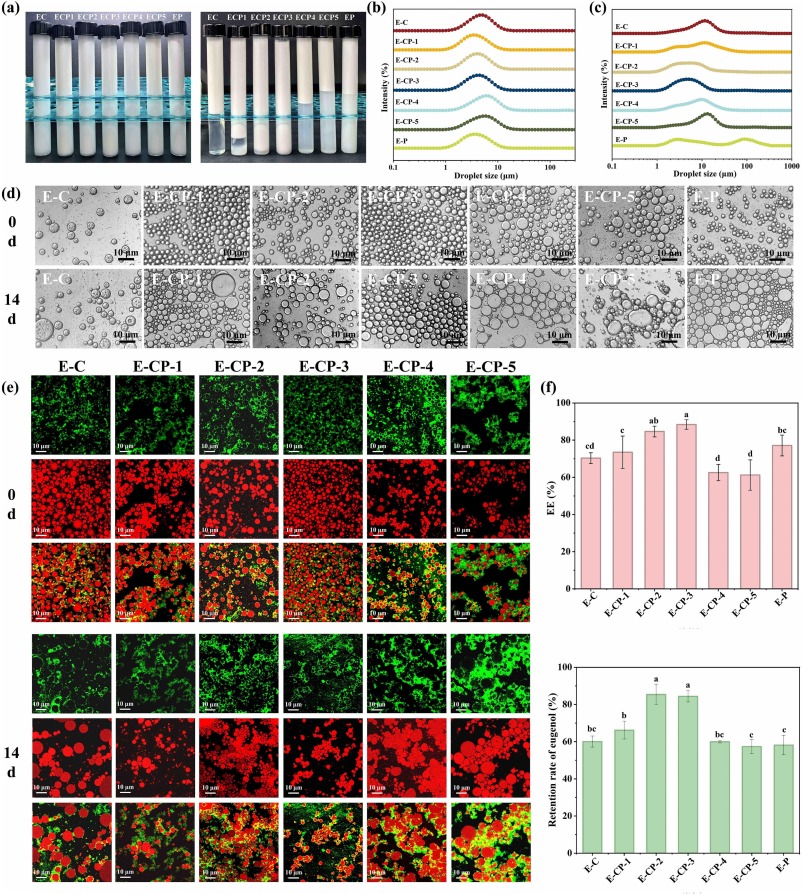
Fig. 4. Optical appearance (a), laser diffraction particle size (b, c), optical micrographs (d), and confocal laser scanning micrographs showing interfacial structure (e) of the emulsions before and after storage. Encapsulation efficiency of eugenol and its retention after 14 d of storage in the different emulsions (f). Data in (f) are presented as mean ± SD (n = 3). Different letters indicate significant differences (p < 0.05) based on one-way ANOVA followed by Duncan's multiple range test.
After 14 d of quiescent storage at 4 °C, differences in phase separation and droplet size evolution revealed distinct stabilisation mechanisms among the emulsion systems. The droplet diameters of E-CP-2 and E-CP-3 increased only modestly to 4.69 ± 0.13 μm and 4.58 ± 0.07 μm, respectively (Fig. 4(c)). The micrographs remained dominated by relatively uniform small droplets. No phase separation was observed for E-CP-3, whereas E-CP-2 showed only slight separation and still retained a thick cream layer, consistent with limited droplet coalescence or demulsification during storage (Fig. 4(a)). An intermediate ζ potential magnitude helps maintain particle dispersion prior to interfacial adsorption, while appropriate wettability, with a three-phase contact angle of 75°–80°, favours firm and uniform anchoring at the oil–water interface. Together with the FTIR evidence for PGA-ChNC interactions, the molecular dynamics results showing energetically favourable noncovalent association, and the relatively dispersed rod-like morphology observed above, these results suggest that CP-2 and CP-3 possessed a more balanced complexation state before emulsification, thereby producing emulsions with improved stability. In the composite systems, PGA exists as both a ChNC-bound fraction and a free fraction. During emulsification, part of the free PGA may become hydrated and participate in interfacial coverage together with the PGA-ChNC complexes, where the flexible PGA chains may bridge adjacent ChNC-rich domains and fill interparticle gaps, while the rigid ChNCs provide particle anchoring and resistance to interfacial deformation (Fig. 1). On this basis, such cooperative assembly is hypothesised to form a soft-hard interfacial layer that may contribute to interfacial stability, while the remaining PGA mainly contributes to increasing the viscosity of the aqueous phase, thereby suppressing droplet migration and collisions over 14 d (Zhang et al., 2025). Except for these two emulsions, all other samples exhibited phase separation. E-CP-1 showed a marked increase in droplet size to 8.57 ± 0.07 μm, with more large droplets appearing during storage. Given the high interfacial activity of PGA and the relatively low ChNC content in CP-1, the supply of composite particles may be insufficient to sustain an intact Pickering interfacial architecture. Although the strongly negative ζ potential and suitable apparent wettability of CP-1 favoured the formation of smaller initial droplets by reducing pre-emulsification aggregation in the aqueous phase and suppressing droplet collisions during homogenisation, its relatively low ChNC content still limited rigid particle anchoring at the oil–water interface. The resulting PGA-dominated soft interface may therefore have been more prone to interfacial rearrangement, coalescence and demulsification during storage (Meng et al., 2025). Deterioration was more evident in E-CP-4 and E-CP-5, where droplet diameters increased to 7.58 ± 0.19 and 10.10 ± 0.96 μm, respectively, together with a thicker serum layer and broader size distribution, presumably because CP-4 and CP-5 exhibited low |ζ| potential values, larger cluster-like morphologies and stronger hydrophilicity before emulsification. These pre-aggregated complexes were less able to distribute uniformly and anchor effectively at the oil–water interface, resulting in uneven interfacial coverage. ChNCs alone were able to form Pickering emulsions, but their relatively hydrophilic wettability may have restricted efficient interfacial packing (Fig. 2(h)). As a result, the E-C system showed weaker long-term resistance to droplet coalescence, with droplet size increasing from 4.12 ± 0.21 μm to 8.55 ± 1.76 μm over 14 d. By contrast, although PGA had a three-phase contact angle close to 90°, suggesting greater amphiphilicity and a stronger propensity for interfacial adsorption, it lacked rigid particles needed to construct a persistent particle anchored layer, so E-P exhibited droplet sizes above 13 μm and more severe phase separation during storage.
CLSM was used to visualise the spatial distribution of ChNCs at the oil–water interface under different CP ratios. The oil phase stained with Nile red appeared red, and ChNCs stained with Calcofluor white appeared green. As PGA is a partially esterified polysaccharide lacking intrinsic fluorophores, and small molecule dyes are prone to nonspecific adsorption, only the six ChNC-containing systems were analysed. CLSM was used primarily to track the interfacial localisation of the hard ChNC component, whereas the involvement of the soft PGA component was inferred from the preceding ζ potential, DLS, FTIR, SEM and three-phase contact angle results and molecular dynamics results. As shown in Fig. 4(e), CP-2 and CP-3 exhibited more uniform droplets and well-defined interfacial rings that were largely retained after 14 d, suggesting relatively continuous ChNC-rich interfacial coverage and good structural persistence. In comparison, CP-1 exhibited weak and discontinuous interfacial enrichment, and after 14 d the complexes appeared as discrete patches with larger droplets, suggesting interfacial rearrangement during storage. For CP-4 and CP-5, clear green clusters were already evident on day 0, and the difference in droplet size became more obvious after 14 d, consistent with nonuniform interfacial coverage. In the absence of PGA-mediated regulation of wettability and dispersion, unmodified ChNCs exhibited limited long-term stabilising capacity, and the corresponding E-C system likewise showed droplet growth and phase separation after 14 d of storage. Overall, the long-term stability of emulsions depends not only on the wettability of the stabilising particles, but also on interfacial dispersion and binding state, the uniformity of interfacial coverage, and the viscosity of the continuous phase (Meng et al., 2025; Su et al., 2025).
This difference in interfacial organisation was further reflected in EE and 14 d retention (Fig. 4(f)). E-CP-3 (88.40 ± 2.55%) and E-CP-2 (84.64 ± 2.88%) showed the highest EE and retained >80% eugenol after 14 d, which was consistent with the hypothesised formation of a more compact and persistent soft-hard interfacial structure that may have helped maintain droplet integrity and reduce premature eugenol loss during emulsification and subsequent storage. In comparison, the limited interfacial coverage and adaptability of ChNCs alone resulted in lower values for E-C (70.32 ± 2.90% EE, 60.07 ± 2.97% retention). E-P achieved a moderate EE of 77.13 ± 5.60% via PGA-driven thickening and interfacial adsorption, but the absence of a particle-built irreversible interface layer resulted in a retention of only 58.23 ± 5.19% after storage. E-CP-4 and E-CP-5 also showed relatively low EE (about 60%) and similarly low retention, suggesting that cluster induced nonuniform coverage weakened eugenol entrapment and undermined interfacial integrity during storage (Ma et al., 2023).
Considering the properties of the composite particles and the corresponding emulsions, E-CP-2 and E-CP-3, which exhibited the most favourable overall performance, were selected for incorporation into the film-forming dispersion for subsequent investigation of active film properties. In our previous work, the DC film system composed of SA, DCSA, and a fraction of ChNCs was shown to form a negatively charged “cement–mortar” architecture (Table 1). To assess whether attractive interactions or destabilisation occurred between the emulsions and the network framework, the formulation with the highest emulsion loading was examined by optical microscopy (Fig. 5(a)). Compared with DC, neither DC-EA4 nor DC-EB4 exhibited flocculated clusters or deformed droplets, and dispersed droplets remained clearly visible, indicating that even at 20% w/w emulsion loading, the DC system did not induce emulsion flocculation. This can be attributed to the negative ζ potentials of CP-2 and CP-3, together with the fact that the small amount of ChNCs in the DC film-forming dispersion had already been adsorbed by the strongly negatively charged DC framework and remained uniformly dispersed as stable composite flocs, rather than existing as free cationic carriers capable of inducing secondary flocculation with the droplets.
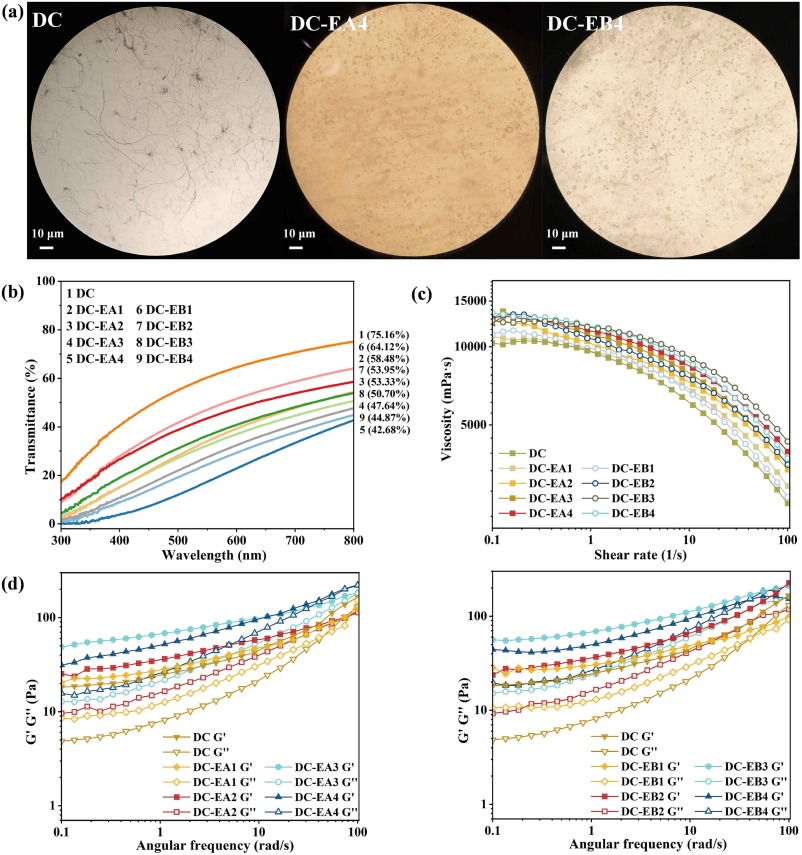
Fig. 5. Optical micrographs of the sodium alginate dendritic colloid and its mixture with the emulsion at the highest loading level (a); light transmittance (b), viscosity (c), and frequency sweep curves of G′ and G″ (d) for the various film-forming solutions.
The turbidity of the film-forming dispersions was evaluated from transmittance spectra over 300–800 nm (Fig. 5(b)). DC displayed the highest transparency (75.16%), indicating effective dispersion of ChNCs within the DC framework. After emulsion incorporation, transmittance decreased monotonically with increasing emulsion loading. In the EA and EB series, it decreased from 58.48% and 64.12% at 5% w/w addition to 42.68% and 44.87% at 20% w/w addition, respectively, reflecting increased light scattering from emulsion droplets. At the same loading, the EB series consistently showed higher transmittance than the EA series, suggesting more uniform droplet dispersion and fewer aggregates after mixing.
The flow behaviour of the film-forming dispersions was evaluated by steady shear rheology (0.1–100 s−1) and frequency-dependent viscoelasticity. As seen in Fig. 5(c), all formulations exhibited marked shear thinning, and emulsion incorporation increased viscosity relative to DC, pointing to enhanced flow resistance due to droplet filling within the continuous phase. At low shear rates, DC-EA3 and DC-EB4 presented the highest viscosities (>13,000 mPa·s), whereas at 100 s−1 DC-EB3 retained the highest value (>4300 mPa·s). The low emulsion contents in DC-EA1 and DC-EB1 were insufficient to markedly hinder flow in the continuous phase or strengthen internal interactions, resulting in relatively low apparent viscosities over the whole shear range. PGA was expected to be present both as a droplet-associated fraction at or near the emulsion interface and as a free fraction in the film-forming dispersion, the latter increasing apparent viscosity through hydration. Accordingly, the EA series, which contained more free PGA, exhibited a more pronounced viscosity increase at low shear rates. At higher shear rates, flow resistance depended mainly on liquid network continuity, droplet packing, and interfacial stability. Therefore, DC-EB3 retained a relatively high viscosity, whereas emulsions with poorer interfacial stability were more easily deformed under shear, leading to a weaker droplet network and lower apparent viscosity (Wang et al., 2025; Yin et al., 2025). Although no obvious adsorption-induced aggregation was observed by optical microscopy, excessive emulsion loading may still introduce entanglement that partially disrupts network connectivity during shear acceleration and reduces viscosity (DC-EA4 and DC-EB4). Emulsion interfacial stability and an appropriate addition level are thus both crucial for preserving the integrity of the original film-forming network.
The G′ and G″ obtained from frequency sweeps are shown in Fig. 5(d). Relative to DC, emulsion incorporation shifted both G′ and G″ to higher values in the EA and EB series, indicating a net increase in viscoelasticity. At low frequency, where the network response is governed mainly by slow deformation, EA3 and EB3 showed the highest G′ values in the EA and EB series, respectively, reaching 48.7 and 56.3 Pa at 0.1 rad s−1. This suggests that moderate emulsion loading was more favourable for reinforcing the original DC network. Consistently, the gap between G′ and G″ at low frequency was larger for EA3 and EB3 than for DC, suggesting a more distinct elastic contribution. At 100 rad s−1, the difference between G′ and G″ became smaller, especially in the EA series, implying that the structure was more prone to dissipation under rapid deformation. This behaviour may be associated with the higher free PGA content in the EA series as well as the relatively lower interfacial stability of the emulsion droplets, both of which favour droplet deformation and structural rearrangement during oscillation (Meng et al., 2025). At higher loadings, EA4 and EB4 presented a tendency towards G″ > G′ at the high frequency end, showing a shift to more liquid-like behaviour, likely due to interfacial slip and structural rearrangement.
The microstructures of the films are illustrated in Fig. 6(a). The DC film exhibited a continuous and compact surface with limited height variation, consistent with the uniformly crosslinked substrate reported in our previous work (Zhang et al., 2026). After emulsion incorporation, the film surfaces became rougher and gradually developed more obvious undulations. At the highest loading, DC-EA4 and DC-EB4 exhibited large surface aggregates, suggesting that excessive emulsion addition promoted droplet rearrangement and local accumulation during drying. Under the same loading, the EB series displayed clearer and more homogeneous emulsion-derived surface features than the EA series. In particular, DC-EB3 showed a more uniformly rough surface than DC-EA3, with smaller pits and clearer boundaries, consistent with the higher interfacial stability of CP-3 derived particles and the lower tendency of E-CP-3 to coalesce and migrate during mixing and drying.
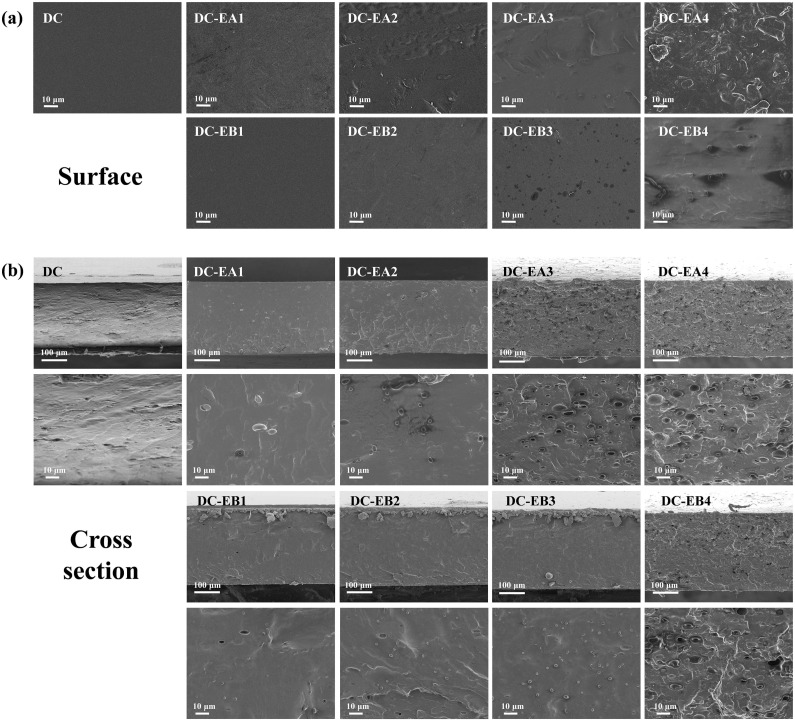
Fig. 6. SEM images of the surface (a) and cross-sectional (b) morphologies of the different films.
Differences were also evident in the cross-sections (Fig. 6(b)). The EA series displayed circular or elliptical cavities, whereas DC-EB2 and DC-EB3 exhibited more uniformly dispersed particulate features. This difference suggests that droplets derived from CP-3 were more stably embedded in the DC matrix, which may have enabled them to better preserve their original morphology after fracture, which is consistent with the stronger elastic response of DC-EB3. By comparison, the CP-2 system showed lower resistance to interfacial deformation and was more easily dragged by the surrounding film matrix during shrinkage and vacuum treatment, so the droplets were more likely to flatten, collapse, and leave pore-like cavities in the cross-section (Wu et al., 2025; Xiong et al., 2025). With increasing emulsion loading, partial droplet interconnection became more evident, and sectional uniformity decreased. This change was most apparent in DC-EB4, where the higher droplet population resulted in closer inter-droplet spacing, local crowding and larger pore-like defects. Several cavities also appeared partially connected, suggesting that excessive emulsion incorporation weakened the continuity of the DC matrix.
The film appearance, optical transmittance, and WCA are summarised in Fig. 7(a). The DC film was transparent and smooth, with the background clearly visible. Emulsion incorporation increased haze and reduced background clarity, especially in DC-EA4 and DC-EB4, but no surface brightening from oil exudation was observed. Meanwhile, the WCA of the EA series decreased continuously as the E-CP-2 loading increased, suggesting that droplet-induced surface undulation and roughness were progressively enhanced. This surface disruption may have weakened the continuity of the original matrix and exposed more hydrophilic PGA-rich interfacial regions (Daizy et al., 2025; Shi et al., 2023). Conversely, the EB series did not change monotonically. DC-EB1 and DC-EB2 were both lower than DC, whereas DC-EB3 increased to 91.1° and remained higher than the EA films at the same loading (76.7°). This large difference at 15% loading may reflect a more favourable balance between PGA mediated interfacial regulation and ChNC anchoring in E-CP-3, which could have promoted better compatibility with the base film, more uniform droplet dispersion, reduced exposure of PGA-rich hydrophilic interfacial regions, and better preservation of surface continuity. At higher emulsion loadings, droplet crowding increased macroscopic roughness, and the WCA of both the EB series (80.5°) and the EA series (74.5°) decreased.
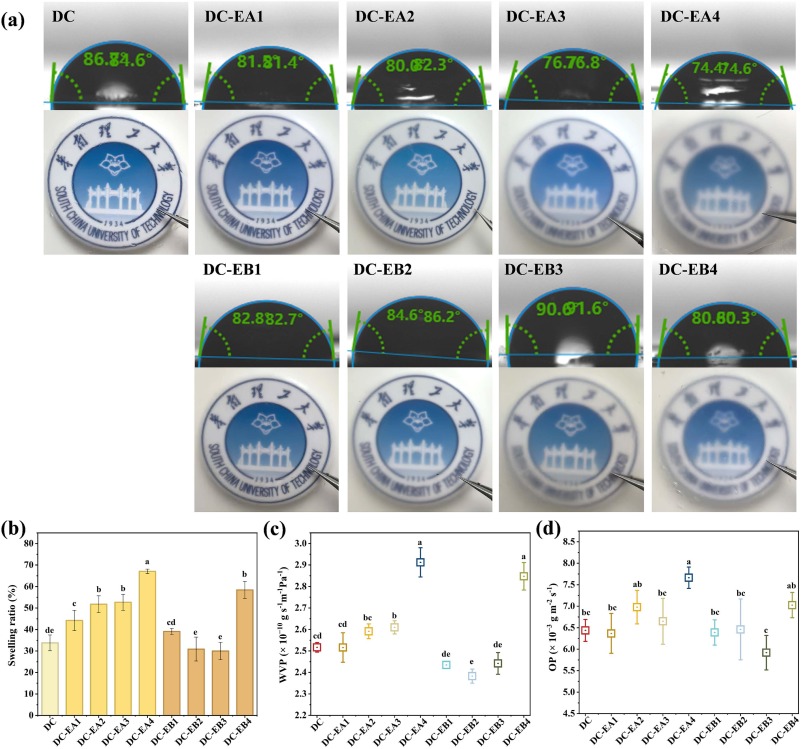
Fig. 7. Water contact angle, optical images (a), swelling ratio (b), water vapour permeability (c), and oxygen permeability (d) of the different films. Data in (b–d) are presented as mean ± SD (n = 3). Different letters indicate significant differences (p < 0.05) based on one-way ANOVA followed by Duncan's multiple range test.
Changes in water uptake and WVP were governed primarily by the integrity and uniformity of the internal network rather than by surface hydrophilic groups. In the EA series, increasing emulsion loading led to concurrent rises in SR and WVP, with DC-EA4 reaching 67.11 ± 1.02% and 2.91 × 10⁻¹⁰ g·s−1·m−1·Pa−1 (Fig. 7(b, c)), suggesting that excessive emulsion incorporation may have disrupted the dense “cement–mortar” architecture during film formation and produced a looser, microporous hydrophilic network that promoted water absorption and vapour diffusion. This tendency was already apparent at the intermediate loadings, where DC-EA2 and DC-EA3 showed relatively high SR values of 51.78% and 52.67%, respectively, together with elevated WVP values. In comparison, the nonmonotonic variation of SR and WVP in the EB series likely arose from the combined effects of dosage, interfacial stability, and emulsion-matrix interactions associated with E-CP-3. EB films at moderate loadings, particularly DC-EB3, presented lower swelling and permeability (30.00 ± 4.00% and 2.44 × 10⁻¹⁰ g·s-1·m-1·Pa-1). Consistent with the WCA results discussed above, the contrast between the EA and EB series at medium loading further indicates that E-CP-2 more readily disturbed the matrix, whereas E-CP-3 was better accommodated within the DC network without forming continuous water-transport defects. DC-EB3 showed significantly lower WVP than DC-EA4 and DC-EB4 (p < 0.05), while no significant difference was observed between DC-EB3 and DC (p = 0.067). This may be associated with the more uniform dispersion of E-CP-3 in the DC matrix and the likely presence of a soft-hard interfacial organisation, which may have promoted the formation of denser and more tortuous diffusion pathways (Meng et al., 2025). In general, the combination of moderate surface wettability, low water absorption and swelling, and balanced moisture regulation in packaging materials depends mainly on internal compactness, which helps reduce moisture loss from produce without causing excessive water vapour retention inside the package during storage (Ding et al., 2024; Lou et al., 2025).
The OP reflects internal defects and changes in oxygen diffusion pathways. As shown in Fig. 7(d), DC exhibited an OP of 6.44 × 10⁻³ g m−2 s−1. In the EA series, DC-EA2, DC-EA3, and DC-EA4 increased relative to DC by 8.4%, 3.3% and 19.0%, respectively, among which the increase in DC-EA4 was significant compared with DC (p = 0.002), whereas the changes in DC-EA2 and DC-EA3 were not significant (p = 0.134 and 0.547, respectively). This indicates that E-CP-2 provided limited improvement in oxygen barrier performance and, at high loadings, tended to disrupt network continuity and facilitate oxygen transport (7.66 × 10⁻³ g m−2 s−1). DC-EB1 and DC-EB2 were comparable to DC, whereas DC-EB3 decreased to the lowest value of 5.92 × 10⁻³ g m−2 s−1, 8.1% lower than DC, although this difference was not significant (p = 0.151). Notably, DC-EB3 showed significantly lower OP than DC-EA3 (p = 0.049), DC-EA4 (p < 0.001) and DC-EB4 (p = 0.005). This further supports the interpretation that, at an appropriate loading level, the more favourable interfacial balance hypothesised for E-CP-3 may have helped maintain network compactness more effectively than E-CP-2, whereas droplet crowding or uneven distribution weakened this advantage. In summary, OP followed a trend broadly consistent with WVP, with the EB series outperforming the EA series and moderate loadings outperforming excessive loadings.
Fig. 8(a) presents the FTIR spectra of the films. Emulsion incorporation did not markedly alter the general spectral profile, but an absorption band appeared at approximately 1740–1750 cm−1 and gradually intensified with increasing emulsion loading, reflecting the increased content of ester-containing components in the films and supporting the incorporation of the PGA-ChNC stabilised Pickering emulsions. In addition, the chemical environment of alginate -COO− was altered. Relative to DC, the asymmetric and symmetric -COO− bands gradually shifted after emulsion incorporation, reaching 1601.6 cm−1 and 1407.8 cm−1 for DC-EA3, and further to 1602.1 cm−1 and 1410.2 cm−1 for DC-EB3. This suggests that components associated with the emulsion interface, together with free PGA, may have altered the distribution of bound water around -COO− groups and rebalanced the local environment within the crosslinked network, thereby affecting the asymmetric and symmetric stretching of -COO− and causing a slight blue shift (Kim et al., 2025). Meanwhile, the 3000–3600 cm−1 region also exhibited enhanced intensity with a slight shift to higher wavenumbers, consistent with hydrogen bond rearrangement and strengthening induced by the film matrix and the emulsion interfacial layer, together with a reduction in free OH stretching.
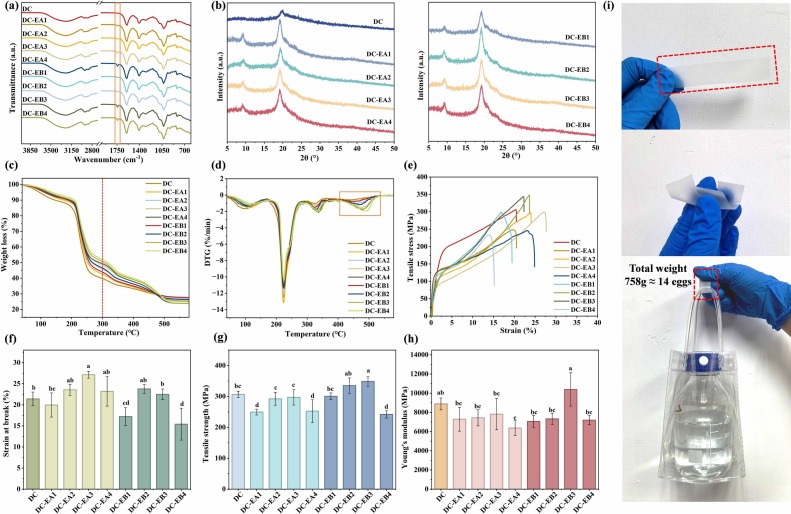
Fig. 8. FTIR spectra (a), XRD patterns (b), heat weight loss curves (c), DTG curves (d), stress-strain curves (e), tensile strength (f), elongation at break (g), and Young's modulus (h) of the different film samples; deformation images of the DC-EB3 film under folding and twisting (i). Data in (f–h) are presented as mean ± SD (n = 3). Different letters indicate significant differences (p < 0.05) based on one-way ANOVA followed by Duncan's multiple range test.
XRD analysis was performed on DC and the films modified with the different emulsions (Fig. 8(b)). DC displayed only a broad and weak diffuse peak near 2θ ≈ 20°, suggesting a predominantly amorphous structure. After emulsion incorporation, the diffraction peaks of all loaded films near 9–10° and 19–20° became markedly stronger, and these positions correspond to the characteristic diffraction signals of the crystalline domains of ChNCs. This change may be related to the greater crystalline contribution of ChNCs introduced by the emulsions (Sun et al., 2025). In addition, the emulsion interfacial components may also exert a positive effect on the local arrangement of matrix chains during film formation. Compared with the EA series, the EB series showed a sharper and more concentrated main peak near 19–20°, which was probably associated with the more balanced contribution of flexible PGA and rigid ChNCs at the E-CP-3 interface. This interfacial organisation was likely to favour more uniform dispersion within the film-forming matrix and cause less disruption to the local ordered packing of the original network. This is consistent with the more uniform cross-sectional morphology described above (Fig. 6(b)). In comparison, although the EA series also showed enhanced peaks, peak broadening was observed at higher loading levels, which was related to the higher content of soft PGA components in the E-CP-2 interface. As amorphous flexible chains, PGA contributes little to crystalline diffraction. At high loading levels, these flexible amorphous domains may dilute or partially mask the diffraction signals associated with ChNC crystalline regions and disturb the local packing of the original network, thereby resulting in broader peak profiles.
The TG and DTG curves of the films are shown in Fig. 8(c, d). The mass loss at 50–150 °C mainly corresponds to evaporation of free and partially bound water, whereas the strongest DTG peak at about 180–250 °C represents the principal degradation stage, involving dehydration of the polysaccharide matrix and initial main chain cleavage (Nguyen et al., 2022; Zhang et al., 2025). Compared with DC at 222.82 °C, the main DTG peak of the emulsion-loaded films shifted slightly to a higher temperature, reaching 223.55 °C for DC-EA1, 223.35 °C for DC-EB1, 223.56 °C for DC-EA3, and 224.62 °C for DC-EB3. This suggests that emulsion incorporation did not alter the basic degradation pathway, but slightly delayed the main decomposition process. The difference between the EA and EB series was relatively small at low loading levels. However, at the moderate loading level, DC-EB3 showed a higher main DTG peak temperature than DC-EA3. This may be associated with the more balanced interfacial organisation proposed for E-CP-3, which could favour more uniform embedding of the emulsion droplets within the film matrix, reducing interfacial voids, and thus causing less disruption to the film network during heating. Near 450 °C, DC showed almost no distinct DTG peak, whereas the emulsion-loaded films exhibited a weak additional peak, more evident at high loadings, suggesting extra high temperature decomposition steps, possibly from the oil phase and eugenol, in agreement with the findings of Li et al. (2024). At 580 °C, DC (27.57%) and the low loading groups retained relatively high residues, while the high loading films, especially EA4 (23.84%) and EB4 (24.03%), displayed lower residues. At the moderate loading level, DC-EB3 also retained slightly more residue than DC-EA3 (25.47%, 24.95%). Overall, the thermal behaviour of the emulsion-loaded films was jointly affected by interfacial compatibility and emulsion loading. Appropriate E-CP-3 incorporation was more favourable for preserving network compactness during heating, thereby delaying mass loss at intermediate temperatures, whereas excessive emulsion loading introduced more oil-rich domains, weakened the continuous film matrix and reduced the char-forming fraction at high temperature.
The mechanical properties of the composite films were governed by the distribution of the emulsions in the base dispersion and their interactions with the matrix. As observed in Fig. 8 and Table 2, the cement–mortar type base film exhibited high strength and rigidity, with a TS of 306.27 MPa and an E of 8888.82 MPa. Although emulsions as soft dispersed phases would typically be expected to reduce the initial rigidity of the film matrix, the EA and EB series exhibited distinctly different mechanical responses (Hou et al., 2024). The EA series tended to reduce rigidity while improving extensibility. Relative to DC, the E of DC-EA1 to DC-EA4 decreased by about 18.0%, 16.3%, 12.0% and 28.4%, respectively, while the ε of DC-EA2 and DC-EA3 increased to 23.56% (p = 0.263) and 27.15% (p = 0.006). This is attributable to the higher level of free PGA and the softer interface in the E-CP-2 system, which exerted a plasticising effect on the film matrix and facilitated chain slippage under stress. By contrast, the TS and E of DC-EA4 decreased by about 17.6% (252.44 MPa, p = 0.004) and 28.4% (6367.98 MPa, p = 0.009) relative to DC, showing that excessive E-CP-2 disrupted network continuity, generated larger defects, and markedly weakened the original rigid support.
Table 2. TS, ԑ, and E of each composite film sample.
| Sample code | TS (MPa) | ε (%) | E (MPa) |
|---|---|---|---|
| DC | 306.27 ± 10.25bc | 21.41 ± 1.63b | 8888.82 ± 620.31ab |
| DC-EA1 | 249.34 ± 9.44d | 19.97 ± 2.85bc | 7292.94 ± 1246.27bc |
| DC-EA2 | 292.22 ± 20.69c | 23.56 ± 1.34ab | 7437.42 ± 841.38bc |
| DC-EA3 | 296.91 ± 24.74c | 27.15 ± 0.81a | 7820.50 ± 1630.97bc |
| DC-EA4 | 252.44 ± 36.70d | 23.19 ± 3.49ab | 6367.98 ± 773.34c |
| DC-EB1 | 300.51 ± 10.92bc | 17.22 ± 2.11cd | 7061.20 ± 630.34bc |
| DC-EB2 | 335.09 ± 24.78ab | 23.79 ± 1.03ab | 7329.57 ± 585.55bc |
| DC-EB3 | 348.32 ± 15.34a | 22.49 ± 1.27b | 10,393.84 ± 1739.99a |
| DC-EB4 | 241.82 ± 11.78d | 15.41 ± 3.77d | 7193.14 ± 475.57bc |
Data are presented as mean ± SD (n = 3). Different superscript letters within the same column indicate significant differences (p < 0.05) based on one-way ANOVA followed by Duncan's multiple range test.
The EB series exhibited better interfacial synergy. At low loading, E-CP-3 largely preserved the strength of the base film, with the TS of EB1 (300.51 MPa) remaining close to that of DC, although ε decreased to 17.22% (p = 0.037), revealing that the toughening effect had not yet emerged. With increasing loading, DC-EB2 and DC-EB3 showed further mechanical improvement, reaching TS values of 335.09 MPa (p = 0.098) and 348.31 MPa (p = 0.020), while the ε increased by about 11.1% (p = 0.218) and 5% (p = 0.569) relative to DC. The DC-EB3 film remained intact after folding and twisting, with no obvious marks, and could lift a weight of more than 700 g using only a very small area (Fig. 8(i)). In contrast to the EA series, where the softer E-CP-2 interface mainly promoted matrix mobility and extensibility, the EB series benefited from the combined action of free PGA and PGA-ChNC complexes in E-CP-3. This interfacial arrangement may favour more stable droplet accommodation within the dendritic colloid network, allowing more uniform emulsion dispersion, lower stress concentration and better preservation of framework continuity. This may explain why the high strength bio-based film largely retained its original strength without a marked loss of extensibility. This positive effect had a loading limit. When the E-CP-3 content increased to 20%, the higher droplet density reduced the matrix space available around each droplet, and local emulsion-rich regions were more likely to form. As shown in the cross-sectional SEM images, DC-EB4 contained more voids and partially connected cavities than DC-EB3 (Fig. 6), suggesting less uniform droplet accommodation at excessive loading. These interfacial defects weakened local stress transfer and provided weak points for crack initiation, explaining the abrupt decrease in TS of DC-EB4. On the whole, the network of the ultra-strong green bio-based film reported in our previous work, with stiffness provided by ChNCs and extensibility by dendritic colloids, served as the structural basis for emulsion incorporation, whereas the further mechanical changes of the films were determined by emulsion dispersion, interfacial structure, and interactions with the base matrix (Zhang et al., 2026).
The apparent release behaviour of eugenol from the films is shown in Fig. 9. All samples displayed marked release during the early storage period, followed by a gradual decrease in release rate, indicating a transition from readily available eugenol loss to a slower apparent release stage. DC-EB4 showed the most rapid apparent eugenol release, reaching 50.27% within 24 h and 75.68% after 168 h, with only a further increase of approximately 6% after 72 h. This suggests that the high emulsion loading and reduced film-network continuity may have promoted the rapid initial loss of eugenol. The subsequent slowing may reflect depletion of readily available eugenol and evolving partitioning between the film and the confined headspace. DC-EA3 showed an intermediate release level. By contrast, DC-EB3 exhibited the most restrained release, reaching only 35.28% at 72 h and 54.93% at 168 h. This contrast indicates that eugenol release was regulated not simply by emulsion dosage, but also potentially by the proposed interfacial organisation of the encapsulated droplets discussed above.
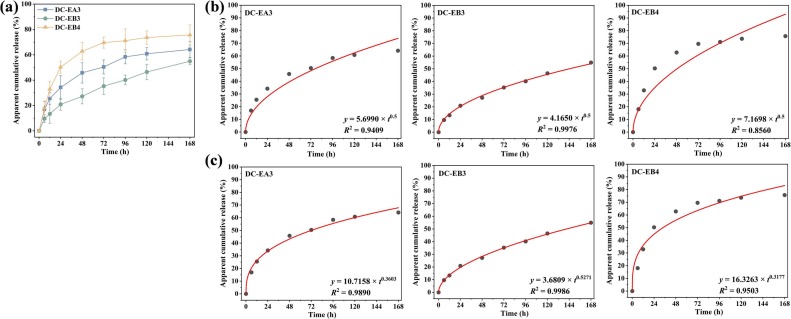
Fig. 9. Apparent cumulative release profiles of eugenol from DC-EA3, DC-EB3 and DC-EB4 films (a); empirical fitting with the Higuchi Eq. (b); and empirical power-law fitting using the Ritger–Peppas Eq. (c). Data in (a) are presented as mean ± SD (n = 3).
Kinetic fitting was further used to compare the apparent release profiles among formulations. Under ideal sink conditions, the Higuchi model describes matrix release as being proportional to the square root of time. This equation fitted the apparent release data for DC-EB3 particularly well, yielding the lowest fitted coefficient (k = 4.1650) and the highest R2 value (0.9976). In contrast, DC-EA3 and DC-EB4 showed higher Higuchi k values, consistent with faster apparent release. The poorer Higuchi fitting of DC-EB4 (R2 = 0.8560) was consistent with a less regular release profile, likely associated with droplet crowding and partial disruption of the film network. Because the present sealed humid system has a finite volume and operates under non-sink conditions, and eugenol release involves vapour-phase partitioning, the Higuchi equation was used only for empirical comparison among formulations rather than as mechanistic evidence of diffusion-controlled release. The Ritger–Peppas equation was likewise used as an empirical power-law description of the measured profiles. DC-EB3 exhibited a higher fitted n value (0.5271) than DC-EA3 (0.3603) and DC-EB4 (0.3177), consistent with its less front-loaded and more sustained apparent eugenol loss in Fig. 9(a). Thus, the exponent helped distinguish the temporal profiles of the formulations, although it was not used to assign a specific transport mechanism under the present non-sink conditions. First-order or Weibull models may also be considered in future work to describe release in a confined headspace. Overall, DC-EB3 showed a more gradual apparent release profile than DC-EA3 and DC-EB4 and continued to release eugenol throughout 168 h without reaching a clear plateau, providing a more suitable basis for maintaining antimicrobial efficacy while potentially limiting high early eugenol exposure during storage.
For fruit and vegetable packaging, the antioxidant capacity of the film is beneficial for scavenging free radicals within the system and thereby retarding colour deterioration and loss of active components. As presented in Fig. 10(a), the pure DC matrix exhibited a low DPPH radical scavenging rate and thus only weak intrinsic antioxidant activity. However, even a low level of emulsion addition markedly improved the antioxidant capacity, revealing that the enhancement mainly originated from eugenol-loaded in the emulsion. The DPPH scavenging rate also depended on emulsion loading, increasing in the EA series from 23.15% for EA1 to 85.62% for EA4, and in the EB series from 29.46% for EB1 to 87.49% for EB4. These results show that emulsion incorporation effectively imparted antioxidant functionality to the films, with the high loading groups showing the most marked effect, highlighting the potential of this system to inhibit oxidative deterioration during fruit and vegetable storage.
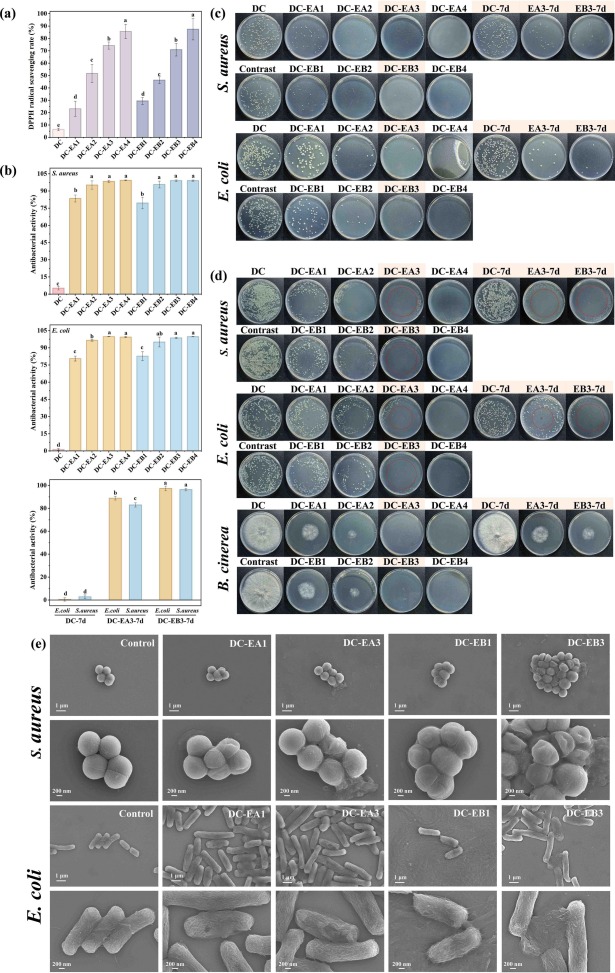
Fig. 10. DPPH radical scavenging activity (a), inhibition rates against E. coli and S. aureus, and inhibition rates after 7 d of the individual films (b); contact antibacterial activity (c), vapour phase antibacterial activity (d), and SEM images of the bacteria before and after treatment (e) for the individual composite films. Data in (a) and (b) are presented as mean ± SD (n = 3). Different letters indicate significant differences (p < 0.05) based on one-way ANOVA followed by Duncan's multiple range test.
The antimicrobial performance of packaging films is critical for reducing the risk of microbial contamination during fruit and vegetable storage. Fig. 10(b, c) show the antibacterial activity of DC and the emulsion-loaded films against E. coli and S. aureus, expressed as inhibition rates based on viable colony counts. The DC film exhibited almost no intrinsic antibacterial activity, whereas emulsion incorporation markedly enhanced the antibacterial effect in a loading-dependent manner. For E. coli, both the EA and EB series exceeded 98% inhibition at 15% loading, while DC-EA3 and DC-EB3 reached 98.3% and 99.0% inhibition against S. aureus, respectively. This strong activity is attributed to eugenol, whose lipophilic nature enables disruption of the cell membrane, leakage of intracellular components, and interference with normal bacterial metabolism (Li et al., 2025; Wang et al., 2023). SEM images displayed that 5% emulsion already caused slight shrinkage and surface depression in some originally smooth bacteria, whereas 15% loading led to more obvious collapse and leakage of intracellular contents in both strains (Fig. 10(e)). At the same loading, the difference between the EA and EB series was not pronounced. However, after 7 d of storage, DC-EA3-7d and DC-EB3-7d still presented inhibition rates of 88.9% and 97.3% against E. coli, with corresponding values of 83.0% and 96.3% against S. aureus, showing that DC-EB3 still retained stronger antibacterial activity against both strains after storage, consistent with the higher encapsulation stability and retention of the E-CP-3 system. This suggests that antibacterial activity of the films is governed primarily by the amount of incorporated eugenol, while the emulsion interfacial structure further regulates its release rate, with a more stable interface favouring more sustained release.
The vapour phase antimicrobial assay further supported this result. As shown in Fig. 10(d), the inhibition zone increased progressively with increasing emulsion loading under the inverted culture condition with the film attached to the lid. Clear inhibition zones were already observed for DC-EA2 and DC-EB2, whereas DC-EA4 and DC-EB4 exhibited the strongest volatile antibacterial activity. A similar trend was found in the fungal assay. DC showed almost no inhibition of Botrytis cinerea colony expansion, while emulsion-loaded films markedly reduced colony diameter. After 7 d of storage, DC-EB3 still maintained clear inhibitory effects against both bacteria and mould, although weaker than those of the freshly prepared film, and remained significantly more effective than DC-EA3. This further suggests that the more stable interfacial organisation likely present in E-CP-3 contributed to slower eugenol release and lower additional volatilisation loss, thereby helping the film retain antibacterial activity after 7 d. Eugenol can inhibit bacterial growth not only by direct contact, but also through vapour phase antibacterial and antifungal action within the package headspace, which is of practical significance for suppressing spoilage during fruit and vegetable storage.
Broccoli and strawberries were used as models of vegetables prone to yellowing and fruits susceptible to water loss and mould decay, respectively. After 7 d of storage, the DC broccoli displayed 16.15% weight loss, while chlorophyll and ascorbic acid decreased to 0.24 g kg−1 and 38.64 mg 100 g−1. In contrast, DC-EA3 and DC-EB3 reduced weight loss to 8.51% and 8.23%, respectively, with DC-EB3 also showing the highest ascorbic acid content (58.89 mg 100 g−1) and a relatively high chlorophyll level (0.45 g kg−1), indicating that moderate emulsion loading was more effective in suppressing water loss and delaying yellowing. Although DC-EA4 and DC-EB4 retained the highest chlorophyll contents (0.47 and 0.48 g kg−1), their weight loss increased to 12.03% and 12.04%, and their appearance became darker green, whereas the DC group mainly exhibited uniform yellowing without obvious blackening (Fig. 11(a, c)). Although a higher loading could further retard chlorophyll degradation, it did not lead to a concomitant improvement in the overall quality of broccoli. The eugenol release profiles showed that, compared with DC-EB3, DC-EB4 exhibited a more pronounced initial release behaviour and a higher cumulative release, whereas DC-EB3 displayed a more gradual and sustained release pattern (Fig. 9). As discussed above, under a moderate emulsion loading, the emulsion droplets could be relatively uniformly embedded within the DCSA network, enabling sustained eugenol release while maintaining a comparatively continuous barrier structure against water vapour and oxygen. In contrast, excessive emulsion incorporation promoted droplet aggregation and reduced matrix continuity, thereby altering the mass-transfer behaviour of the film and partially compromising its ability to regulate water loss in broccoli. In addition, locally enriched emulsion domains may have facilitated the rapid volatilisation of eugenol at specific sites, exposing the broccoli surface to a relatively high eugenol microenvironment. As a volatile phenolic active compound, excessive eugenol has been reported to disturb membrane integrity in plant tissues and induce surface stress and oxidative responses (Amiri et al., 2008). For broccoli, the dark-green discolouration observed in DC-EA4 and DC-EB4 may therefore be closely related to moisture loss, tissue damage under high eugenol exposure, and phenolic oxidation.
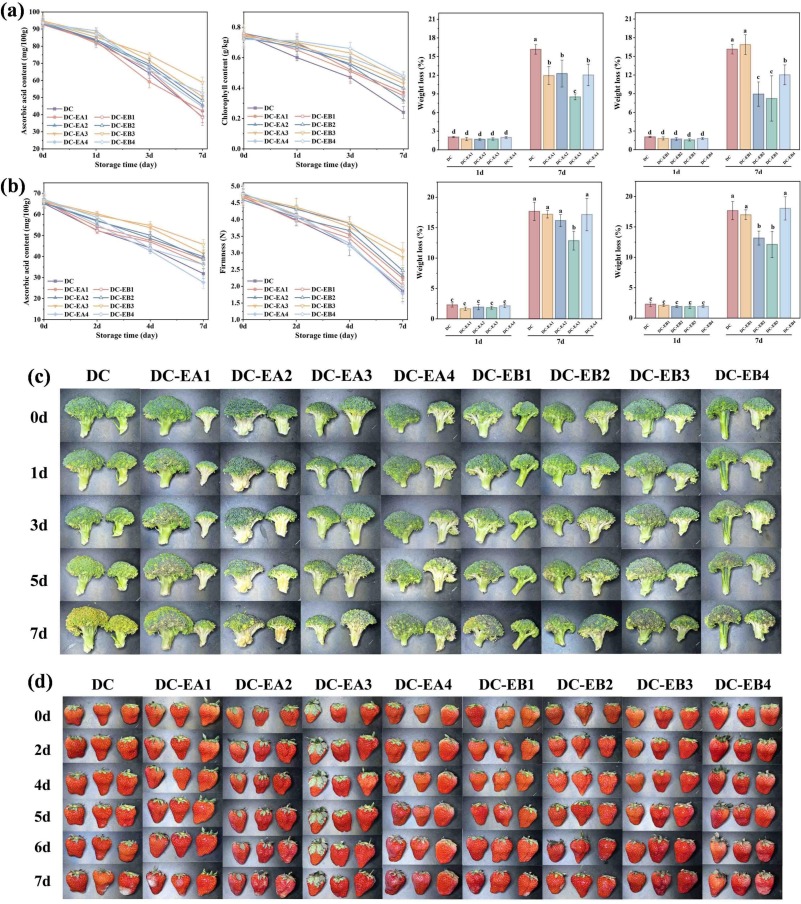
Fig. 11. Changes in ascorbic acid content, chlorophyll content, and weight loss of broccoli after treatment with different films (a), and images showing the preservation effect during storage (c); changes in ascorbic acid content, firmness, and weight loss of strawberries (b), and images showing the preservation effect during storage (d). Data for ascorbic acid content, chlorophyll content, and weight loss are presented as mean ± SD (n = 3), while firmness data are presented as mean ± SD (n = 8). Different letters indicate significant differences (p < 0.05) based on one-way ANOVA followed by Duncan's multiple range test.
For the strawberry, the DC group showed 17.68% weight loss after 7 d, while firmness and ascorbic acid decreased to 1.86 N and 31.84 mg 100 g−1. In comparison, DC-EA3 and EB3 reduced weight loss to 12.86% and 12.12%, maintained firmness at 2.87 N and 3.06 N, and kept ascorbic acid above 40 mg 100 g−1, all markedly better than DC. Consistently, severe mould growth and soft collapse were observed in DC and EA1 at later storage stages, whereas DC-EA4 and EB4 inhibited decay to some extent but displayed a more uneven red colour than DC-EA3 and EB3, together with sepal shrinkage and obvious softening (Fig. 11(b, d)). Strawberries have a soft epidermal structure and high water content, making them more sensitive to environmental changes. Although higher eugenol exposure can help inhibit mould growth, excessive volatile phenolics may exceed the tolerance of strawberry surface tissues, leading to reduced anthocyanin stability, phenolic oxidation, and electrolyte leakage from fruits and leaves (Pham et al., 2026). This phenomenon further suggests that the preservation performance of eugenol-loaded films is governed by the combined effects of film structural homogeneity, barrier and mass-transfer properties, eugenol release behaviour, and the tolerance of fruit and vegetable tissues.
The additional control groups further clarified the relative contributions of film coverage, emulsion structure and eugenol activity (Fig. 12). UP showed the most rapid deterioration, with marked broccoli yellowing and severe mould development in strawberries. PE wrap effectively suppressed water loss, but this did not translate into better overall quality. In broccoli, DC-EB3 showed comparable water loss control to PE, while retaining 54.5% more chlorophyll and 49.5% more ascorbic acid after 7 d, consistent with the delayed yellowing observed in the images. In strawberries, although PE gave lower weight loss than DC-EB3, its firmness was much lower, whereas DC-EB3 maintained 64.6% higher firmness and 13.2% higher ascorbic acid content. This suggests that the highly humid microenvironment formed inside PE packaging reduced dehydration but favoured tissue softening and visible mould growth. DC-BE provided only partial protection, indicating that emulsion induced regulation of water vapour and gas transfer contributed to preservation but was insufficient on its own. By contrast, DC-FE retained part of the nutritional quality, but obvious phase separation and oil phase exudation were observed in the film. Such heterogeneous free eugenol distribution was consistent with rapid initial release and localised eugenol rich exposure, which may explain the less favourable appearance and softening of the packaged produce. While the DC-FE group provided a useful reference for the behaviour of free eugenol during preservation, these results did not permit a direct comparison of the antibacterial potency of free and encapsulated eugenol under in vitro conditions. Future studies incorporating a free eugenol control under otherwise identical in vitro conditions would help clarify the contribution of encapsulation to antibacterial performance.
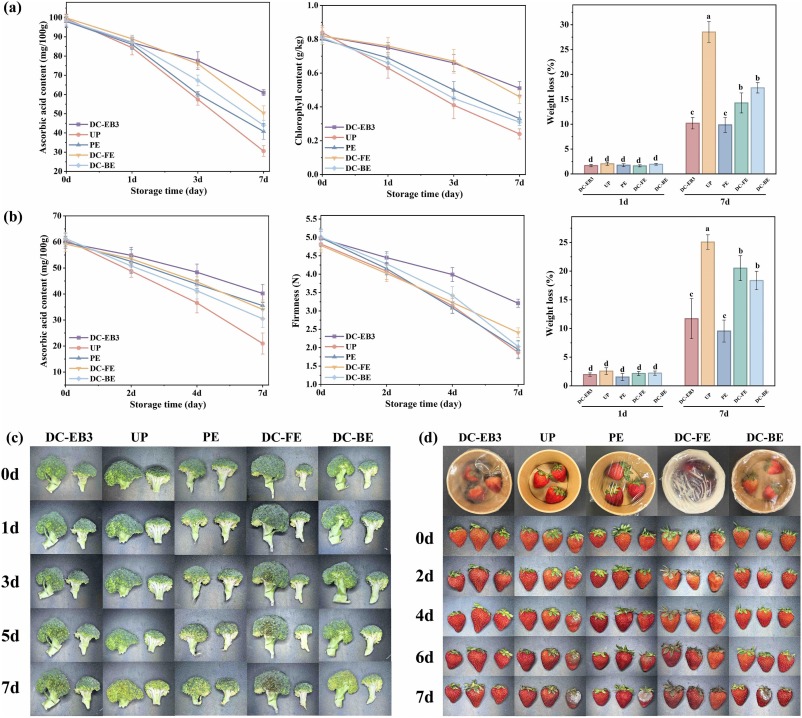
Fig. 12. Changes in ascorbic acid content, chlorophyll content and weight loss of broccoli treated with DC-EB3 and different control films during storage (a), and corresponding visual appearance of broccoli (c); changes in ascorbic acid content, firmness and weight loss of strawberries treated with DC-EB3 and different control films during storage (b), and corresponding visual appearance of strawberries (d). Data for ascorbic acid content, chlorophyll content, and weight loss are presented as mean ± SD (n = 3), while firmness data are presented as mean ± SD (n = 8). Different letters indicate significant differences (p < 0.05) based on one-way ANOVA followed by Duncan's multiple range test.
A 15% E-CP-3 loading provided an appropriate level of eugenol release and antimicrobial activity while maintaining a more intact and homogeneous film network, thereby better preserving moisture, delaying nutrient loss and maintaining the visual quality of broccoli and strawberries. From a practical perspective, the lower apparent cumulative release of DC-EB3 than DC-EB4 after 168 h indicates a more controlled release profile, which may help limit excessive odour accumulation and potential food-contact exposure while maintaining preservation efficacy. The estimated cumulative eugenol release should be regarded only as a theoretical upper bound for potential exposure, since only a fraction of the volatilised eugenol is expected to deposit on the produce surface and contribute to actual intake. Accordingly, the present release data provide only preliminary exposure-related information and are insufficient to establish food-contact safety or regulatory compliance. Further formal migration testing, such as studies using appropriate food simulants in accordance with relevant EU and U.S. FDA regulations and guidance for food-contact materials, will be required for regulatory assessment, while sensory evaluation is also needed to further establish practical applicability. These results indicate that an appropriate loading window, rather than maximum eugenol incorporation, is essential for balancing antimicrobial activity, produce quality maintenance and practical application acceptability.
In this study, eugenol-loaded Pickering emulsions with tunable interfacial characteristics were constructed from ChNCs and PGA, and subsequently incorporated into a SA-based dendritic colloid-ChNC composite film-forming system to fabricate active films derived from marine biomass. The results supported the likely formation of a soft-hard interfacial organisation between ChNCs and PGA with pronounced interfacial complementarity, which was associated with improved eugenol encapsulation and retention, as well as more favourable emulsion dispersion and interfacial compatibility within the preestablished cement–mortar matrix network. In particular, representative emulsions stabilised at intermediate ChNC-PGA ratios exhibited the highest encapsulation efficiencies, reaching 88.4% and 84.6%, and retained more than 80% of eugenol after 14 d, consistent with a protective effect of the interfacial design. Benefiting from this interfacial regulation, the resulting films achieved an improved balance between physicochemical performance and sustained bioactivity, and the optimized formulation exhibited suitable oxygen permeability while still maintaining strong contact antibacterial activity after 7 d, with inhibition rates of 97.3% against Escherichia coli and 96.3% against Staphylococcus aureus. In preservation tests, it reduced broccoli weight loss from 16.2% to 8.2% and better preserved strawberry firmness, demonstrating clear advantages in maintaining postharvest quality. Overall, this work indicates that regulation of emulsion interfacial properties through the proposed ChNC-PGA soft-hard interfacial organisation may represent an effective strategy for simultaneously improving eugenol protection, film performance, and preservation functionality, thus providing a feasible route towards high-performance marine biomass-based active packaging for fruit and vegetable preservation.
Xijia Zhang: Writing – original draft, Investigation, Formal analysis. Hongbin Pu: Validation, Resources, Funding acquisition. Da-Wen Sun: Writing – review & editing, Supervision, Resources, Funding acquisition.
来源 查看原文
版权申明 本网站立足国家海洋药物和生物制品产业联盟,致力于打造海洋生物医药“产学研用”一站式、综合性资讯共享服务平台,促进我国海洋药物和功能制品“资源链、科技链、产业链、应用链”协同创新、深度融合发展。本文转载自原文来源。版权归原作者及原来出处所有,部分文章未能联系到原作者,在此深表歉意。如涉及版权问题,请留言联系我们协商处理(邮箱:czhang@tio.org.cn),侵权内容将即刻删除。
免责声明 本文仅代表作者个人观点,与本平台立场无关。本站不对内容真实性、完整性、时效性作保证,仅供参考,请读者自行核实。