NATIONAL INDUSTRY ALLIANCE FOR MARINE DRUGS AND BIOPRODUCTS
In the current context of global warming and other ecological concerns, public awareness of environmental issues has increased and consumers have turned their interest towards “green”, healthy, and chemical-free products [1]. Moreover, a growing concern for overall personal health and wellness, as well as an increased awareness of harmful chemicals in everyday products, is driving the global market towards organic ingredients, encouraging private and public investments into the use of natural ingredients that have the potential, and public perception, of being sustainable [2]. Along with this demand, policies such as those from the European Commission and the Blue Bioeconomy Forum, as well as international guidelines, are supporting industry and other stakeholders towards the achievement of the Sustainable Development Goals outlined by the United Nations [3]. As a result, industries such as the cosmeceutical are incentivized to replace currently utilized ingredients with novel and natural high-value compounds to produce “chemically-clean” beauty products [4]. According to Eurostat, the global annual income from the cosmetic market was estimated at US $170 billion and in 2016 the European cosmetics market was estimated at €77 billion (wholesale rate) [5], [6]. As the demand for new bioactive compounds has increased, research efforts have focused on the discovery of novel sources of such compounds from the marine environment [1]. Algae are a polyphyletic group of photosynthetic organisms characterized by extremely high biodiversity and complex biochemical composition [7], making them ideal candidates to fulfil such purpose [3]. Algae-derived products are already regularly found in cosmeceutical products, and are advertised as a sustainable, natural alternative to synthetic cosmeceutical ingredients [8], [9]. Algae are indeed an excellent source of polysaccharides, proteins, lipids, and a wide variety of secondary metabolites such as phenolic compounds, terpenoids, carotenoids, pigments and nitrogen derivatives which find different uses in cosmetic products [1], [10], [11]. These compounds are the physiological product of algal survival strategies to cope with a wide range of environmental conditions. For instance, algae in rocky shore environments, constantly subject to changing tidal heights, are often exposed to the harsh effects of desiccation and high solar radiation. This results in the production of compounds that are widely exploited for their antioxidant (e.g., MAAs, polysaccharides, phenolic compounds, pigments), hydrating (e.g., agar, carrageenan, laminarin, fucoidan), anti-aging (e.g., polysaccharides, phenolic compounds), anti-inflammatory (e.g., polysaccharides, PUFAs, MAAs, phenolic compounds, pigments, sterols) properties [3], [12], [13].
Algae-derived compounds are typically stored by the algae in their cell cytoplasm or walls [6]. Algal cell wall composition and structure are highly variable across species, ranging from thin walls to complex, multilayered structures, which can complicate the recovery of the targeted algal molecules [5].
This diversity makes it particularly challenging to predict the chemical composition and, consequently, to standardize extraction protocols across this heterogeneous group [14].
Algae-derived products have been incorporated in the cosmetic market as sunscreens, sensitizers, thickening and moisturizing mediums, skin protection against abrasions, and skin tanning [10], [15], [16]. Some of these metabolites are produced by the algae under stressful environmental conditions, and are known to have antimicrobial, antiviral, and antimycotic properties [17], [18], [19].
Algal polysaccharides play an important role in cosmetic preparations as moisturizers and humectants and include agar, carrageenan, alginates, fucoidans, laminarins, and ulvans [20], [21]. These often act as gels in lotions, shampoos, and creams [22]. Thanks to their high water-retention capacity, these macromolecules can form hydrogen bonds with keratin, thereby enhancing skin hydration [23], [24], [25]. In particular, alginate, agar, carrageenan, and fucoidan contribute to regulating water diffusion across the skin [26], [27]. Beyond their functional benefits, these polysaccharides are cost-effective, easy to extract, and abundantly present in algal biomass. [28], [29]. For example, a cosmetic preparation containing 5–10% derivative from Laminaria japonica was reported to improve skin moisture in a study conducted on 25 volunteers [30]. Algal derivatives from Colpomenia, Hydroclathrus, Padina, Turbinaria ornata (Phaeophyceae), Ahnfeltiopsis, Gracilaria, Halymenia, Laurencia, and Polysiphonia (Rhodophyta), are reported to exhibit antioxidant activity [31], [32].
However, while numerous reviews have explored the biochemical potential of algal-derived products for cosmetics [5], [33], [34], [35], [36], [37], [38], there is limited documentation of which species are currently incorporated into commercially available products in Europe. Such knowledge is essential for assessing ecological sustainability and long-term impacts of the industry, especially given that some macroalgal species are slow-growing, habitat-forming, or already under environmental pressure [39], [40], [41].
This study aims to (1) identify algal species utilized in European cosmetic products currently on the market, (2) characterize the product application of the various taxa, and (3) evaluate reported methods of production (wild harvest versus aquaculture) to discuss sustainability implications.
A dataset of European companies that utilize algae-derived ingredients was compiled using the Rubisko Hub (https://gumhub-production.up.railway.app/companies), the platform into which the Phyconomy database was integrated in 2026 [42]. The Rubisko Hub is a freely accessible, publicly available database tracking organizations in the global seaweed industry. The Company Directory was filtered by selecting “Personal care” under the “Applications” field, and by restricting headquarters location to the following available European countries: Austria, Belgium, Denmark, Estonia, France, Germany, Greece, Iceland, Ireland, Italy, Netherlands, Norway, Poland, Portugal, Spain, Sweden, and the UK. Although Iceland, Norway, and the United Kingdom are not European Union member states, they were included due to their significant and well-documented role in the European seaweed industry, particularly in harvesting and aquaculture [80]. The filtered dataset was exported as a CSV file, yielding an initial list of 49 companies.
Each company's official website was systematically reviewed to extract information on their country, founding year, algal species utilized, and production method. The latter was categorized as “wild harvesting”, “aquaculture”, or a combination of both, and recorded only when explicitly disclosed. Species information was retrieved from company websites and product ingredient information, when available. Companies providing information on both algal species and production methods were retained for analyses examining species-specific sourcing patterns. For each species, taxonomic classification (phylum, class, order, family) was recorded. Taxonomic information was retrieved from AlgaeBase [43], a global database of taxonomic and distributional information on algae. Reported algal species were further classified into microalgae and macroalgae and analyzed as distinct groups, reflecting the substantial differences in their ecological role, and cultivation and harvesting practices. This distinction is particularly relevant to sustainability analyses, as macroalgae are predominantly wild-harvested or sea-cultivated, while microalgae in this dataset are exclusively obtained through land-based cultivation [68], [81]. Classification of species as microalgae or macroalgae followed established morphological criteria in the primary literature [7], with AlgaeBase [43] consulted for taxonomic placement. For ambiguous filamentous taxa present in the dataset (e.g. Vertebrata lanosa), species were classified as macroalgae consistent with their treatment in the broader seaweed literature [43].
For the product-level analysis, companies reporting algal species were further screened based on the availability of the INCI or an ingredient list for their cosmetic products. Individual product webpages were examined to obtain information about the cosmetic type (“body care”, “face care”, “make-up”), cosmetic subtype (body care: “body cream”, “body scrub”, “shower gel”, “hair conditioner”, “hand cream”, “shampoo”, “body soap”, “hair lotion”; face care: “eye cream”, “face cleanser”, “face cream”, “face scrub”, “face serum”, “face mask”), claims specifically attributed to the algae species present in the product (e.g., “moisturizing”, “antioxidant”, “softening”), type of algal product (i.e. extract, powder, oil, ferment), International Nomenclature of Cosmetic Ingredients (INCI), price, and quantity of product. Companies lacking species-level disclosure in the INCI were excluded from species-level analyses. Sometimes, only the compound associated with a group of algae (e.g., “fucoidan”, “alginate”) was reported in the INCI. These data were excluded from the species-level analysis. The complete screening and inclusion process is summarized in Fig. 1.
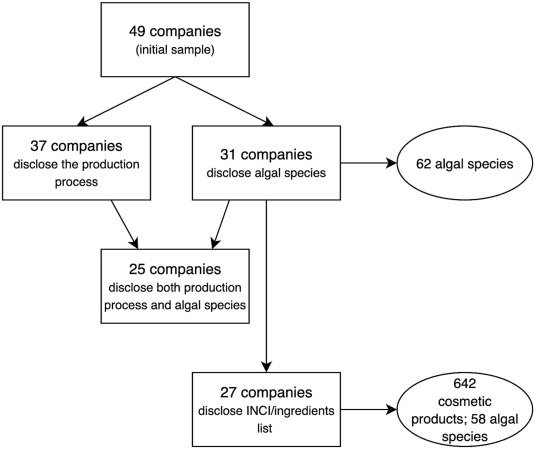
Fig. 1. Flowchart of the screening and inclusion process, from the initial sample of 49 companies identified through the Rubisko Hub to the datasets used in the company-level analysis (62 species) and the product-level analysis (58 species across 642 products).
To investigate whether algal use differed between major cosmetic product categories, we analyzed the product-level dataset reported in Supplementary Table S1. We tested whether algal species composition differed between face-care and body-care products using a Jaccard-based partial distance permutation analysis, conditioning on company by restricting permutations within companies to account for the non-independence of products from the same manufacturer. Homogeneity of multivariate dispersion was assessed using PERMDISP. We also examined whether species richness, defined as the number of algal species per product, differed between face-care and body-care products using a company-adjusted mean difference with statistical significance assessed by within-company permutation testing. The results of these analyses are presented in Section 3.4. Finally, conclusions should be interpreted only in relation to the source data, given that the available sample does not necessarily represent the European cosmetic market.
Of the 49 companies initially identified through the Rubisko Hub (formerly the Phyconomy database) [42], 37 disclosed production methods and 31 reported the algal species used, resulting in the identification of 62 distinct species at the company level. A total of 25 companies provided both types of information and were therefore included in the species-specific analysis of production methods. Among the 31 companies reporting algal species, 27 also provided INCI or ingredient information for their cosmetic products, resulting in a total of 642 products included in the product-level analysis. Across these products, 58 of the 62 species identified at the company level were confirmed in the INCI or ingredient lists. The remaining four species were reported by companies as being utilized but were not identified in the ingredient lists of the analyzed products. Therefore, 62 species refers to the complete set of species identified at the company level, whereas 58 refers specifically to those identified in the 642 cosmetic products and retained for product-level analyses.
Among the 49 identified companies, the largest number of headquarters were located in France (17 companies), followed by Ireland (10), the UK (7), Spain (4), the Netherlands (3), and Norway (2). Denmark, Estonia, Finland, Germany, Iceland, and Portugal were each represented by one company.
Information on the founding year was available for 24 companies. The earliest companies were established in the 1970s, primarily in France (Fig. 2), while the majority of companies were founded more recently, between 2010 and 2020.
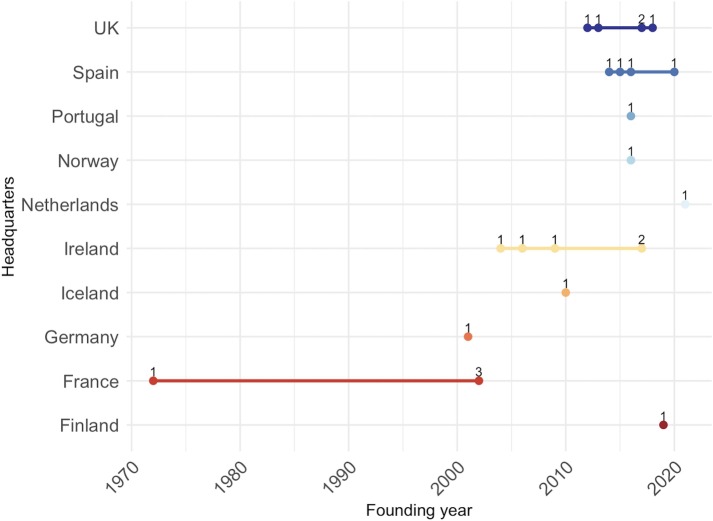
Fig. 2. Companies' founding years by country of headquarters. Numbers indicate the number of companies established at each timeline point.
A total of 31 companies that disclosed species information on their INCI lists were included in the species-specific analyses. The distribution of algal ingredients across taxonomic levels (from phylum to order) is shown (Fig. 3), where node size reflects the frequency of each taxon within the dataset.
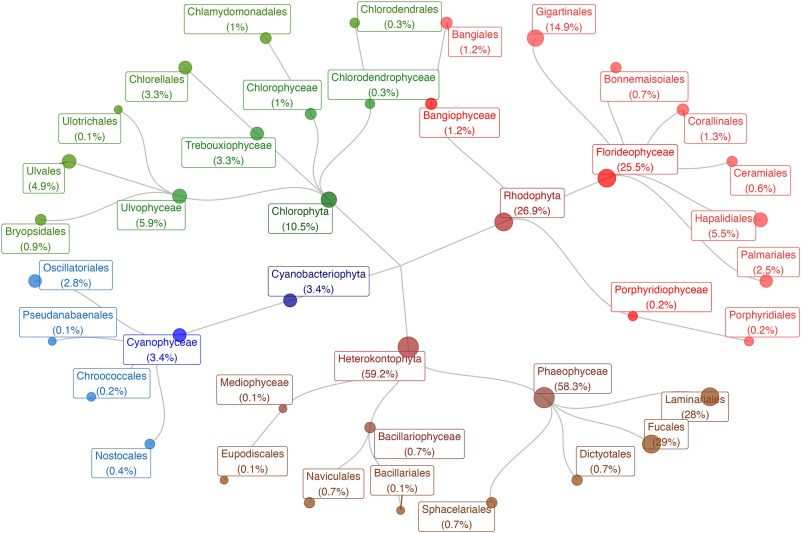
Fig. 3. Taxonomic distribution of algal groups (phylum–order) in the analyzed products, by colour. Blue = Cyanobacteriophyta; Brown = Heterokontophyta; Red = Rhodophyta; Green = Chlorophyta; node size corresponds to frequency (%). (For interpretation of the references to colour in this figure legend, the reader is referred to the web version of this article.)
Overall, 62 distinct algal species were identified. Macroalgae represented the majority of observations (87.1%). At the phylum level, Heterokontophyta (predominantly the class Phaeophyceae) was the most represented group (49.4%), followed by Rhodophyta (31.3%), Chlorophyta (14.2%), and Cyanobacteriophyta (5.2%).
Within macroalgae, the class Phaeophyceae belonging to the Heterokontophyta accounted for 54.7% of occurrences, followed by Rhodophyta (35%) and Chlorophyta (10.3%, Fig. 4). At the class level, Rhodophyta was mainly represented by Florideophyceae (32%).
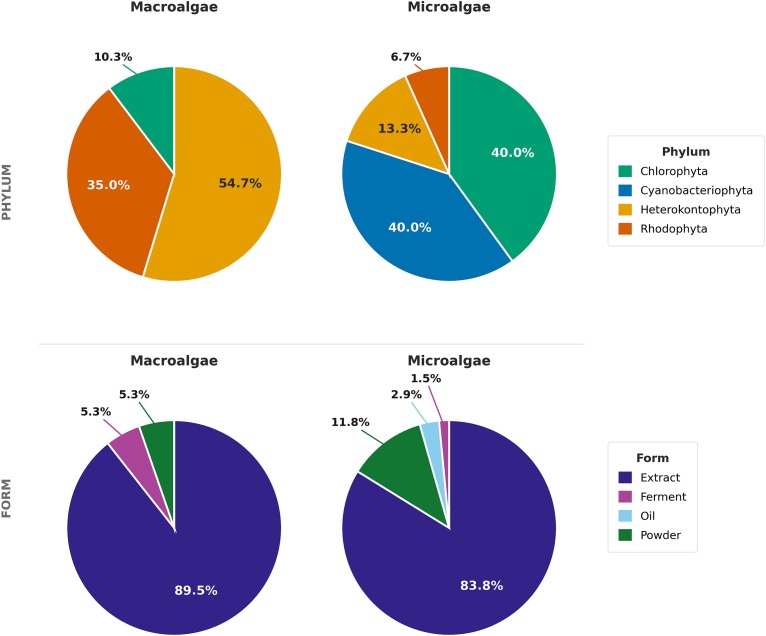
Fig. 4. Pie charts of the distribution of phyla (upper panels) and ingredient forms (lower panels) for macroalgae and microalgae used in the analyzed cosmetic products.
At the order level, a limited number of groups accounted for most of the observations. Within Phaeophyceae, Fucales was the most represented order (30.5%), followed by Laminariales (21.7%). Within Rhodophyta, Gigartinales accounted for 15.3% of observations, followed by Palmariales (6.4%) and Hapalidiales (4.4%). Within Chlorophyta, Ulvales was the most represented order (7.4%). The remaining orders each accounted for less than 3% of the total.
At the species level, among the 24 brown algae, Laminaria digitata (8.2%), Fucus vesiculosus (7.7%), and Ascophyllum nodosum (6.9%) were the most frequently encountered species. Of the 18 red algal species, Chondrus crispus (7.7%) and Phymatolithon calcareum (5.6%), and of the 4 green algae, Ulva lactuca (5.2%) were most common.
Among microalgae, Cyanobacteriophyta and Chlorophyta were the most frequently reported phyla, each representing 40% of observations, followed by Heterokontophyta (13.3%) and Rhodophyta (6.7%) (Fig. 4).
In the overall microalgal dataset, Oscillatoriales accounted for 30% of observations, with Limnospira platensis (20%) and Limnospira maxima (10%) representing the most frequent Cyanobacteriophytal species. Chlorellales accounted for 26.7% of observations, largely driven by the occurrence of Chlorella vulgaris (23.3%). Naviculales represented 6.7% of observations, represented exclusively by Phaeodactylum tricornutum. Similarly, Porphyridiales also accounted for 6.7% of observations, with Porphyridium purpureum as the only reported species.
Production methods were disclosed by 37 of the 49 companies. Among these, 77.5% reported sourcing algal biomass through wild harvesting, while the remaining 22.5% relied on aquaculture. A subset of companies reported adopting both approaches. As production method data were unavailable for the remaining 12 companies, these figures should be interpreted as representative of the disclosing subset only and may not reflect the sourcing practices of the sector as a whole.
Information on both the algal species utilized and the corresponding production process was available for 25 companies (Table 1). This information was available for 21 species (Fig. 5). The analysis of production methods was restricted to macroalgae, as microalgae are only obtained through land-based cultivation.
Table 1. Number of companies, macroalgal species, and the biomass sourced from wild harvesting per country analyzed.
| Headquarters | No. companies | No. macroalgae species | % biomass sourced from wild harvesting |
|---|---|---|---|
| France | 12 | 34 | 81.3 |
| Germany | 1 | 2 | 0 |
| Iceland | 1 | 3 | 100 |
| Ireland | 6 | 10 | 100 |
| Spain | 2 | 1 | 50 |
| UK | 3 | 7 | 100 |
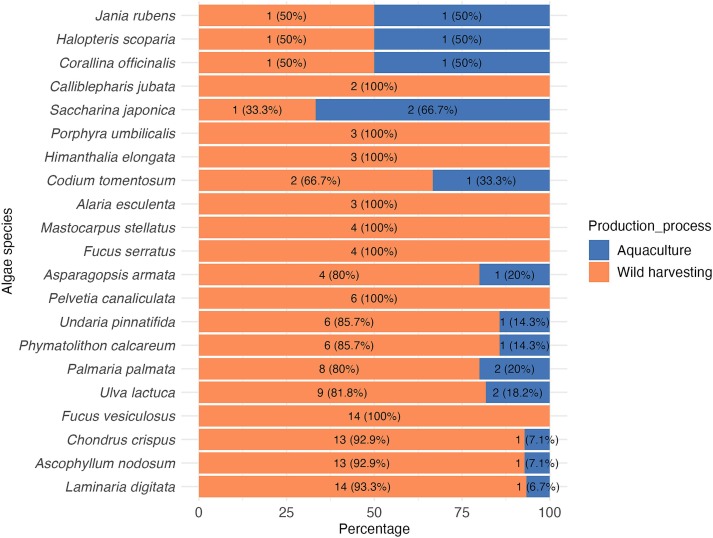
Fig. 5. Frequencies (and percentages) of algae sourced from wild harvest or aquaculture by species.
Across the considered companies, the only one relying exclusively on aquaculture was based in Germany, while companies from other countries primarily obtained algal biomass through wild harvesting.
To further investigate species-level patterns, the analysis was limited to algal species for which production method information was available from at least two companies. This criterion was met for 21 out of the 62 species identified in the INCI data. Within this subset, several species were consistently sourced from the wild. In particular, products containing Pelvetia canaliculata, Fucus vesiculosus, Fucus serratus, Alaria esculenta, Himanthalia elongata (Phaeophyceae), Mastocarpus stellatus, Porphyra umbilicalis, and Calliblepharis jubata (Rhodophyta) were associated with biomass sourced entirely through wild harvesting.
Across the 642 cosmetic products analyzed, 58 algal species were identified in the INCI lists, out of the 62 species previously identified at the company level. This discrepancy is due to some companies reporting the use of specific algal species on their websites without including them in the corresponding product INCI lists or not providing INCI information at all. The complete list of the 642 analyzed products and the corresponding product-level information is provided in Supplementary Table S1, while the 58 species identified are reported in Table A1 (Appendix), together with their frequency (number of products containing each species) and relative percentage, calculated as the proportion of the 642 analyzed products in which each species occurred. Because individual products may contain more than one algal species, these percentages do not sum to 100%. Moreover it should be noted that product frequency reflects the number of products in which a species appears as an ingredient, and should not be interpreted as a measure of biomass consumption, as INCI listings do not disclose ingredient quantities or concentrations. The most frequently identified algal species in cosmetic formulations were Laminaria digitata (38%), Fucus vesiculosus (27%), and Fucus serratus (11%) (Phaeophyceae), and Chondrus crispus (19%) and Phymatolithon calcareum (11%) (Rhodophyta).
Over half of the products were face-care formulations (51%), 45% were body-care products, and approximately 1% were for make-up. Both microalgae and macroalgae were most frequently incorporated as extracts (84%, Fig. 4).
We further analyzed the distribution of cosmetic product types within each algal group (macroalgae and microalgae) and each phylum to assess potential differences in their application across body-care, face-care, and make-up formulations (Fig. 6). The analyzed make-up products only contained the red alga Phymatolithon calcareum (order Hapalidiales, coralline algae) and species in the green microalgal order Chlorellales. For body and face-care products, the most frequently encountered orders were the Laminariales and Fucales (brown); the Hapalidiales, Palmariales, and Gigartinales (red); and the Ulvales (green) for macroalgae, and the Chlorellales and Chlamydomonadales (green) and Oscillatoriales (Cyanobacteriophyta) for microalgae. Species in the orders Laminariales, Fucales, and Gigartinales are equally used in face- and body-care products, while products containing the red algal order Hapalidiales (67.6%), and the microalgal orders Chlorellales (80.5%), Chlamydomonadales (83.3%) and Oscillatoriales (69.4%) are mostly used for face-care products (Fig. 6).
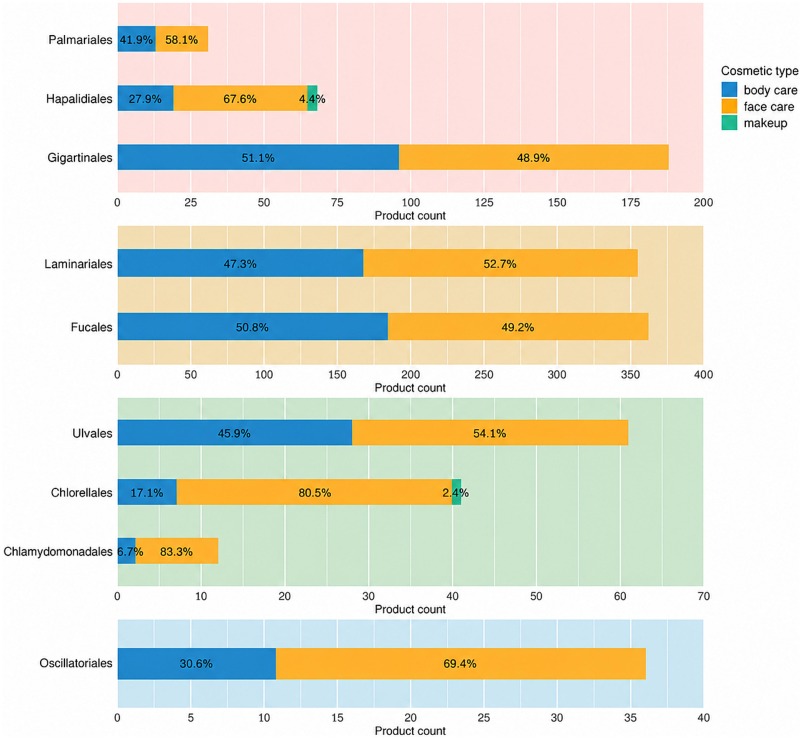
Fig. 6. Number of cosmetic products by type (body-care, face-care, and make-up) across algal phyla and orders. Light brown = brown algae (Heterokontophyta), Red = red algae (Rhodophyta), Green = green algae (Chlorophyta), blue = bluegreen algae (Cyanobacteriophyta). (For interpretation of the references to colour in this figure legend, the reader is referred to the web version of this article.)
Common marketing claims are presented in the wordcloud (Fig. 7), and include ‘moisturizing’, ‘anti-aging’, ‘nourishing’, and ‘antioxidant’, aligning with known biochemical properties of algal metabolites.
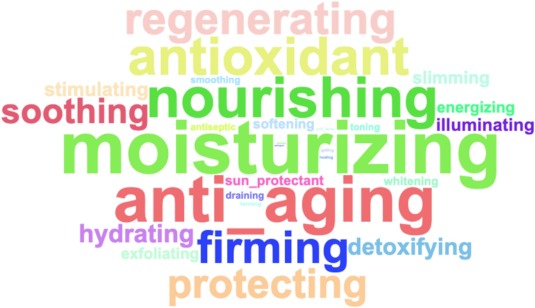
Fig. 7. Word cloud derived from words encountered in the product survey. Words were derived from the web page for individual products. The size of each word corresponds to the frequency with which the word was encountered.
The statistical analysis investigated patterns of algal use between face- and body-care products using a subset of companies marketing both product types, comprising 575 products from 21 companies. Algal species composition differed significantly between face- and body-care products after accounting for company (Fpseudo = 2.41, p = 0.0066), although the effect size was very small (R2partial = 0.003). PERMDISP indicated no significant difference in multivariate dispersion between the two categories (p = 0.1503). Face-care products also showed slightly higher algal species richness than body-care products, with an adjusted mean difference of 0.19 species per product (p = 0.0138). Overall, these results indicate statistically detectable but quantitatively small differences in algal use between the two product categories in the dataset.
This study reveals a strong reliance on wild-harvested macroalgae within the European cosmetic sector. Wild-harvest was found to be the most common source of biomass for Laminaria digitata (93.3%), Chondrus crispus (92.9%), and Phymatolithon calcareum (85.7%), three of the four most frequently encountered species in our product analysis. This trend extends even to species with well-established aquaculture operations in the Atlantic, such as Palmaria palmata (80%) [44], [45], [46], [47]. For numerous other species, including Fucus vesiculosus, F. serratus, Himanthalia elongata, and Pelvetia canaliculata (Fucales), Calliblepharis jubata and Mastocarpus stellatus (Gigartinales), and Porphyra umbilicalis (Bangiales), wild harvest was reportedly the sole biomass source. This is based exclusively on information disclosed by the companies surveyed. Although these taxa are biochemically rich and commercially attractive, many are ecologically important habitat-forming species [48], [49], [50]. For example, Laminaria and Fucus spp. have very high productivity, and are key drivers of coastal carbon and nutrient cycles [51], [52], [53], [54]. They are also canopy-forming species, and together with branching red algae (e.g., Chondrus crispus), they create three-dimensional habitats that host a wide variety of other organisms of commercial and ecological importance [55], [56], [57].
The dominance of wild harvesting raises growing sustainability concerns, particularly given rising demand, increasing climate pressures, and documented declines in coastal algal populations. [40], [58]. For example, L. digitata populations have declined at their southern limits in the northeast Atlantic, most likely due to warming waters [39]. In many areas, this species is being outcompeted by Saccorhiza polyschides [59], a native species which is not as widely harvested. In France, for example, L. digitata is still the most harvested seaweed, with approximately 45,000 tons harvested on average yearly over the past decade [60]. Sustainability assessments of algae-derived products should therefore account for the ecological status and climate vulnerability of the species being utilized [39], [41], [60], [61]. Overharvesting due to increasing demand may exacerbate ecological degradation, particularly for habitat-forming, slow-growing taxa such as coralline algae. For example, Phymatolithon calcareum is part of a group of red calcareous algae known as maerl, that forms extensive beds present in the Northeast Atlantic and in parts of the Mediterranean [62], [63]. Maerl beds between Galicia (Spain) and the Lofoten Islands (Norway), were shown to provide habitat to 2000 macrofaunal taxa, highlighting the ecological richness of such habitats [64]. The use of calcareous species in cosmetics is primarily due to their chemical composition (calcium and magnesium), which can be applied in make-up products such as eye shadows, or face care products such as scrubs [65], [66]. This is consistent with our findings, in which P. calcareum was identified in a wide range of products, particularly body wraps, soaps, face masks, and make-up formulations. The claims most frequently associated with this species were remineralising, exfoliating, and mattifying properties. However, since the 1950s, demersal fishing, sedimentation from land due to industrialized farming, eutrophication, sewage pollution and mariculture have all impacted on coastal waters, causing global declines in maerl extent [64]. In addition, the reported growth rate for this species in European coasts is 0.5–1.5 mm yr−1, rendering populations highly vulnerable to harvesting-induced depletion and unlikely to recover on human-relevant timescales [67]. Given these ecological characteristics (slow growth, sensitivity to multiple stressors, and documented population declines), sustainability claims associated with cosmetic products containing P. calcareum warrant careful scrutiny, particularly where sourcing data, harvest intensity, and regional management measures are not publicly disclosed.
Expansion of aquaculture and diversification of utilized species could reduce ecological pressure on wild stocks. For instance, fast-growing microalgae, currently underrepresented in products, may offer more scalable and potentially sustainable alternatives [68], [69], [70]. Macroalgal aquaculture also represents a viable alternative to wild harvesting for several of the dominant species identified in this study. Laminaria digitata, Saccharina latissima, and Alaria esculenta (Phaeophyceae) have established sea-cultivation pathways in the North Atlantic, with longline cultivation systems operational in Norway, Ireland, France, and the UK [46], [58], [80]. Similarly, Palmaria palmata (Rhodophyta) and Ulva spp. (Chlorophyta) have been successfully cultivated both at sea and in land-based integrated multi-trophic aquaculture (IMTA) systems [44], [45], [84]. Expanding cultivation of these species could reduce pressure on wild stocks while maintaining the supply of the macroalgal biomass most relevant to the cosmetic sector. Of the microalgal species encountered in our survey, Chlorella vulgaris (n = 40), Haematococcus lacustris (n = 12, often reported in products with the old nomenclature Haematococcus pluvialis), and Limnospira platensis (n = 31, previously in the genus Spirulina) were the most frequently recorded ones. These species have well-established industrial cultivations [71], [72], [73], [74]. However other microalgal species with well-established cultivation infrastructure, such as Dunaliella salina (Chlorophyta) [75], [76] and Euglena gracilis (Euglenophyta) [77], were not found in any of the 642 commercially available products analyzed, and others only in a few (e.g., Limnospira maxima, n = 3, Cyanobacteriophyta; Phaeodactylum tricornutum, n = 8, Bacillariophyta; Porphyridium purpureum, n = 3, Rhodophyta). These species contain substantial quantities of bioactive compounds relevant to cosmetic applications, including glycolipids, astaxanthin, geraniol, phytoene, fucoxanthin, β-carotene, lutein, violaxanthin, abscisic acid, monoacylglycerols, and diacylglycerols [22], [78], [79]. Combined with the feasibility of large-scale land-based cultivation, these characteristics make them potentially more environmentally friendly sources of bioactive material for cosmetic formulations [80], [81].
A comprehensive sustainability assessment of algae-based cosmetics should extend beyond sourcing methods alone. Harvesting pressure, including extraction volumes relative to stock size and regeneration rates, is a critical but largely unavailable variable in this dataset. Processing and formulation also carry environmental costs, including energy use, solvent extraction, and packaging, which are not captured by INCI-level analysis. Similarly, while aquaculture is often presented as a more sustainable alternative to wild harvesting, cultivation systems carry their own ecological considerations, including nutrient loading, interactions with native species, and energy inputs [58], [61]. Future sustainability frameworks for the seaweed cosmetics sector should integrate these dimensions rather than treating sourcing methods as a proxy for overall environmental impact.
However, this solution may not be applicable to products that require large quantities of algal biomass, such as the polysaccharides typically derived from habitat forming canopy species such as the Laminariales and Fucales. In this case, regulations and a more solid framework around aquaculture practices could encourage the development of sustainable farming over wild-harvesting. Norway, for example, has operated a specific interim licensing system for macroalgae under the Aquaculture Act since 2014, in which agencies assess environmental conflict in relation to coastal development plans [82], [83]. However, risk assessment protocols and licensing criteria focus primarily on site, scale, environmental effects, and non-native status, rather than on species-specific technical standards [46], [84], [85], [86]. This is problematic where regulations address only the selection of optimal sites and harvest dates, parameters that vary considerably between species [84], [87], and fail to account for the conservation status of the harvested taxa.
Another solution could be to increase the sourcing of wild biomass of fast-growing, undesired, invasive species, in order to remove their pressure on the ecosystems [88]. For example, the seaweed biofertilizer company Waikaitu (https://www.waikaitu.com/; New Zealand), uses the invasive kelp Undaria pinnatifida (Phaeophyceae) that biofouls aquaculture mussel lines. However, this raises concerns about further expanding the distribution of such a fast-growing, invasive species, since these aquaculture structures were also shown to act as vessels for the proliferation of this species, and its expansion into reefs near the farms [89]. Harvesting, handling, and transporting biomass of this highly invasive species risks spreading its reproductive structures (sporophylls), which produce large numbers of spores that remain viable in the water for at least five days [90], [91]. Therefore, the creation of a market around native species over invasive ones should always be considered cautiously, particularly since current climatic challenges often favour the proliferation of the latter [92].
Although this study analyzed a broad range of cosmetic products, the availability of publicly accessible information inevitably limited the scope of the review. The number of European companies identified through the Rubisko Hub (formerly the Phyconomy database)remains relatively limited, and not all companies provided complete ingredient information on their websites, preventing the inclusion of some products in the species-level analyses. In addition, the transparency and level of detail regarding sourcing practices varied considerably among companies. Direct outreach to companies was not undertaken in this study, as the methodological scope was restricted to publicly available information to ensure reproducibility and avoid selective response bias. Future studies may benefit from combining web-based data collection with direct company engagement, which could help fill gaps such as the founding year of companies for which this information was not publicly available, and the species utilized by companies that did not disclose this on their websites.
Another limitation concerns the dataset's representativeness and, consequently, the interpretation of the statistical analyses. Companies and products were not selected through a random sampling design, but were identified from an online industry database and publicly available company websites. The descriptive results reported throughout the study should therefore be interpreted as referring specifically to the analyzed dataset, rather than as population estimates for the European cosmetics market. Similarly, the inferential analyses were intended as exploratory assessments of patterns within the sampled companies and do not overcome the limitations associated with non-probability sampling. Although statistically significant differences between face- and body-care products were detected for both species composition and richness, the corresponding effects were small, indicating that product type explained only a very limited proportion of the observed variation in algal use. These results should therefore be regarded as indicative rather than broadly generalizable.
Production method data were unavailable for 12 of the 49 companies surveyed, so the 77.5% wild-harvesting figure should be interpreted as representative only of the disclosing subset. Companies that did not disclose sourcing information may differ systematically from those that did. For example, companies with certified sustainable supply chains may be more willing to make this information publicly available, which could bias the estimate in either direction.
A further limitation concerns the geographical origin of the algal biomass. In the majority of cases, companies did not publicly disclose the specific harvest or cultivation locations of their raw materials, and company headquarters location was used as a proxy for geographical context. This may not accurately reflect actual biomass sourcing regions, and future studies would benefit from direct engagement with suppliers or mandatory origin labelling to enable more precise geographical analyses.
The reliance on INCI listings also introduces constraints on species identification. INCI names do not always resolve to species level: ingredients listed generically as ‘algae extract’ or ‘seaweed extract’ without further specification were excluded from the analysis, which may result in an underestimation of species diversity and product coverage. Some INCI names may also correspond to multiple species or to taxonomically revized names that differ from the product label, introducing potential misidentification. Finally, the number of products containing a given species should not be interpreted as a measure of biomass consumption, as INCI listings do not disclose ingredient quantities or concentrations.
Despite these limitations, the present work provides a representative overview of the current utilization of algal resources within the European cosmetic sector. The results offer useful insights into the diversity of algal species employed, prevailing sourcing strategies, and the growing role of algae in the cosmetic bioeconomy. The prevalence of wild harvesting, combined with the limited availability of transparent sourcing data, makes it difficult to substantiate the sustainability claims frequently associated with algae-based cosmetic products. Since many of the species identified in this survey are threatened by anthropogenic pressures and climate change, caution should be exercized in describing their wild harvest as sustainable. These findings highlight the need for improved management and regulation of biomass sourcing across the sector. Our findings may contribute to future efforts aimed at improving sustainability practices, supporting responsible resource management, and promoting the protection of marine and coastal ecosystems.
The European seaweed cosmetics industry relies heavily on wild-harvested macroalgae, particularly brown algal taxa. While algae offer significant biotechnological potential, the reliance on wild biomass harvest for many of the species present in the products analyzed in this survey raises concerns about long-term sustainability. These findings emphasize the need for improved sourcing transparency and species-specific ecological risk assessment within the European seaweed cosmetics sector. The dataset generated here serves as a baseline for future sustainability evaluations and may assist industry and policy efforts aimed at promoting more responsible biomass management.
Rossella Nicolai: Writing – original draft, Methodology, Investigation, Formal analysis, Data curation, Conceptualization. Tamara G. Vasiljev: Writing – original draft, Methodology, Formal analysis, Data curation. Lucia Morelli: Writing – review & editing, Methodology, Formal analysis. Francesca Greselin: Writing – review & editing, Supervision, Resources. Paolo Galli: Writing – review & editing, Conceptualization. Giuseppe C. Zuccarello: Writing – review & editing, Supervision. Miriam Colombo: Writing – review & editing, Visualization, Supervision, Resources.
During the preparation of this work the authors used Claude to help with the consistency between the in-text citations and the reference list, to identify formatting and bibliographic inconsistences in the references, and to review the language and readability of selected passages. The authors reviewed and edited the content and take full responsibility for the content of the publication.
This research has been supported by the MUSA – Multilayered Urban Sustainability Action - project, funded by the European Union - NextGenerationEU, under the National Recovery and Resilience Plan (NRRP), and by the Ministry of University and Research (MUR, D.M. 118).
来源 查看原文
版权申明 本网站立足国家海洋药物和生物制品产业联盟,致力于打造海洋生物医药“产学研用”一站式、综合性资讯共享服务平台,促进我国海洋药物和功能制品“资源链、科技链、产业链、应用链”协同创新、深度融合发展。本文转载自原文来源。版权归原作者及原来出处所有,部分文章未能联系到原作者,在此深表歉意。如涉及版权问题,请留言联系我们协商处理(邮箱:czhang@tio.org.cn),侵权内容将即刻删除。
免责声明 本文仅代表作者个人观点,与本平台立场无关。本站不对内容真实性、完整性、时效性作保证,仅供参考,请读者自行核实。