NATIONAL INDUSTRY ALLIANCE FOR MARINE DRUGS AND BIOPRODUCTS

5月28日,自然资源部、国家发展改革委等8部门联合发布《关于加快海洋药物和功能制品高质量发展的指导意见》(下称《指导意见》),提出力争到2030年,多项海洋创新药上市,产业增加值突破1300亿元,综合实力进入国际前列。这是全国层面首部聚焦海洋生物医药产业发展的政策文件,从国家战略高度明确产业定位、构建系统顶层设计,为建设海洋强国、健康中国、培育海洋新质生产力提供了根本遵循与行动指南。从全球看,“蓝色药库”引领全球新药研发浪潮,成为全球海洋强国重点布局的战略性新兴产业。海洋生物医药作为大健康向海延伸的黄金赛道,已形成美、欧、中、日四极主导的稳定竞争格局。北美市场依托强大的生物技术基础和资本市场,在海洋生物制药领域拥有核心竞争力;欧洲侧重深海天然产物发现,聚焦高端创新药、深海活性物质等;亚太地区成为全球发展最快、增长潜力最大的区域。日本在海洋药物与高端化妆品原料研发保持传统优势;中国海洋糖类药物研发水平、部分高端海洋功能制品产能已跻身世界第一方阵。从重点产品看,全球已上市海洋来源重磅创新药中,Seagen(辉瑞子公司)维布妥昔单抗(Adcetris)是全球海洋生物医药与ADC领域里程碑式重磅药物;西班牙PharmaMar的曲贝替定(Yondelis)是全球首个海洋来源抗肿瘤药;日本卫材的艾立布林(Halaven)是海洋海绵来源的重磅化疗药物;TerSera的齐考诺肽(Prialt)为全球首个海洋源非阿片类镇痛药物;诺华的维替泊芬(Visudyne)则是眼科海洋药物标杆。从国内看,海洋生物医药产业实现从“跟跑”到“并跑”,部分领域向“领跑”迈进。我国在海洋药物发现上具有“天然”优势,自2005年以来,海洋新天然产物发现数量持续位居全球首位,近年来已占全球产出总量的一半左右,自主研发海洋药物品类约占全球上市总品类28%,多款海洋来源的自主创新药陆续进入临床试验阶段,覆盖肿瘤、抗感染、呼吸系统等治疗领域,尤其是海洋糖类药物研发进入国际先进行列。其中,壳聚糖、海藻酸钠等原料级产品产量占全球份额超80%。藻酸双酯钠(PSS)、甘糖酯、甘露醇烟酸酯、甘露特钠胶囊等现代海洋药物接续上市。2025年,海洋生物医药产业增加值已达996亿元,“十四五”以来增长了近四成,产业链涵盖海洋创新药物、海洋保健食品、海洋生物材料、海洋生物制品等领域。“十五五”时期,我国将加速发展海洋生物医药和生物制品,推动国内在海洋天然化合物发现上的优势转化为创新药物产出优势。目前,海洋生物医药产业已形成明显的区域集聚,山东、广东、浙江、福建、江苏是主要参与者。其中,山东凭借先发优势和系统布局,确立了绝对的龙头地位,产业集群成熟度高;广东、浙江、福建等省份则依托区域特色资源,在海洋生物材料、功能食品等细分领域形成了产业化优势。从江苏看,我省依托江海交汇独特生态、生物医药产业强省根基与海洋资源禀赋叠加优势,海洋生物医药产业进入加速跃升期。一方面,省级层面已将海洋经济、海洋生物医药纳入重点方向,省“十五五”规划建议提出,做大做强海洋药物和生物制品产业;《省“十五五”海洋经济发展规划》(征求意见稿)提出打造长三角海洋药物和生物制品业创新与转化基地。另一方面,在海洋糖类药物及抗肿瘤药物等细分赛道上全国领先,建有江苏海洋药物研发协同创新中心、江苏省海洋资源开发技术创新中心、江苏省海洋生物资源创新中心等平台载体,形成了南通、盐城、连云港三大沿海集聚区。南通甲壳素、海藻、海洋微生物等原料资源突出;盐城海洋生物产业园突破海藻生物萃取、创伤修复等海洋生物医药等关键技术;连云港依托中华药港,编制了《海洋生物医药产业发展规划(2024-2030年)》,重点发展海洋化学创新药、海洋现代中药、海洋医用生物材料等产业。2024年,江苏海洋产业总值虽首次突破万亿元,但作为高附加值环节的海洋药物和生物制品增加值尚不足百亿元,占海洋经济比重极低,与山东、广东等领先省份相比,江苏在整体产业规模、部分高附加值环节的竞争力上仍有提升空间,缺乏龙头企业引领,海洋资源尚未充分释放。面对全球蓝色药库产业加速布局、国内海洋生物医药创新竞赛日趋激烈、政策红利叠加释放等机遇与挑战,江苏海洋生物医药如何借势提速,实现从海洋资源大省、医药制造大省向海洋生物医药强省跨越?建议从以下几个方面入手:一是做强载体平台,打通成果转化通道。聚焦海洋创新药短板,充分发挥江苏海洋生物资源创新中心、海洋发展研究中心等高能级创新平台作用,布局“蓝色药库”转化医学平台及概念验证中心、中试放大平台等成果转化公共服务平台,支持沿海地区建设海洋生物资源精深加工基地,打造AI+海洋药物研发平台,建设“数智蓝药”大模型、智能实验室,提升化合物发现、靶点验证、临床预测效率。二是做强优势赛道,攻关关键技术。构建涵盖海洋医药精深加工、海洋保健产业创新研发和海洋健康食品升级的多元化高附加值产业的新体系。重点发展海洋创新药物、海洋功能制品、现代海洋中药、特色海洋酶制剂、海洋生物材料与生物制造等领域。开发海洋生物成分提纯、海洋药物活性分子筛选技术,加快海洋药物筛选、药靶蛋白合成技术研发。推进海藻活性物、海洋胶原蛋白、海洋多糖、海洋药物中间体及功能营养制品研制,重点突破海洋药物资源挖掘与评价、海洋活性天然产物修饰改造等技术,实现新型酶制剂、海洋酶制品规模化制造,拓展海洋生物活性物质提取、精准营养补剂开发、海洋中药经典名方等领域。三是培育优质企业,引领产业发展。聚焦产业短板与赛道优势,充分发挥江苏医药产业底盘优势,培优做强行业龙头链主,支持本土医药龙头布局海洋功能性制品、海洋生物材料等差异化赛道,深耕海洋天然产物新药、海洋现代中药、海洋生物医用材料等高端赛道。支持龙头企业通过并购重组、战略合作整合省内外创新资源,带动中小企业协同配套,快速提升产业整体规模与市场竞争力。加强产学研合作,支持企业、高校、科研院所联合开发海洋特色资源,推动一批潜力型海洋生物制品实现产业化。四是优化空间布局,推动区域错位协同发展。立足南通、盐城、连云港沿海三大产业集群差异化定位,建立三市资源互通、成果共享、产业链互补机制,形成全省联动、各具特色的产业集群体系。南通聚焦甲壳素、海洋微生物资源,持续深化沪苏协同;盐城重点发展海洋生物医药与新材料,依托海藻资源,主攻海藻精深加工、海洋医用修复材料、功能性健康等产品;连云港依托中华药港龙头药企集聚优势,重点发展海洋生物制药与大健康产业,攻克海洋创新药、海洋现代中药、高端植入类生物材料等。强化沿海三市与苏南创新高地、沿江产业带联动协作,提升全省海洋生物医药产业整体竞争力。作者简介马赛产业研究二室 研究员研究方向:化学药来源:现代管理科学版权声明:我们分享文章、图片来自网络,版权归原作者及原出处所有。此文出于学习分享、传播更多资讯之目的,无商业用途。若涉及作品内容、版权或其他问题,敬请原作者联系我们(邮箱:xianghaiwenyao@126.com),立即处理。
藻菌培养【0成本生态农场】藻菌生物肥【生产配套】建设及维护场农本成0肥菌藻藻类一站式线上专人辅导学成培训课程通过实践和在线课程培训,例如温室设计和操作、水培藻类生长和水培生产技术,你将获得在农业行业工作的基本技能。学习设计、安装、维护和操作可持续的藻类培养系统。发现成功培养各种藻类物种的受控环境要求。熟练掌握藻类培养技术,包括藻类推广培训。因为藻类提供了可持续的资源,你可以研究藻类生物学和藻类生物质的生产,藻类生物质可以转化为食品、饲料、化妆品、能源等8大产业。你可以获得在不断发展的藻类行业工作的培训和实践技能。我们的宗旨:服务中小微企业、个体户,用区块链(blockchain)信息技术解决他们获取价值信息难的问题,让他们学习掌握 IP知识,用最低的成本创造最高的价值!藻菌生物肥一起来探索宇宙的奥秘探索宇宙我们看到的从很远星系来的光是在几百万年之前发出的,在我们看到的最远的物体的情况下,光是在80亿年前发出的。这样当我们看宇宙时,我们是在看它的过去。——霍金《时间简史》介绍受人口增长和作物产量下降的驱动,粮食需求呈指数增长。农作物减产的主要原因之一是害虫。这个问题导致大量使用合成杀虫剂和化肥来对付害虫和植物疾病。然而,它们对人类健康和环境的有害影响是不可避免的。众所周知,合成杀虫剂会污染土壤、水和空气,破坏土壤养分。它们的负面影响会扩大并影响授粉者、水生生态系统和支持作物生产力的有益土壤微生物。因此,对更绿色的替代品,如生物衍生杀虫剂的需求非常普遍。在这种情况下,基于微藻的解决方案具有更好的结果,符合循环经济的核心原则。微藻,包括单细胞真核生物和蓝细菌,其特征在于快速生长、低营养需求和高代谢生产率。微藻目前作为一种更有前途的生物农药来源受到关注,因为它们具有天然产生具有抗微生物和抑制害虫活性的生物活性化合物的独特能力。酚类、脂肪酸和生物碱是微藻产生的几种生物活性化合物,它们抑制植物病原体和害虫,而不伤害非目标生物。
Published by: Elsevier Published by Review article Full text access Author links open overlay panel, , , , Highlights •Marine macroalgae are emerging as sustainable natural antimicrobials. •Red algae produce potent halogenated bioactive compounds. •Algal extracts show activity against food spoilage microorganisms. •Bioactive compounds link chemical diversity to antimicrobial function. •Safety, cytotoxicity and scalability remain key research priorities. Abstract Pathogenic and spoilage microorganisms continue to compromise food safety, shelf life and sustainability. Although synthetic antimicrobial preservatives such as sodium benzoate, sorbates, nitrites, sulphites, BHA, and BHT are widely used and effective, increasing evidence links their long-term use to health concerns, including allergenicity, the formation of harmful by-products such as benzene and nitrosamines, and potential endocrine or respiratory side-effects. These limitations, together with growing consumer and regulatory pressures, highlight the need for safer, natural alternatives. While terrestrial plant antimicrobials have been extensively studied, exploration of marine resources remains comparatively limited despite the remarkable biochemical diversity found in ocean ecosystems. Marine macroalgae from red (Rhodophyta), brown (Phaeophyceae) and green (Chlorophyta) lineages are recognised as rich sources of structurally diverse bioactive natural products, including halogenated terpenes, sulphated polysaccharides, phlorotannin's, alkaloids, sterols and polyphenols, many of which exhibit potent antimicrobial, antioxidant, anti-inflammatory and antiviral activities. Despite this, well-documented bioactivity and the established use of algal ingredients such as alginate, carrageenan, fucoidan and phycocyanin in food systems, the targeted development of macroalgae-derived antimicrobials for food preservation remains limited. This gap is largely driven by challenges in extraction and purification from complex algal matrices, chemical variability, stability in food systems, sensory compatibility, and regulatory constraints. The rapid evolution of LC–MS, GC–MS, HPLC, and metabolomics has transformed our ability to uncover macroalgal bioactive compounds, paving the way for their application as sustainable and effective natural antimicrobials in modern food systems. Keywords Marine macroalgae ; Natural food preservatives ; Antimicrobial compounds ; Food spoilage microorganisms ; Food safety Loading... Data availability No data was used for the research described in the article. View Abstract Recommended articles No articles found. © 2026 Published by Elsevier B.V.

点击上方蓝字关注我们International PetFood持续分享"宠物食品领域”的科学技术、生产设备、创新产品及解决方案等国际前沿科技文章与行业热点资讯。构建宠物食品原料供应链的韧性作者:里卡多·道拉·加西亚,丹麦Algiecel公司首席商务官宠物食品行业已相当擅长将营养学、原料学与生产制造专业知识相结合,打造能够满足消费者日益严苛预期的产品。然而,有一项挑战处于所有环节的上游:年复一年稳定获取品质达标、数量充足的合适原料;这一难题正变得愈发棘手。更具不确定性的供应格局制造商所处的供应链,承受着重塑整个食品体系的多重压力:气候多变、地缘冲突、法规调整、农业与海洋资源争夺、物流瓶颈,以及不断提高的负责任采购要求。价格不再是唯一需要关注的变量。如今同等重要的是:原料明年能否持续供应、品质能否保持稳定,以及能否可靠溯源。欧洲宠物食品工业联合会(FEDIAF)直接指出,地缘政治事件会对宠物食品供应链造成扰动,包括对原料供应产生连锁影响,同时强调,要在保障关键原料供给的同时,兼顾资源的合理利用。对生产企业而言,这就需要实现精妙的平衡:维持配方营养稳定性、保障生产线原料供给可预测,同时回应品牌面临的日益增长的溯源要求,清晰展示原料来源。部分供应不稳定性源于生物本身属性。绝大多数宠物食品原料最终来自农作物、畜禽、渔业或其他自然资源,其中包含大量人类食品产业链的副产物,否则这些副产物会被废弃。但生物供应链本身不可避免地存在波动。农业产出受天气、土壤和水资源制约;海洋原料依赖鱼类种群、捕捞配额与生态系统健康;动物源原料越来越多地与其他行业争夺同类原材料。行业对天然原料的广泛趋势进一步加剧了该问题,天然供应链相比人工合成原料,更容易受季节性、品质波动以及原料产地分散等因素影响。这并非意味着传统供应链已经失效,但充分说明了供应链多元化的必要性。对大型生产商来说,供应链韧性很少代表放弃现有原料,更多是开辟额外供应渠道,降低对单一资源、区域或生产体系的依赖,尤其当某类原料的需求超出其依托资源的承载能力时。一种可靠替代方案人工培育微藻为此提供了解决思路。光养微藻处于海洋食物链底端,可天然合成Omega 3脂肪酸及其他高价值脂质。传统上,宠物食品中的海洋源Omega 3大多来自鱼类与鱼油。培育微藻能够更直接地获取同类物质,在多个行业对Omega 3需求持续上涨的背景下,减轻对野生海洋资源的完全依赖。其价值在于,为海洋源营养物质开辟一条新增生产路径。捕捞与培育二者的区别至关重要。渔业在生态系统内开展作业,生态系统的生物产出无法完全受控。而微藻培育体系让生产者可以调控影响生物量的大部分变量:藻株选育、营养盐投放、温度、光照、二氧化碳供给、采收时机以及加工条件。这种可控性带来配方师高度看重的品质稳定性。稳定可预测的营养组成,让生产商配方设计更有把握;生产不受采收季节限制,采购端可以做更长远的规划;从培养到加工全程可溯源的体系,让质量管理更加系统化。搭载人工光源的密闭光生物反应器将优势进一步放大,打造出不受耕地、开放海域、阳光限制,可全年不间断运行的可控培育环境。在Algiecel公司,我们的平台正是基于该原理设计——稳定品质与全年持续供给是核心目标,而非附带效益。二氧化碳作为生产原料还有一个值得探讨的维度:碳。微藻通过光合作用,将二氧化碳、水、光照和营养物质转化为生物量。因此在密闭光生物反应器内,捕获的二氧化碳成为可管控的生产原料,而不再仅仅是需要另行处理的排放物。这催生了碳管理与原料生产之间全新的思考方式:不再将可持续性作为后期附加项,资源效率、溯源体系和产品质量可以从项目初期就一体化设计。这与快消行业整体发展方向一致。欧睿国际近期分析表明,可持续性越来越和供应链韧性、负责任采购以及企业应对市场波动的能力相关。分析发现,即便遭遇地缘政治与经济压力,可持续产品的表现依旧相对稳健。具体到宠物食品行业,这一点意义重大:可持续性已经不再只是营销口号,而是进入采购与产品开发决策环节。这种稳定性问题不只存在于供应链层面,也体现在原料本身。微藻含有种类十分丰富的天然物质,包含蛋白质、脂质、磷脂、色素、类胡萝卜素、维生素以及其他生物活性物质,具体成分随藻种不同而变化。丰富的组分,让同一培育来源可以产出多种形态的原料,从完整藻体生物量到目标分离组分,标志着行业从单纯生产生物量,转向生产适配特定用途的功能性原料。随着分析技术与下游加工工艺不断进步,配方师不再只关心原料含有哪些成分,更关注原料的应用性能。无论是需要广谱营养基质的全细胞生物量,还是针对Omega 3等特定营养目标、组分更明确的分离组分。随着宠物食品向精准营养方向发展,这种灵活性的重要性会持续提升。打造韧性,而非简单替代以上内容,并非主张用一种生产技术完全取代另一种。农业、海洋及动物源供应链对行业而言依旧是基础。宠物食品行业利用人类食品产业链副产物,依然是其资源高效利用的重要组成部分。更有价值的问题是,新型生产体系如何与现有体系形成互补。大型生产商已经开始朝这个方向思考。玛氏公司正在强化海鲜供应链溯源体系,作为负责任采购、土地利用与气候韧性整体工作的一部分;普瑞纳也同样重视长期采购战略。综合来看,这些思路拓展了供应安全的定义:不只是增加供应商数量,而是拥有更多元的生产路径、更清晰的可视性、更严格的质量管控,以及随环境变化快速调整的能力。人工培育微藻能够直接助力搭建这套体系。宠物食品行业的下一阶段创新,不只取决于新型原料,更取决于原料体系。即便环境、经济、地缘政治条件发生变化,该体系依旧可以稳定保障营养性能。对微藻而言,其机遇不只是替代某一种Omega 3来源:而是搭建一套可控生物生产平台,持续供给稳定的海洋源营养,利用捕获的二氧化碳,并提供多种可全程溯源的原料形态。战略方向十分明确:实现这一目标,仅靠技术远远不够。这类生产体系需要和所服务的市场同步发展。原料生产商、制造企业以及其他产业链参与者之间的长期合作,与科学技术本身同等重要。前路仍存在切实挑战:生产成本需要持续优化、生产规模需要验证,法规也需要跟上技术发展。但发展方向正变得愈发清晰。随着营养、可持续性与供应安全三者的关联愈发紧密,原料生产方式的多元化,最终可能和供应商多元化同等重要。光养微藻不会取代农业或海洋生产体系,但它提供了另一种获取高价值营养素的途径,依托可控培育,而非单纯依赖自然资源存量。在原料市场波动加剧的大环境下,依托全产业链深度协作带来的这一层额外可控性,或将成为原料最宝贵的特性之一。说明:发布文章原文为英文,来自本刊《国际宠物食品》,中文翻译仅供读者参考。点击链接可获得原文:Building Resilience in the Petfood Ingredient Supply Chain.pdf大势已来!藻类 Omega-3 才是宠物健康营养新王者天天喂的粮竟然藏着“隐形毒素”?难怪毛孩子总生病!功能革命:塑造下一代宠物营养为何适口性在宠物营养中至关重要点击下方名片即可关注【国际宠物食品PetFood】↓↓↓
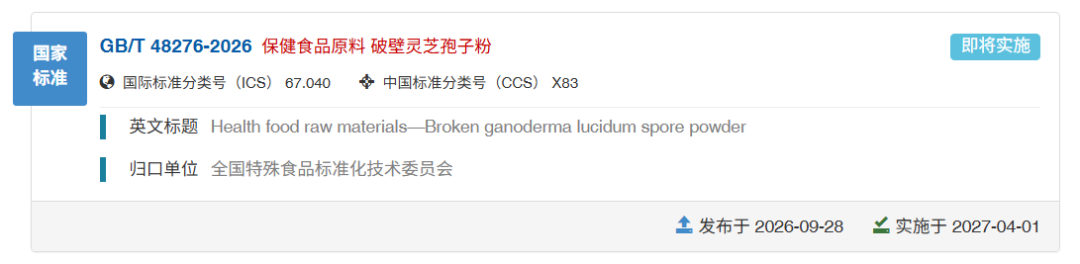
点击蓝字关注我们10月10日,市场监管总局(国家标准委)发布了四项保健食品原料推荐性国家标准——《保健食品原料 破壁灵芝孢子粉》(GB/T 48276-2026)、《保健食品原料 褪黑素》(GB/T 48335-2026)、《保健食品原料 辅酶Q10》(GB/T 48277-2026)、《保健食品原料 螺旋藻》(GB/T 48275-2026)。这是保健食品原料管理历史上,首次为单一原料发布国家级质量标准。在此之前,纳入原料目录的保健食品原料有备案要求、有每日用量规定,但原料本身"应该长什么样"——纯度多少、杂质限值多少、标志性成分是什么——没有统一的国家级标准。01为什么是这四款原料?破壁灵芝孢子粉、褪黑素、辅酶Q10、螺旋藻——这四个原料有一个共同特征:都在2020年11月被纳入《保健食品原料目录》,实施备案管理。截至2026年8月31日,以这四款原料为核心的保健食品备案数量分别为:辅酶Q10:2300余个——所有备案原料中产品数量最多的品类之一破壁灵芝孢子粉:1900余个褪黑素:1100余个螺旋藻:180余个合计超过5480个备案产品。这四款原料基本覆盖了保健食品备案制中最主流的品类:助眠(褪黑素)、心脏养护(辅酶Q10)、免疫调节(灵芝孢子粉)和基础营养(螺旋藻)。产品越多、市场越大,原料质量参差不齐的问题就越突出。同叫"褪黑素",有的纯度99.5%以上,有的可能只有98%;同叫"辅酶Q10",有的用发酵法、有的用化学合成,顺式异构体含量天差地别。在备案制下,产品只需要"备案"就能上市,但备案审查的是产品的配方和声称,对原料本身的质量管控,此前主要依赖企业自检和行业自律。四项国标的发布,补上了这块空白。02四项国标各自管什么?褪黑素:高纯度+杂质限量双锁定褪黑素国标的核心是"纯度"和"杂质"。一方面规定褪黑素的高纯度要求,确保有效成分含量;另一方面限定杂质——尤其是合成过程中可能产生的5-甲氧基色胺等副产物。同时规定铅、总砷、总汞等重金属和微生物限量,明确检验规则、标签标识和储运要求。这意味着,今后褪黑素原料不能只说"纯度99%",而是要同时回答:纯度是多少?杂质有哪些?每种杂质的限值是多少?——每一项都有国标可查。辅酶Q10:从源头到储运的全链条覆盖辅酶Q10国标覆盖范围最广,从原料来源、生产工艺、质量指标、检验检测、检验规则,到标志、标签、包装、运输、贮存,全部纳入。特别值得注意的是限制顺式异构体和有关物质含量——辅酶Q10的生产工艺分发酵法和化学合成法,不同工艺产生的异构体比例不同,而顺式异构体是影响产品生物利用度和安全性的关键指标。破壁灵芝孢子粉:多糖含量是硬指标破壁灵芝孢子粉国标建立了感官、理化、微生物、标志性成分四个维度的质量技术要求。其中最具实操意义的是以多糖作为标志性成分指标,规定含量最低限量。灵芝孢子粉的核心功效成分就是灵芝多糖,但行业内菌种同质化严重、活性成分含量波动大,不同产地、不同菌种的孢子粉多糖含量可能相差数倍。有了最低限量标准,"挂羊头卖狗肉"式的低多糖含量产品将难以立足。螺旋藻:β-胡萝卜素和藻蓝蛋白双标志物螺旋藻国标突出以β-胡萝卜素和藻蓝蛋白作为标志性成分指标。藻蓝蛋白是螺旋藻中特有的光合色素蛋白,也是其营养价值的核心指标。此前市面上部分"螺旋藻"产品存在掺假或含量不足的问题,双标志物的设定让产品质量有了可量化的评判依据。03从"备案制"到"标准化":监管逻辑的进化四项国标的发布,标志着保健食品原料管理完成了一个关键的制度闭环:2020年11月,破壁灵芝孢子粉、褪黑素、辅酶Q10、螺旋藻等被纳入《保健食品原料目录》,实施备案管理——解决了"哪些原料可以用"的问题。2026年10月,四项国标发布——解决了"原料应该是什么质量"的问题。两步合在一起,保健食品原料的准入路径变成了:目录准入(能不能用)→ 备案管理(产品怎么报)→ 国标定质(原料怎么算合格) 。这个闭环的意义在于:备案制大幅降低了保健食品的准入门槛,让更多企业能够快速推出合规产品。但低门槛不等于低标准——国标的存在确保了即使走备案通道,原料质量也有底线可查。对行业来说,四项国标最直接的效应是检测有据可依。此前企业在做原料验收、出厂检验时,没有统一的国标可参照,只能依据企标或行标。国标出台后,原料供应商、生产企业、第三方检测机构、监管执法部门,都有了同一把尺子。对消费者来说,四项国标传递的信号更朴素:你买到的褪黑素,以后真的是褪黑素了。04更大的图景:保健食品的"标准时代"把视野拉远,四项原料国标不是孤立事件。过去两个月,保健食品领域的标准化动作密集落地:9月2日,新版保健食品GMP(GB 17405-2025)正式实施,替代沿用二十余年的1998版10月8日,《保健食品生产企业质量管理体系自查工作规范》征求意见,自查频率和程序有了统一标尺10月10日,食安法修订草案征求意见,特殊食品监管框架进一步收紧同日,四项原料国标发布生产规范、自查规范、原料标准、上位法修订——保健食品行业正在经历一轮系统性的"标准化重构"。每一项单独看都是技术性文件,合在一起看,是一个明确的信号:保健食品行业正在从"准入宽松、事后追责"的模式,转向"标准前置、全程留痕"的模式。对于那些靠低质原料打价格战的企业来说,国标就是那条正在抬高的底线。跨过去的继续跑,跨不过去的,会被甩在后面。往期推荐 ●●// 1|跳出成分内卷!百雀羚用95年科研+底蕴,重新定义养肤彩妆// 2|总局连发两大专项整治!网络食品、网红食品迎来最严监管// 3|狂烧16亿赌转型!若羽臣再冲港股,暗藏多重暗雷// 4|2025美妆上市公司十强榜出炉!
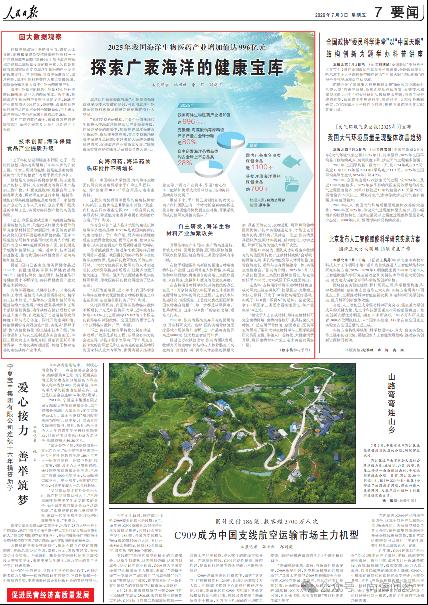
2025年我国海洋生物医药产业增加值达996亿元探索广袤海洋的健康宝库本报记者 林丽鹂 李 蕊 刘晓宇 虾蟹壳提取物可养护骨关节、修复人体骨骼,南极褐藻成免疫抗肿瘤药物原料……自然资源部等8部门发布《关于加快海洋药物和功能制品高质量发展的指导意见》,这是我国首部国家层面支持海洋生物医药产业发展的政策文件。其中明确,将海洋保健食品、海洋药物、海洋生物材料等作为重点突破领域,加快做强做优做大海洋生物医药健康产业。 海洋生物量占地球总生物量87%,物种丰度远超陆地,是巨大的药源宝库。近年来,我国海洋生物医药产业得到长足发展,2025年产业增加值达996亿元,壳聚糖、海藻酸钠等原料级产品产量占全球份额超80%,自主研发海洋药物品类约占全球上市总品类28%。 这片广袤的蓝色疆土,蕴藏着怎样的健康宝库?如何更好惠及大众?记者进行了采访。技术创新,海洋保健食品产业提质升级 “上了年纪总觉得膝盖不舒服,吃了一段时间氨糖,确实有所缓解。”今年66岁的许女士说。许女士所说的氨糖,就是氨基葡萄糖,被称为“关节的粮食”,有助于骨关节养护。 氨糖是来自海洋的健康馈赠,其工业化生产的核心原料,来自虾蟹壳等海洋水产品加工副产物。“虾蟹壳经脱钙、脱蛋白等工序制得甲壳素,再对甲壳素进行水解、精制等,就能获得高纯度盐酸氨基葡萄糖。”一家氨糖生产企业的工作人员介绍,企业采用升级改进的水解工艺,实现对海洋副产物的高值化利用。 “过去,我国企业缺乏生产高纯度盐酸氨基葡萄糖的技术,只能把从虾蟹壳中提取的甲壳素原材料低价卖到国外,中国消费者再以高价从国外买回氨糖类保健食品。”国家市场监管总局特殊食品司相关负责人介绍,我国作为全球80%氨糖原料生产国,曾长期处于低附加值原料出口端。近年来,技术创新加速推进,推动我国海洋保健食品产业向高附加值迈进。 目前,国内已备案鱼油类保健食品近1100个,获批注册海洋原料保健食品约700个。随着抗氧化、免疫调节、脑健康维护等健康需求不断深化,海洋保健食品产业发展迎来新契机。 向海洋要健康,关键靠技术。以南极磷虾加工为例,运输成本高且品质易劣化、精深加工技术缺乏、产品种类少且附加值低等难题曾制约产业发展。“我们团队将精深加工环节前移至捕捞船,确保磷虾在捕获后数分钟内进入生产线,有效避免了长途运输导致的鲜度下降与成分劣变。同时开发出磷虾油、虾油微囊粉等高附加值产品,实现从‘保鲜保活’到‘高值化转化’的全链条技术升级。”海洋食品加工与安全控制重点实验室主任、中国工程院院士朱蓓薇介绍,目前我国跃升为世界第二大南极磷虾捕捞国,构建了相对完善的南极磷虾产业体系。海洋活性物质提取与绿色生物制造领域取得多项技术突破的同时,可食用海洋生物资源的原料创新及保健功能挖掘仍有巨大空间。 “我们支持科研机构、行业企业依托现代生物技术推动海洋保健食品产业提质升级,在保证安全的前提下,加快推进海洋保健食品新原料、新功能开发应用,重点支持新功能海洋保健食品研制,更好满足人民群众健康保健需求,促进海洋产业高质量发展。”国家市场监管总局特殊食品司相关负责人表示。向海问药,海洋药物临床批件不断增长 眼下,中国海洋大学教授、青岛海洋生物医药研究院首席科学家于广利正和团队一起,为“注射用BG136”联合用药方案准备资料。 这款从南极褐藻中提取的免疫抗肿瘤1类新药,正稳步推进Ⅱ期临床试验。“最近,我们还在同步准备它跟PD—1联合用药的申报资料,希望能为患者探索更有效的治疗方案。”于广利说。 作为全球首个进入临床试验的免疫抗肿瘤海洋多糖类药物,BG136是我国向海问药的生动缩影。于广利介绍,很多海洋活性物质在自然界含量极低,提取分离难,化学合成也难,从实验室到生产线需要跨越巨大鸿沟。 尽管挑战巨大,但近年来我国海洋药物发展势头迅猛。我国漫长的海岸线和丰富的海洋生物资源,是海洋药物研发的天然宝库;同时,一大批专注海洋药物研究的人才加速成长,政策引导叠加市场需求,让更多力量开始关注这一领域。强大的资源储备和扎实的科研积累,为我国海洋药物发展提供了坚实基础。 “从研发前端看,近20年来,我国科学家从海洋生物中发现活性化合物的数量在全球走在前列,基础储备很扎实。”于广利说。 依托深厚积淀,我国海洋药物临床批件不断增长。“光是中国海洋大学,近年就有抗肿瘤BG136、抗乙肝病毒LY102等5个候选药获得临床试验批件。全国范围内累计已有7个获得临床批件。”于广利说。 不过,海洋药物成果转化机制有待进一步理顺。“做药是系统工程,必须由有实力的企业主导,以临床需求为导向。”于广利直言,新印发的指导意见和正在实施的创新药物研发国家科技重大专项等,都明确要求推动企业主导,“撬动产业资本,引进‘耐心资本’,能够加快形成滚雪球效应,推动海洋药物高效发展。” 展望未来,于广利已规划好新的攻关方向:“我们团队还有一个针对帕金森病的候选化合物,希望能尽快找到企业对接,开展系统的成药性研究并推向临床。”自主研发,海洋生物材料产业加紧攻关 万级洁净生产车间内,生产线高速运转,骨填充材料、医用胶原膜、医用胶原修复膜、可吸收胶原蛋白缝合线等三类医疗器械有序下线。 在位于福建福州高新区的福建吉特瑞生物科技产业园,这些可修复人体骨骼、实现创伤和病缺损组织再生愈合的高端三类医疗器械,来自贝壳、鱼鳞和虾蟹壳等渔业废弃物。 在吉特瑞首席科学家张其清教授的办公室里,1.2万余份实验资料记录着全球首款贝壳源骨填充材料的研发全过程。“这套技术从基础研究、实验验证、工艺优化到按照国际和国家标准合规量产,每一步都是从零探索。”张其清坦言,这条“从0到1”的创新之路,艰难又扎实。 2005年,张其清瞄准废弃贝壳的医用潜力,开启科研攻关。当时,国内高端骨修复医疗器械市场被海外垄断,进口产品每克售价高达8000元,让无数患者望而却步。 经过上万次试验比对,张其清团队发现,牡蛎壳天然生物矿化结构与人体骨骼生长高度契合,富含钙、磷、镁等人体必需的微量元素,具备天然安全、生物适配、可降解的独特医用优势。“技术实现绕道超车,才能让老百姓少花钱、看好病。”秉持这一信念,张其清及其团队聚焦原材料提纯、结构优化、力学适配、降解可控等关键技术展开攻坚。 历经18年努力,团队成功实现废弃牡蛎壳的高值医用转化。“这款材料就像‘会呼吸’的骨骼支架,多孔结构能引导人体骨细胞、血管自然生长,最终与自身骨骼融为一体,实现生理性愈合。”张其清介绍。2023年5月,该产品获批国家三类医疗器械注册证,每克售价低于2000元,大大减轻了群众就医负担。 这些年,吉特瑞深耕海洋生物材料赛道,成功研发出羟基磷灰石、胶原蛋白、壳聚糖三大核心原料,开发了10余款高端医疗器械,实现了“从0到1再到N”的延伸。企业现已拿下5项国家三类医疗器械注册证,年产值突破10亿元。 “相较于人工合成材料,海洋生物材料可完全生物降解、生物相容性好,兼具抗菌抗炎特性,广泛应用于骨修复、创面愈合、医美再生等领域。”福州大学生物科学与工程学院副研究员陈立说,伴随人口老龄化、大健康消费升级,海洋生物材料产业正迎来黄金发展窗口期。 (赖志昌参与采写)《人民日报》(2026年7月3日 7版)来源:东岳客版权声明:我们分享文章、图片来自网络,版权归原作者及原出处所有。此文出于学习分享、传播更多资讯之目的,无商业用途。若涉及作品内容、版权或其他问题,敬请原作者联系我们(邮箱:xianghaiwenyao@126.com),立即处理。

"2026年9月29日,国家卫生健康委员会政务服务平台发布新食品原料延期通知书信息,涉及D-阿洛酮糖、L-麦角硫因、短乳杆菌 CECT 7480、膨腹海马、塔格糖、吡咯并喹啉醌二钠盐6种新食品原料。"新食品原料申报的成功,离不开资料规范与全流程把控。近年审批效率提升,但因预评估不足、资料不当等导致的延期、不予许可仍频发。在国家卫健委公布的新食品原料及实质等同名单中,北京中健天行医药凭借多款产品获批的成绩,在行业内积累了极为丰富的成功申报经验,项目实力名列前茅。我们可为申报的新食品原料提供全面评估与分析,量身定制经济、可行且有保障的申报方案。欢迎相关申报企业来电交流!END【邀您入群】新原料落地难?怕申报踩坑?速进「新原料保健食品合规交流群」,群内聊审评动态、分享申报案例,政策解读、市场趋势紧跟不丢,添加微信18511323469入群,和同路人一起破局,少走弯路!【星标指南】因公众号推送规则调整,如想每天都收到推送文章,请进入健研申讯公众号主页,设置星标,实时get新鲜推文,踩准行业脉搏,不掉队!2026新食品原料半年成绩单:获批12个、受理16个、终止审查7个、征求意见5个三新食品受理动态|塔格糖、膨腹海马、D-阿洛酮糖等7种原料进入受理公示栀子油等7种新食品原料征求意见,北京中健天行医药代理香玉牡丹花在列关注营养健康行业内容矩阵get更多精彩内容👇点赞分享留言

"植提桥摘要:全球高品质OMEGA-3供应商圆大生物将亮相AAES2026(A馆D4展位),主推高纯度鱼油与藻油方案。依托合成生物学四大技术平台,其98nTG鱼油及藻源乐健™系列实现量产,畅销80多国。"在营养健康产业,Omega-3脂肪酸的应用边界正在持续拓宽。从母婴营养到功能食品,从膳食补充剂到宠物营养,市场对高纯度、高稳定性、高生物利用度原料的需求持续攀升。作为脂质原料赛道的核心品类,鱼油与藻油的工艺迭代,正成为企业构建竞争力的关键支点。在即将于2026年10月14-16日在南京国际展览中心举办的AAES2026植提桥科技展暨植提桥科技大会( 第17届 )及同期【第3届】药食同源|滋补品升维开发峰会&展现场。全球高品质OMEGA-3供应商成都圆大生物科技有限公司(简称“圆大生物”),将在A馆D4展位集中呈现其在高纯度鱼油、藻油原料领域的技术成果与产品矩阵,为行业提供可落地的脂肪酸解决方案。同时,圆大生物也将以AAES2026赛道占位企业的身份亮相,并将在现场发布创新成果——《新一代高Sn-2DHA藻油更还原、更高含量、更高吸收》。一、圆大生物携核心产品亮相AAES本次展会,圆大生物将主推美加乐康®98nTG鱼油、藻源乐健™DHA藻油、Omega-3藻油、Sn-2 DHA藻油、磷脂型DHA藻油等核心产品,覆盖不同应用场景的需求。1、美加乐康®98nTG鱼油美加乐康®98nTG鱼油是第四代天然甘油三酯型鱼油,EPA/DHA含量可达30%-98%。该产品在天然甘油三酯TG型式下,通过酶法去除饱和脂肪、单不饱和脂肪和其他杂质,富集得到高浓缩EPA/DHA。相比传统鱼油,其具备100%天然形式、口感更优、安全性与稳定性更高、生物利用度更强的特点,适配高端膳食补充剂开发需求。2、藻源乐健™藻源乐健™是依托圆大生物自有专研菌株密闭培养发酵工艺,采用MSET®生物制备,SOB/SET®质量提升,BtBLife®性能改善和VCFI-BRT™智能生产四大闭环式核心技术平台生产出的Omega-3。包括DHA藻油、Omega-3藻油、磷脂型DHA藻油、Sn-2 DHA藻油等高质量脂肪酸产品解决方案。其中,DHA藻油DHA含量可达40%-90%;Omega-3藻油EPA/DHA含量可达40%-90%;Sn-2 DHA藻油DHA含量可高达85%,Sn-2位DHA占总DHA含量可达70%;磷脂型DHA藻油总磷脂含量可高达70%,DHA含量可高达75%。在功能性食品与特殊膳食领域具备独特应用价值。整体来看,藻源乐健™系列产品具备高纯度、高吸收、高稳定性、有机素食、非转基因、氧化值接近零、绿色可持续等特点,可广泛应用于食品、母婴营养、膳食补充剂等品类。二、技术壁垒,nTG工艺构建产品竞争力圆大生物的核心技术优势,集中体现在nTG天然甘油三酯型鱼油、藻油的制备工艺上。该工艺在保留天然甘油三酯结构的基础上,通过定向酶解富集EPA/DHA,既避免了化学改性带来的安全风险,又实现了有效成分的浓缩,解决了传统鱼油、藻油纯度低、稳定性差、生物利用度不足的行业痛点。相关核心工艺受发明专利保护,为企业构筑了较高的技术壁垒。目前,圆大生物的鱼油、藻油产品均已实现量产,可供样测试,同时满足多国法规标准,可适配饮品、软糖、片剂、粉剂、宠物营养、功能食品、药食同源产品等多剂型开发需求。三、关于圆大生物圆大生物是一家基于合成生物学的高新技术企业和专精特新企业。企业长期深耕脂质生物信息学、代谢、分子生物学、酶学、生物发酵及工业化生物合成等前沿领域,构建了MSET®生物制备、SOB/SET®质量提升、BtBLife®性能改善和VCFI-BRT™智能生产四大闭环式核心技术平台,形成了覆盖分子设计、质量优化、性能提升及智能生产的全链条科学与技术体系。研发投入方面,企业近三年累计投入数千万元,拥有超2000㎡科研场地、20000㎡GMP车间、10万级微生物实验室及千余台套专业仪器设备。45人以上的专职研发团队中,硕士及以上学历占比超过50%,为技术迭代与产品创新提供了扎实支撑。目前,圆大生物的产品已畅销中国、美国、加拿大、澳洲、德国、西班牙、韩国、新西兰等全球80多个国家和地区,完成了从底层技术创新到市场化落地的完整闭环。四、相约南京,共探Omega-3未来作为全球高品质Omega-3供应商,圆大生物拥有完整的质量管理标准、国际认证矩阵认证、实力可溯,可提供高纯度鱼油、藻油原料。在AAES2026展会现场,圆大生物期待能与品牌方、OEM/ODM企业、研发负责人、产品经理、采购经理等群体,围绕新品开发、原料采购、联合研发、渠道合作等方向展开对接。五、报名/合作AAES2026会议日程:10月14-16日南京!科技驱动增长,营养健康产业必赴之约|AAES2026现场版议程合作联系:所有图源:圆大生物END温馨提示:亲爱的朋友们,公众号推送机制发生改变,进入植提桥公众号主页,设置星标,及时收获新鲜推文,与行业共同进步,不掉队。星标指南:声明:文章转载,请后台回复小桥;文章配图不涉及商业行为,如有疑问,请后台回复小桥;本文仅代表作者本人观点,不代表植提桥立场,内容仅出于信息传播和交流目的;不代表我们绝对认同相关宣称,也不支持任何产品销售。点赞分享留言
声共振混合技术是一种结合宏观振动与微观声场作用的新型混合技术,通过低频高速垂直往复振动实现物料的高效混合、包覆以及研磨等多项功能。其超强的混合能力加上密闭的工作环境,保证在混合过程中不需要添加过量溶剂,生产效率大幅提升。 声共振混合不但能够通过大团混合和微混合,实现被混物料全场均匀分散,而且能够避免桨叶的剪切或与壁面的摩擦碰撞对被混物料造成物理破坏或导致危险事故发生;且由于该混合方式使用低频声流,不会产生剧烈的热效应,适用于包括液-液、液-固、固-固、高粘态等多种含能材料介质的混合,特别是高固体质量分数体系中各种小组分助剂的均匀混合。应用领域非常广泛,已在有机化学、无机化学、医药等领域获得广泛应用。在制药领域,对于原料药,普通混合方法存在诸多问题,如低浓度制剂中药物均匀混合所需的时间较长,混合桨叶对颗粒的破坏,混合装置结构复杂,清洗工作量大。此外,由于普通混合方法都会受设备容积和样品装填量等条件的影响,在工艺从实验室放大到生产水平时,往往需要重新确认工艺参数。为此,声共振作为一个没有明显放大效应的无桨混合新工艺受到制药行业的广泛研究。声共振混合以无桨叶、无研磨介质的共振振动实现粉体高效混合,混合过程中剪切力极低。相比传统混合设备,其优势在于:超低剂量下仍可实现良好均匀性,活性成分回收率超95%,且对脆弱颗粒损伤极小,无污染引入。声共振参与的大部分机械化学反应都是在微量溶剂辅助条件下开展的,因此将这一过程称为溶剂辅助的声共振混合(LA-RAM)。声共振辅助共晶基于设备振动机械能到物料动能的转化,其对散状晶体颗粒具有高效混合的优势,实现“混合→接触→反应→混合→新鲜界面创造→接触→反应”共晶过程的高效率循环。溶剂辅助的声共振共晶兼具固态共晶法和溶液共晶法优势,添加适量对晶体组分溶解度较好的辅助溶剂一方面提升共晶物的流动性,从而提升界面接触效率和新鲜界面的创造效率;同时溶剂能够使晶体组分表面适度溶解,强化接触的充分和紧密性。在干粉吸入剂开发、原料药合成、生物培养等医药领域,声共振混合已展现出广阔的应用前景。该技术可从实验室规模直接线性放大至生产规模,工艺参数无需重新优化,显著缩短从研发到生产的转化周期,为制药企业提供一条高效、可扩展的工艺升级路径。10月28-30日,中国粉体网将于2026IPIE上海高端粉体装备与科学仪器展览会期间,同期举办“2026第三届药用粉体技术研讨会”,届时华声强化(上海)科技有限公司华东区销售总监崔玉美将为大家带来《声共振混合技术:破解制药粉末混合与制剂工艺瓶颈的创新路径》的主题报告。报告人介绍崔玉美,毕业于西安交通大学,现任华声强化(上海)科技有限公司大区经理。十数年科学仪器销售推广经验,始终坚守在客户服务一线,发现痛点、解决问题,将自身专业知识与先进技术仪器融合,助力客户成就诸多精彩。资料来源:1、马宁,张光斌等.声共振混合技术的应用研究进展2、蒋浩龙,王晓峰等.声共振混合技术及其在火炸药中的应用3、李典.智能声共振混合器设计及其混合特性研究

近日,广东省市场监督管理局公布一批食品抽检结果,其中,中山市粤好顺隆百货有限公司销售、标称海南椰妹保健酒业有限公司生产的一款海马酒,被检出药物成分西地那非俗称“伟哥”。据通报,西地那非属于药物成分,不得违法添加到食品中,此次抽检不合格涉及的海马酒,标称生产企业为海南椰妹保健酒业有限公司。《消费者报道》查询发现,该涉事海马酒拥有保健食品批准文号(卫食健字(2000)第0058号),但与该批文号对应的产品申请人名称显示为海南双龙保健品制造有限公司,而非此次抽检通报中的海南椰妹保健酒业有限公司。西地那非属于处方药,目前已被列入《保健食品中可能非法添加的物质名单(第一批)》,保健酒不得检出。如果消费者在不知情情况下通过酒类、保健食品摄入此类药物,尤其与酒精同服,可能增加健康风险,如血管扩张叠加,引发低血压、心率异常、消化/神经/肝肾损害等,患有相关心血管疾病、肝肾功能异常等人群需要尤其警惕。海马酒、鹿鞭酒、玛卡酒等多类男性滋补酒产品,长期是非法添加的重灾区。2025年6月,国家市场监督管理总局会同国家卫生健康委发布联合公告,为严厉打击食品生产经营过程中非法添加那非类、拉非类物质的违法行为,两部委将这两类物质纳入食品中可能添加的非食用物质名录,并要求各地市场监管部门加大对食品生产经营环节的监督检查力度。保健酒的特殊性在于,它同时具有酒和保健食品的双重身份,监管链条比普通食品更复杂,生产企业取得批文后,实际生产环节的投料管控是否到位,往往存在盲区。而对于消费者,风险在于:你不知道自己喝下去的到底是什么,一瓶标注海马、鹿茸、枸杞的酒,里面实际含有什么成分,仅凭外观和口感根本无法判断,西地那非起效时间约15到60分钟,与饮酒后的上头感在体感上容易混淆,消费者很难意识到自己摄入的是药物而非酒劲。目前,广东省市监局已要求属地调查,落实下架、召回、整改等,并记入生产经营者食品安全信用档案。来源:广东省市场监管局、消费者报道END【邀您入群】新原料落地难?怕申报踩坑?速进「新原料保健食品合规交流群」,群内聊审评动态、分享申报案例,政策解读、市场趋势紧跟不丢,添加微信18511323469入群,和同路人一起破局,少走弯路!【星标指南】因公众号推送规则调整,如想每天都收到推送文章,请进入健研申讯公众号主页,设置星标,实时get新鲜推文,踩准行业脉搏,不掉队!声明:本文数据综合自行业研究机构、电商平台、企业财报,部分数据因统计口径或存在波动,仅供参考,文中品牌及产品仅作市场分析,不构成消费、投资建议。图文版权归作者,观点不代表本平台立场,侵权请联系处理。克鲁维毕赤酵母扩大使用范围终止审查!新食品原料终止审查数量增至103个684款获批!胶囊占四成、芦荟苷领跑:润肠通便保健食品注册数据全景曝光涉及二氢槲皮素、PQQ测定!牛乳蛋白等50项食品安全新国标发布!关注营养健康行业内容矩阵get更多精彩内容👇点赞分享留言

2026年7月10日,国家卫健委政务服务平台的一则受理公告,在海洋生物产业圈引发了一轮不小的关注。受理编号“卫食新申字(2026)第0017号”,产品名称:膨腹海马。仅仅两个月后,9月14日,膨腹海马再次以“卫食新申字(2026)第0028号”出现在受理名单中。一年之内两度被受理,这个信号值得业内仔细拆解。膨腹海马是什么?大腹海马(Hippocampus abdominalis),俗称膨腹海马,原产于澳大利亚、新西兰等大洋洲海域,是所有已知海马种类中体型最大的一种。与我国《中国药典》收载的三斑海马、大海马等品种不同,膨腹海马并未列入药典,也不在食药物质目录中,即便人工养殖的膨腹海马已取得水生野生动物标识备案,也始终缺乏作为普通食品或新食品原料使用的明确法规依据。在本次受理前,市场上的膨腹海马干品只能按初级农产品销售,存在巨大的合规天花板:不能作为食品原料添加到普通食品、饮料、粉剂、即食产品中,仅可作为农产品流通,深加工产品开发受限,产品形态长期停留在海马干、泡酒原料,附加值低,难以进入商超、电商食品类目大规模推广。行业一直在寻找突破口。膨腹海马人工养殖体系成熟、种质稳定、供给可规模化,成为海马品类冲击新食品原料目录的首选品种。一旦获批,它将成为国内首个可合法用于普通食品的海马原料。为什么这味海马值得被审查?已有研究显示,膨腹海马乙醇提取物中共检测出1174种化合物,包括377个肽类、172个氨基酸类、137个羧酸类和117个脂肪酸类化合物。其脂质组成富含不饱和脂肪酸,在促进大脑发育和降低心血管疾病风险方面具有潜在营养功能。更值得关注的是活性肽层面的进展。研究团队已从膨腹海马中提取出多种具有明确生物活性的肽段,部分肽在动物试验中显示出改善高尿酸血症、增强有氧代谢能力、修复生殖系统损伤以及抗肌少症等功效。在安全性方面,已有团队完成了卫生学、过敏原和毒理学分析,初步结论为安全无毒。这些数据构成了新食品原料申报中“营养学”和“毒理学”板块的核心素材,也是膨腹海马区别于普通海马品种的差异化优势。更关键的是,国内人工养殖技术已高度成熟,膨腹海马产量占全国海马养殖总量的80%以上,福建、山东等地已形成规模化养殖基地,这层底层支撑,正是它能够顺利跨过食品原料申报门槛的核心原因。产业机遇与挑战海马在传统应用中已有明确的功能认知,叠加现代人工养殖技术的标准化管控,未来获批后,相关原料将可合法应用于露酒、口服液、压片糖果、功能饮料等多个普通食品品类,无需再仅局限于保健食品的窄通道。此前显齿蛇葡萄叶、青钱柳叶等原料,都是从最初仅允许冲泡食用的状态,通过新食品原料升级获批,拓展为可量化添加到多类食品中的通用原料,膨腹海马的产业化路径完全可以参照这一成熟模式推进。目前,福建、山东等地已联合高校开展膨腹海马活性成分研究(如小分子肽、抗氧化物质),并制定团体标准,为未来标准化、规模化应用奠定基础。但同时也必须提醒行业从业者,当前膨腹海马仅处于“受理”阶段,距离正式获批还有完整的技术审查和公示周期。在正式公告发布之前,任何企业都不能将膨腹海马作为普通食品原料进行生产经营,更不能以此为概念进行夸大宣传。参考近年新食品原料的审批惯例,后续公告大概率会明确标注推荐食用量、不适宜人群,大概率会将婴幼儿、孕妇、哺乳期妇女划入限制范围,企业提前布局时必须提前做好相关安全性研究和指标预设,避免后续产品设计与正式公告要求冲突。结语膨腹海马新食品原料正式受理,是海马产业食品化进程中里程碑式一步。一旦成功落地,将打通从海洋养殖到功能性食品终端的产业链,为海洋功能原料赛道注入新变量。从源头养殖到加工终端,谁能率先吃透政策逻辑、打磨出成熟的加工工艺,谁就能拿下这个市场的第一波红利。新食品原料申报的成功,离不开资料规范与全流程把控。近年审批效率提升,但因预评估不足、资料不当等导致的延期、不予许可仍频发。在国家卫健委公布的新食品原料及实质等同名单中,北京中健天行医药凭借多款产品获批的成绩,在行业内积累了极为丰富的成功申报经验,项目实力名列前茅。我们可为申报的新食品原料提供全面评估与分析,量身定制经济、可行且有保障的申报方案。欢迎相关申报企业来电交流!END【邀您入群】新原料落地难?怕申报踩坑?速进「新原料保健食品合规交流群」,群内聊审评动态、分享申报案例,政策解读、市场趋势紧跟不丢,添加微信18511323469入群,和同路人一起破局,少走弯路!【星标指南】因公众号推送规则调整,如想每天都收到推送文章,请进入健研申讯公众号主页,设置星标,实时get新鲜推文,踩准行业脉搏,不掉队!涉及二氢槲皮素、PQQ测定!牛乳蛋白等50项食品安全新国标发布!库拉索芦荟凝胶取消食用限量!2年过渡期,企业要关注哪些变化?2026三新食品首批落地:5种新食品原料放行,中健天行助力香玉牡丹花申报获批关注营养健康行业内容矩阵get更多精彩内容👇点赞分享留言
2026年9月,农业农村部正式印发《全国渔业发展“十五五”规划》,明确提出稳步推进养殖区域由内陆、近海向深远海延伸,国内海洋捕捞产量控制在1000万吨以内。与此同时,国务院常务会议专题部署海洋经济高质量发展,明确要大力培育海洋生物医药、新材料等新兴产业。政策信号再清晰不过:深远海和可持续,是未来五年中国海洋经济的核心关键词。南极磷虾产业,恰好站在这两个关键词的交汇点上。但一个现实问题是:当国内磷虾油产能快速扩张,市场从“有没有”转向“好不好”的时候,什么才是真正的竞争壁垒?答案正在转向“可持续”。保护与利用,从来不是单选题南极磷虾是南极生态系统的核心基石,维系着企鹅、海豹、须鲸等极地动物的生存。同时,它又是人类未来重要的蛋白质来源和生物医药原料。保护与利用之间的平衡,是磷虾产业必须回答的第一道题。南极磷虾渔业是全球监管最为严格的渔业之一。由南极海洋生物资源养护委员会(CCAMLR)实施预防性捕捞限额管理,2026捕捞季62万吨的触发限额,仅占CCAMLR预防性捕捞上限的11%,不到磷虾总生物量的1%。这意味着,每一吨南极磷虾的捕捞,都是在严格的科学评估和生态监测下进行的。但这还不够。国际社会对磷虾捕捞的可持续性审查只会越来越严格。南极海洋生物资源保护联盟等国际组织已对MSC再认证提出正式异议。可持续,正在从“加分项”变成“准入门槛”。在保护中利用,在利用中保护中国磷虾油产业的健康发展,必须建立在“在保护中利用、在利用中保护”的框架之上。这不是一句口号,而是一套可验证的体系。MSC是全球公认的可持续渔业标准,涵盖资源管理、生态保护与科学管理三大核心原则,确保从捕捞到成品全流程可追溯。Friend of the Sea则是唯一获得全球国家认证机构认可和监督的可持续渔业认证程序,对供应链实施现场监控。值得关注的是,国内企业已经在这一维度上建立优势。极源生物南极磷虾严格遵循可持续利用理念,产品获Friend of the Sea认证。此外,极源生物致力于南极磷虾高值化利用,推动海洋磷脂向生物医药新材料升级,南极磷虾高值化利用,推动海洋磷脂向生物医药新材料升级。安全可靠,是可持续的底线可持续不仅仅是生态层面的要求,更是产品安全可靠的保障。从捕捞源头到终端产品,全链条可追溯是安全可靠的前提。南极磷虾从捕捞上船的那一刻起,就开始进入严格的品控体系——船上加工、冷链运输、精深加工、成品检测,每一个环节都需要有据可查。只有建立在可持续基础上的利用,才是安全的;只有可追溯的供应链,才是可靠的。原料要来自可持续的捕捞源头,更确保从捕捞到成品全流程可追溯。对于消费者而言,这意味着他们拿到的每一粒磷虾油,都可以追溯到它的源头;对于企业而言,这意味着每一批产品都有据可查,经得起监管和市场的检验。从指标比拼到体系竞争过去几年,国内磷虾油行业的竞争焦点集中在磷脂含量、Omega-3浓度等指标上。但“十五五”规划对深远海和可持续的强调,正在把竞争维度拉高一个层级。磷虾油产业的竞争,正在从单一的营养指标比拼,升级为“品质+可持续+标准”的体系化竞争。谁先完成可持续认证的布局,谁就能在下一个五年的市场中占据主动。深远海不是一句口号,可持续也不是一张标签。对于磷虾油产业来说,“十五五”规划划出的这条线,既是约束,更是机会。在保护中利用,在利用中保护——安全、可靠、可持续,才是磷虾油产业真正的入场券。
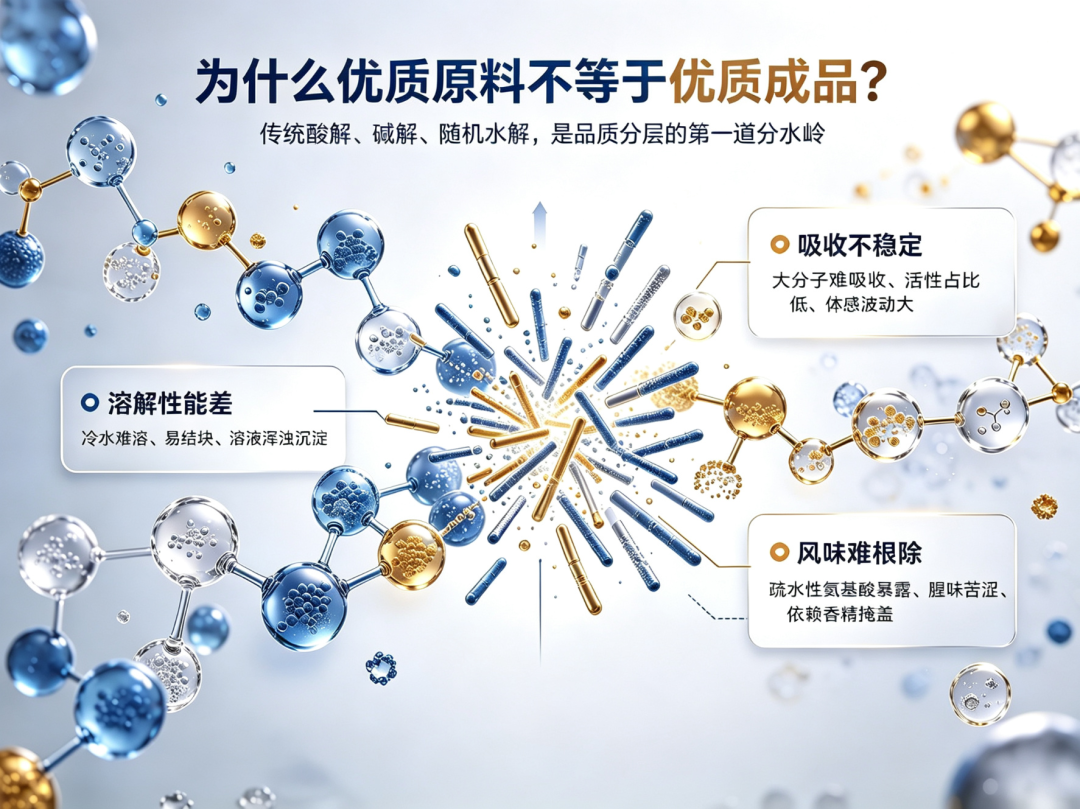
在胶原蛋白肽行业,长期存在一种普遍的市场悖论:不少产品标榜深海鳕鱼优质原料,消费者实际体验却大打折扣——腥味刺鼻、冲泡结块、溶解浑浊、服用后体感微弱。原料品质没有问题,真正拉开产品差距的,是水解工艺的层级差异。传统酸解、碱解、随机水解工艺,仅能实现蛋白质大分子的粗略拆分,无法精准保留活性结构,这也是市面多数胶原肽“原料高端、成品低端”的核心症结。随着行业规范化、精细化升级,定向酶切技术已然成为头部原料企业的核心技术分水岭,彻底打破传统工艺的品质瓶颈。本文将从技术原理、工艺优势、落地标准三个维度,深度拆解定向酶切如何从根源提升胶原肽综合品质,同时结合行业标杆工艺落地案例,梳理可落地的原料甄选标准。一、传统水解工艺的核心瓶颈:优质原料难以转化为优质成品市面上绝大多数普通胶原肽,采用的是粗放式随机水解工艺,如同用大锤击碎整块蛋白质,切割过程无规律、无靶向性。最终产物肽段长短混杂,既包含小分子二肽、三肽,也存在大量长链多肽、未水解完全的大分子蛋白,直接造成分子量分布过宽的行业通病。这种工艺缺陷会衍生出三大终端问题,也是消费者和品牌方最头疼的痛点:第一,溶解性能差。肽段大小不均、大分子杂质残留多,导致产品冷水难溶、极易结块,冲泡后溶液浑浊、静置沉淀,直接影响产品观感与使用体验。第二,吸收效果不稳定。长短不一的肽段人体吸收效率差异极大,大分子无法被肠道直接吸收,活性成分占比极低,造成“吃了但没效果”的消费体验。第三,风味瑕疵难根除。随机水解会强制暴露大量疏水性氨基酸,这类物质是鱼腥味、苦涩味的主要来源,也是多数产品只能靠香精掩盖异味的根本原因。行业内一直有一个直观的品控方法:无需复杂检测,只需冷水冲泡静置十分钟,溶液的清澈度、稳定性、无异味程度,就能直观判定一款胶原肽的工艺层级与品质高低。二、定向酶切技术底层逻辑:从“粗暴粉碎”到“精准裁剪”区别于传统工艺的无差别破坏,定向酶切是一套精准、可控、靶向的生物裁剪体系。核心原理是甄选专属功能性蛋白酶,利用不同酶的分子识别特性,精准锁定胶原蛋白链上的固定切割位点,通过精准调控酶解温度、时间、酶制剂配比,有规律地拆分蛋白链条,完整保留原生高活性肽段,剔除无效、杂质片段。如果说传统随机水解是“无序撕碎书籍”,最终只剩杂乱纸屑;那定向酶切就是“按章节精准拆解”,每一段活性肽结构完整、功能清晰,从根源上保留胶原蛋白的原生生物活性。行业标杆企业的工艺落地,充分印证了这套技术的价值。以深耕胶原肽技术迭代的海南华研为例,其自研精准靶向酶切工艺彻底摒弃随机水解模式,针对鳕鱼皮、鱼骨等不同深海原料的蛋白结构特性,定制专属酶切方案,做到“一原料一工艺”,最大程度留存深海鳕鱼原生活性肽片段,避免活性成分被破坏、流失,从工艺源头锁定产品功效稳定性。三、四大硬核品质升级:定向酶切带来的全方位产品突破定向酶切并非单一工艺噱头,而是能落地、可量化、可检测的品质升级体系,核心体现在纯度、稳定性、口感、生物活性四大维度。(一)源头提纯,降低后续纯化损耗传统随机水解会生成大量无效杂肽、游离氨基酸与杂质,后续纯化压力极大,即便经过深加工,也难以彻底剔除,容易影响成品纯度与稳定性。而定向酶切从切割阶段就精准规避无效片段,大幅减少杂质生成。搭配高端提纯工艺,可实现原料极致纯净。行业主流高端解决方案为靶向酶切+超滤膜浓缩+离子柱纯化成套工艺,这套组合工艺也是头部供应链的核心技术壁垒。经过全流程提纯的胶原肽,可实现0脂肪、无胶质、无多余杂质,基底纯净度拉满,为下游复配配方、多剂型生产筑牢基础。(二)肽段均匀稳定,适配全场景生产应用定向酶切可将肽段分子量高度集中在优质区间,杜绝大小分子混杂问题。标准化的小分子结构,让原料具备优异的冷水速溶特性,冲泡无结块、无颗粒、溶液清澈透亮,批次品质高度统一。同时成品耐高低温、耐酸碱,理化性质稳定,可与维生素、益生菌、植物提取物等各类活性成分兼容复配,无拮抗反应,完美适配口服液、软糖、片剂、固体饮料等全剂型生产需求,彻底解决品牌方复配生产、成品储存的品质波动难题。(三)从根源去腥味,实现原味纯净口感胶原肽的腥味、苦涩味,核心是工艺缺陷导致的疏水性氨基酸暴露与杂质残留。定向酶切通过精准切割,大幅减少异味物质生成,再搭配专业脱色脱味、无菌提纯工艺,无需添加香精、甜味剂即可实现无腥、无涩、口感纯净的效果。口感是终端消费复购的第一道门槛,极致纯净的基底口感,尤其适配口服饮品、儿童软糖、高端滋补品等对风味要求严苛的品类,大幅提升消费者体验感。(四)定向富集活性肽,真正实现有效养护这是定向酶切最核心的技术价值。胶原三肽、环二肽等特异性活性肽段,是胶原蛋白肽发挥护肤、关节养护功效的核心关键。传统随机水解会切碎、损耗这类珍稀活性片段,导致成品“有含量、无活性、无效果”。而定向酶切可精准富集高活性功能肽段,锁定有效成分含量,让产品功效有明确的数据支撑和原理支撑。行业多项重点研发项目均围绕这一核心技术深耕,聚焦水产胶原三肽的定向富集、精准检测技术攻关,推动胶原肽行业从“概念营销”走向“功效实证”。四、技术落地核心:精准酶切需要全链路工艺配套定向酶切不是单一独立工序,想要发挥最大价值,必须依托完整闭环的生产工艺链与优质原料基底,单一技术无法实现品质质变。行业标准化高端生产链路,需覆盖原料前处理、精准酶解、高温灭酶、滤芯除菌、纳滤膜脱盐、无菌提取、离子柱纯化、脱色脱味、喷雾干燥全流程。其中超滤膜浓缩与离子柱纯化是承接精准酶切的关键后置工序,能够进一步提纯活性肽、剔除微量杂质,让精准酶切的技术优势真正落地。同时,优质原料是工艺赋能的基础。高端深海胶原肽甄选500-1500米洁净深海海域鳕鱼原料,野生持证捕捞、全程可溯源,从源头规避重金属、有机污染物残留。只有原料基底纯净,精准酶切技术才能最大化发挥价值,避免“巧妇难为无米之炊”的行业困境。五、B端甄选指南:4个方法验证真实酶切技术水平目前行业“伪定向酶切”概念泛滥,很多普通水解产品刻意炒作工艺噱头。品牌方、经销商甄选原料与代工供应链,可通过4个实操方法辨别真伪,避开工艺陷阱:(一)核查分子量分布曲线不看单一数值标注,重点看分子量分布图,优质定向酶切产物曲线紧凑集中,无大范围离散,证明肽段均匀、工艺精准。(二)索要活性肽检测数据要求提供胶原三肽、环二肽等核心活性成分的具体含量检测报告,无精准活性数据的“定向酶切”均为概念炒作。(三)自主开展稳定性测试冷水冲泡观察溶解速度、溶液清澈度;通过高温、常温加速储存测试,观察成品是否吸潮、变色、结块,验证批次稳定性。(四)确认工艺定制能力鱼皮、鱼骨、陆生肽、植物肽等不同原料蛋白结构不同,酶切方案必须差异化。通用一套工艺的供应链,基本属于传统随机水解工艺。行业成熟供应链的核心优势,正是具备全品类定制化酶切能力,覆盖海洋肽、陆生肽、植物肽等多品类原料,针对不同原料特性匹配专属工艺方案,真正实现技术落地,而非营销噱头。同时支持客户实地溯源验厂,工艺、产能、品质全程透明可查。六、工艺深度,才是终极产品壁垒当下胶原蛋白肽赛道,已经彻底告别“原料稀缺红利”,进入工艺精细化竞争时代。消费者愈发理性、品牌竞争愈发内卷,单纯的原料概念包装早已无法支撑终端复购,唯有硬核工艺带来的纯净口感、稳定品质、真实活性,才是产品长效竞争力的核心。定向酶切技术的普及与迭代,推动行业从“粗放生产”走向“精准智造”。深耕行业二十余年的海南华研凭借持续的科研投入,搭建起完善的技术体系与产能体系,依托近200项国家专利、十余项省市国家级重点研发项目、高学历专属科研团队,持续迭代定向酶切及配套提纯工艺。长期稳居行业出口前列、持续服务众多国民头部品牌,正是技术实力与品控能力的最好市场佐证。对于B端品牌而言,选择具备真实定向酶切技术、全链路工艺闭环、科研实力扎实的源头供应链,不仅是选择一款原料,更是为终端产品的品质、口碑、复购率筑牢核心护城河。温馨提示:本文技术原理、工艺标准、行业数据均来源于行业公开技术文献与头部企业公开资料,仅供行业交流与原料甄选参考。胶原蛋白肽为普通食品原料,不具备疾病治疗功效,产品效果因人而异,不构成任何合作、投资与医疗建议。

●|行业资讯9月24日,国家食品安全检验检测技术研究中心发布通知,面向行业征集《保健食品原料 乳清蛋白》《保健食品原料 DHA藻油》《保健食品原料 大豆分离蛋白》《保健食品原料 番茄红素》四项国家标准的起草工作组成员和相关样品。此次被列入国标制定计划的四项原料,均为保健食品领域使用频次极高、市场规模较大的核心功能性原料:乳清蛋白:蛋白质补充类保健食品的主要原料,广泛应用于增强免疫力、运动营养等产品。DHA藻油:以藻类为来源的DHA原料,主要用于辅助改善记忆、促进脑健康类产品,近年来在孕产妇及婴幼儿营养领域需求快速增长。大豆分离蛋白:植物蛋白的代表性原料,是蛋白粉、营养棒等产品的核心成分。番茄红素:天然抗氧化剂,常用于抗氧化、辅助保护心血管等功能的保健食品。这四项原料此前虽有行业标准或企业标准可循,但长期缺乏统一的国家级标准,导致产品质量参差不齐、检测方法不一,监管执法也缺乏明确依据。根据通知,四项标准由全国特殊食品标准化技术委员会(SAC/TC 466) 归口,国家食品安全检验检测技术研究中心牵头组织起草,主管部门为市场监管总局(特殊食品)。其中,《保健食品原料 乳清蛋白》的国家标准计划已于2026年1月28日正式下达,项目周期18个月,主要起草单位包括国家市场监督管理总局食品审评中心等。本次征集面向全行业开放,有意参与标准制定的单位需填写申请表并提供相关样品,截止时间为2026年11月1日。此次四项国标集中启动,释放出一个明确信号:保健食品原料领域的标准化建设正在加速。近年来,监管部门对保健食品的整治从终端产品向上游原料延伸,原料端的标准缺失,曾导致部分企业以次充好、标注模糊,而统一国标的建立将为原料质量、检测方法、标签标识提供明确规范。对合规企业而言,国标出台意味着劣质低价竞争空间被压缩,行业集中度有望提升,对监管部门而言,则获得了更清晰的执法依据,四项标准均属推荐性国标,但一旦实施,将事实上成为保健食品注册备案和市场监管的重要技术参照。研究行业 / 客观报道 / 推动发展未经授权 禁止转载期待分享朋友圈点“在看”,让食安时代的声音传播更远…
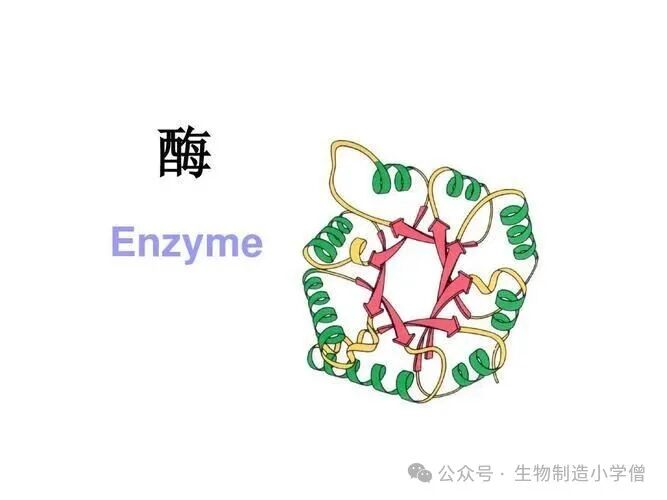
如果说生物制造是未来的"绿色工厂",那么酶制剂就是这座工厂里的"芯片"。今天,我们用一篇文章讲清楚:这个行业的地位有多重、产业链怎么跑、产能在哪里、巨头们怎么玩,以及中国玩家的机会到底在哪。一、行业地位:生物制造的"芯片",含金量被严重低估酶是由生物体产生的生物催化剂,能让化学反应在常温常压下高效、高选择性地进行。相比传统化工的高温高压、强酸强碱,酶催化过程更节能、更清洁、副产物更少——这正是生物制造替代传统化学工艺的核心逻辑。在生物制造的版图里,酶制剂的角色可以用三个"关键词"概括:1. 核心催化剂。 从淀粉糖、燃料乙醇到手性药物中间体,几乎所有生物转化路线的第一性工具都是酶。没有酶,生物质就只是生物质,无法变成葡萄糖、乙醇、氨基酸和高价值化学品。行业里常把酶比作生物制造的"芯片"——"十五五"相关规划中,酶制剂已作为生物制造核心要素被直接点名。2. 高壁垒赛道。 酶的开发依赖菌种资源、蛋白质工程、发酵放大和配方应用技术的长期积累,头部企业动辄拥有上万种酶蛋白的数据资产,后来者很难速成。这造就了全球市场"寡头+长尾"的格局。3. 万能放大器。 酶不是孤立产业,而是渗透进食品饮料、饲料、洗涤、纺织、造纸、生物能源、医药诊断、环境治理等几乎所有工业门类。据 Global Market Insights 等机构数据,2025 年全球酶制剂市场规模约 150 亿美元级别(部分宽口径统计达 180-250 亿美元),预计 2030 年接近 300 亿美元,年复合增速 6.5%-8%。中国市场是增长的核心引擎。 2025 年中国酶制剂市场规模约 430-460 亿元人民币,占全球约四分之一到三分之一(统计口径不同),年增速 9% 以上,显著高于全球平均水平;全年产量约 215 万吨,同比增长约 11%,已是全球最大的酶制剂生产国,进口依存度降至 5.5% 的历史低位。二、产业链全景:从一株菌到一条绿色生产线酶制剂产业链可以清晰地分为三段:上游:菌种 + 原料 + 设备,"一株菌决定一家厂"上游的胜负手是菌种。 主流表达体系包括芽孢杆菌、黑曲霉、毕赤酵母、里氏木霉四大类,头部企业均构建了自主表达平台。基因工程与重组 DNA 技术已应用于约 75% 的高产量酶生产,CRISPR 技术在产酶菌株改造中的渗透率从 2021 年的 12% 升至 2025 年的 41%。中游:发酵 + 提取 + 制剂,成本与纯度的平衡术典型流程为:菌种开发 → 种子培养 → 液体深层发酵 → 菌体分离 → 酶提取浓缩 → 纯化 → 标准化 → 复配制剂 → 包装。两个行业常识值得记住:• 约 85% 的工业酶采用液体深层发酵,固态发酵则因成本低在饲料酶等领域仍占一席之地;• 下游分离纯化环节占制造成本的 50%-70%——酶好不好做是一回事,提不提得纯、稳不稳定是另一回事,这正是国内企业与国际巨头差距最大的环节之一。下游:应用即市场,"酶卖的不是产品,是工艺"下游覆盖极广,2025 年全球结构大致为:工业酶(淀粉加工、洗涤剂、纺织、造纸、生物燃料)约占六成以上,食品饮料酶约占两成,饲料酶增速最快(全球约 26-35 亿美元规模,同比增 14%),医药与诊断用酶体量小但利润率最高。行业竞争的本质正在从"卖酶"升级为"卖解决方案":客户要的不是一公斤蛋白酶,而是"让我的洗涤剂冷水去污力提升 20%"、"让我的饲料配方料肉比下降 3%"。应用技术、定制复配与持续技术服务,构成了超越产品本身的护城河。三、产能分布:欧美握着技术,亚洲握着产能全球版图• 丹麦:全球酶工业的"圣地"。诺维信(Novonesis)在卡伦堡等地的发酵基地代表了世界最高水平,丹麦一国产能约占欧洲四分之一,是全球最大的酶出口国之一;• 美国:IFF(原杜邦工业生物科技)、DSM-Firmenich 等在弗吉尼亚、爱荷华、威斯康星等地拥有大型发酵基地,与丹麦合计贡献全球约 60% 以上的高活性酶基础产能;• 中国:全球最大生产国,产能集中于山东、江苏、浙江、广东、宁夏等省份,约占全球发酵产能的 15%-20%,以大宗工业酶和饲料酶为主,并向中高端延伸;• 印度:成本竞争型生产基地,Advanced Enzyme 等企业面向全球供应饲料酶与医药酶;• 欧洲其他(德国、比利时、荷兰)与日本:聚焦特种酶、高端食品酶与医药酶。区域消费上,亚太已占全球消费量约 40% 以上,中国、印度、东南亚增速领跑;但高附加值特种酶的研发专利 70% 以上仍握在欧美日手中。中国呈现"产量大国、出口大国、品牌小国"的错位:2025 年出口额首次突破 25 亿美元(+17.6%),主要面向东南亚、中东、南美;但产品结构仍以大宗酶为主,高端洗涤酶、食品级酶的进口依赖度仍约 40% 以上,"量大而不强"是现状,"国产替代 + 结构升级"是主线。四、头部企业:全球寡头稳固,中国力量崛起4.1 全球第一梯队:并购整合后的"三超多强"全球前五大企业合计份额约 47%-58%。值得注意的是,巨头们近年的共同动作是并购整合(诺维信+科汉森、DSM+帝斯曼芬芳、杜邦并入 IFF)+ AI 蛋白质设计——用平台化对冲单品竞争。头部企业的典型客户结构:Novonesis 长期为宝洁、联合利华等全球日化巨头供应洗涤酶,同时服务中粮、益海嘉里等粮油加工与全球食品饮料集团;IFF 服务全球大型食品、日化与燃料乙醇企业;饲料酶端则对接新希望、温氏、正大等全球养殖与饲料集团。客户粘性来自"产品+技术服务+法规准入"的深度绑定,认证切换周期动辄 12-18 个月。4.2 中国梯队:两家上市公司 + 一批专精特新蔚蓝生物(603739)——"平台型选手"• 2025 年营收 13.66 亿元(+3.43%),归母净利润 6981 万元(+11.45%);2026Q1 净利同比大增 86.57%,动能明显释放;• 酶制剂收入 4.68 亿元,毛利率高达 63.2%,是国内最接近"技术溢价"模式的企业;• 研发投入 1.39 亿元、占营收 10.19%,建有四大表达系统 + 高通量筛选 + AI 酶蛋白优化实验室;• 基于饲料酶大数据平台提供"按配方定制酶"服务,获中粮、温氏、新希望、海大等头部客户认可;• 国际化领先:境外收入 1.22 亿元(+22.54%),覆盖 60 多个国家,在美国、越南、印尼设子公司。溢多利(300381)——"全品类老将,转型阵痛期"• 1991 年成立于珠海,2025 年营收 8.32 亿元(+0.73%),但归母净利润亏损 1978 万元,由盈转亏;• 生物酶制剂收入 6.85 亿元、占比 82.3%,毛利率 45.4%;境外收入 2.95 亿元(+10.2%)、占比升至 35.4%;• 亏损主因:四大基地工程投建带来的折旧攀升、存货减值与市场拓展费用,属于"扩张期报表阵痛"而非主业崩塌;• 覆盖动物营养、人类营养、护理清洁、生物能源、食品饮料、纺织皮革、造纸等八大应用,产品线在国内最全。其他重要玩家:新华扬(武汉,饲料酶老牌劲旅)、夏盛集团(宁夏,固态发酵特色)、尤特尔(湖南,液体发酵新势力)、隆科特等区域龙头。2025 年国内本土酶制剂企业营收合计约 210 亿元,占国内供给的 45.4%,国产化率已从 2019 年的 31% 升至 60% 以上(饲料酶领域国产自给率约 68%-72%)。4.3 国内外对标:差距与追赶国内企业在成本、响应速度、贴身服务上已经不输,饲料酶、纺织酶等领域国产替代基本完成;真正的差距在菌种底层资产、高端纯化工艺和全球品牌信任度——这三样恰恰都是时间的朋友。五、给国内生物制造企业的四点启示启示一:从"卖产品"到"卖方案",护城河在应用端。蔚蓝生物 63% 的酶制剂毛利率证明了一件事:客户愿意为"解决问题的能力"付溢价。国内企业应尽快建立应用数据库、定制复配能力和驻场技术服务体系——这是国际巨头花了三十年筑起的护城河,也是国内企业用"贴身服务"可以更快追赶的赛道。启示二:AI + 菌种,是新周期的入场券。AI 蛋白质设计已把新酶种研发周期从 2-3 年压缩到 6-8 个月,BASF 携手 Ginkgo 的合作是明确信号。国内企业与其在大宗酶红海里卷价格,不如把资源押注在"AI 辅助定向进化 + 自主表达系统"上,用更快的迭代速度对冲巨头的存量资产。启示三:盯住高附加值增量,别在存量里内卷。医药与诊断用酶、生物质转化酶(纤维素酶)、手性合成用酶是增速 15%-20% 的黄金赛道;分子诊断原料酶国内市场已达约 45 亿元。CDMO 模式在医药酶领域渗透率已超 30%,是轻资产切入高端市场的现实路径。启示四:出海是必答题,而且是"带方案出海"。中国酶制剂出口已突破 25 亿美元且结构持续上移,但出口目的地集中在价格敏感市场。参考蔚蓝生物"美国+越南+印尼+香港"的布局,未来竞争不是把酶卖出去,而是把"本土化产能 + 本土化服务 + 国际认证"整套体系搬出去,在巨头腹地与后院同时落子。六、行业展望:三个确定性1. 政策确定性。 生物制造已被列入国家前瞻布局的未来产业,"十五五"生物经济专项规划持续加码,酶制剂作为核心"芯片"明确受益;绿色工艺相关税收优惠等配套政策逐步落地,国产替代从"市场自发"进入"政策+市场双轮驱动"。2. 需求确定性。 全球市场 2030 年有望接近 300 亿美元,中国有望突破 700-1100 亿元人民币(口径不同)。替抗饲料酶、低糖健康食品酶、生物燃料与生物质炼制酶、分子诊断酶四大方向需求增长明确,传统大宗酶则进入"总量平稳、结构升级"阶段。3. 格局演化的确定性。 全球看,巨头整合与 AI 平台化将加剧头部集中;中国看,"上市公司 + 专精特新"的双层结构将长期并存。未来五年的分水岭在于:谁能率先在高端食品酶、医药酶和国际化认证上完成从 0 到 1,谁就能把"国产替代"的故事讲成"全球替代"。酶很小,小到肉眼不可见;酶也很大,大到承载一个产业向绿色转型的全部想象力。对中国生物制造而言,把"芯片"握在自己手里,才真正握住了生物经济的入场券。附录:酶制剂行业专业名词解析酶(Enzyme)生物体产生的具有催化功能的蛋白质(少数为 RNA),能在温和条件下高效催化特定化学反应,被誉为生物制造的"芯片"。酶活力(Enzyme Activity,U)衡量酶催化能力的指标,指一定条件下单位时间内转化底物的量,常用"酶活单位 U"表示。商品酶标注"10万 U/g"即每克制剂含 10 万个活力单位。比活力(Specific Activity)单位蛋白质量中所含的酶活力(U/mg),反映酶制品的纯度,比活力越高纯度越高。菌种(Strain)用于发酵产酶的微生物,是酶制剂企业最核心的生物资产;同一酶种不同菌株的产酶水平可相差数十倍。表达系统(Expression System)将目标酶基因导入宿主微生物进行生产的体系,工业上常用芽孢杆菌、黑曲霉、毕赤酵母、里氏木霉四大系统。基因工程菌(Genetically Engineered Strain)通过重组 DNA 技术改造过的产酶菌株,可将酶产量提升数十至数百倍,目前约 75% 的高产量工业酶由基因工程菌生产。定向进化(Directed Evolution)模拟自然进化、对酶基因进行随机突变和高通量筛选,获得性能(耐热、耐碱、活性)更优酶变体的蛋白质改造技术,是酶工程的核心方法。AI 蛋白质设计(AI Protein Design)利用人工智能预测和设计酶蛋白结构与功能的技术,可将新酶研发周期从 2-3 年缩短至 6-8 个月。CRISPR 基因编辑一种精准基因编辑技术,用于产酶菌株的理性改造,2025 年在头部企业菌株改造中的使用比例已达 41%。液体深层发酵(Submerged Fermentation, SmF)在液体培养基中通气搅拌培养微生物的发酵方式,自动化程度高、易放大,约 85% 的工业酶采用此工艺。固态发酵(Solid-State Fermentation, SSF)以麸皮等固体农副产品为基质的发酵方式,成本低、能耗少,常见于饲料酶和传统酿造酶生产。发酵效价 / 产酶水平单位发酵液中酶活力的多少(U/mL),是衡量菌株与工艺水平的核心指标。分离纯化(Downstream Processing)发酵后对酶进行分离、浓缩、纯化的过程,通常占酶生产总成本的 50%-70%,是高端酶的技术门槛所在。制剂化 / 复配(Formulation)将酶加工成液体、粉剂或颗粒,并稳定化、复配增效的过程,决定酶的储运稳定性与应用效果。固定化酶(Immobilized Enzyme)将酶固定在载体上使其可重复使用的制剂技术,大幅降低果糖浆、手性药物等连续化生产的用酶成本。耐热性 / 稳定性(Thermostability / Stability)酶在高温或极端 pH 下保持活性的能力,是工业酶性能分级的关键指标,耐高温淀粉酶即典型代表。生物制造(Biomanufacturing)以生物体(细胞、酶)为生产工具,把生物质或无机原料加工为化学品、材料、能源的制造范式,国家前瞻布局的未来产业。合成生物学(Synthetic Biology)对生物体系进行设计、改造乃至从头合成的学科,为酶制剂提供全新菌种与酶分子资源。生物炼制(Biorefinery)以生物质为原料,像石油炼厂一样联产燃料、化学品与材料的平台,纤维素酶是其核心催化剂。手性合成(Chiral Synthesis)利用酶的高选择性合成单一构型药物分子的技术,医药用酶的高利润所在。CDMO合同定制研发生产,指接受客户委托进行酶或生物产品的研发与生产服务,在医药酶领域渗透率已超 30%。GRAS 认证美国 FDA"一般认为安全"资质,食品酶进入美国市场的通行证;欧盟则需通过 EFSA 评估。国产替代(Import Substitution)用本土产品替代进口产品的进程,中国工业酶国产化率已从 2019 年的约 31% 提升至 2025 年的 60% 以上。CR5行业前五大企业的市场集中度。全球酶制剂 CR5 约 47%-58%,中国 CR5 约 43%-45%,属中高集中度行业。替抗(Antibiotic Replacement)饲料端用酶制剂、益生菌等替代抗生素生长促进剂的趋势,是饲料酶高速增长的核心驱动。
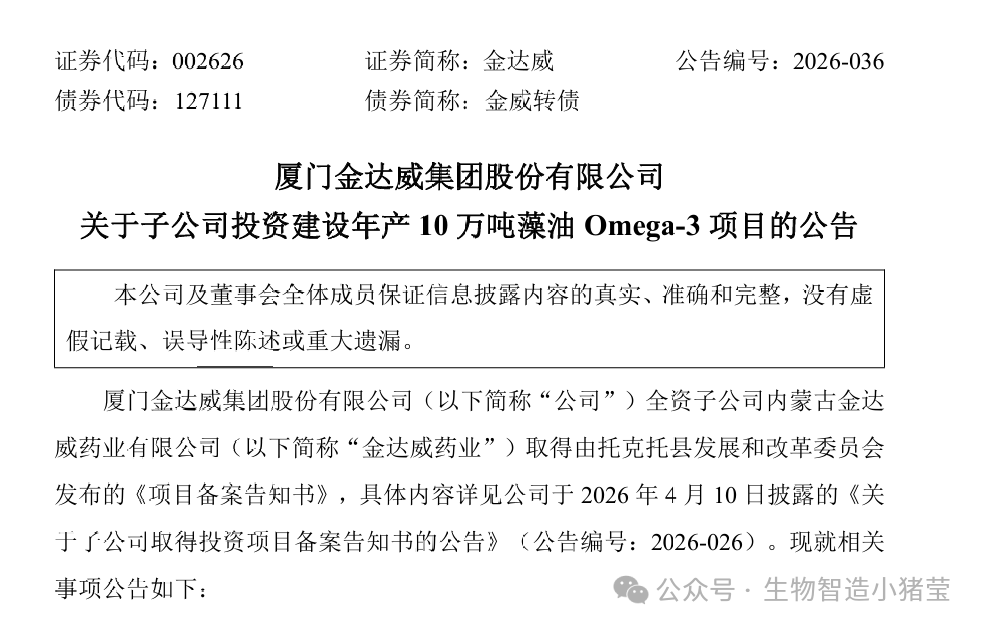
2026年4月,金达威公告拟投资12亿元,建设年产10万吨藻油Omega-3、12.5万吨藻粕项目,预计建设期36个月。但首先要说清楚:10万吨是藻油Omega-3规划产能,不是10万吨纯EPA,也不是已经投产。公司明确表示项目仍处于前期阶段,短期内不会对经营业绩产生重大影响。金达威项目公告 为什么一家以辅酶Q10、DHA和营养品见长的企业,要把12亿元投向藻油?答案之一,就是EPA。 EPA中文名为二十碳五烯酸,是一种长链Omega-3多不饱和脂肪酸,分子中含有5个双键。人们通常从鱼油中获得EPA,但鱼并不是EPA最初的制造者。海洋微藻合成EPA,小型生物摄食微藻,鱼类再通过食物链把EPA富集起来。因此,生产EPA有两种思路:从鱼体内提取,或者绕过鱼,直接培养微藻。EPA与DHA经常出现在同一种鱼油或藻油中,但二者定位并不完全相同:EPA更偏向心血管、血脂管理和炎症相关营养研究;DHA更偏向大脑、视网膜及婴幼儿营养;EPA+DHA复配油则是膳食补充剂、食品和动物营养中更常见的产品。 需要注意,食品级EPA原料不能直接宣称治疗疾病。高纯度药用EPA属于另一套药品研发、生产和审批体系。为什么要用生物制造生产EPA 传统鱼油产业已经非常成熟,但仍存在几个问题:鱼油供应受捕捞季节和海洋资源影响;EPA和DHA比例难以完全按照客户需求控制;需要处理鱼腥味、重金属和环境污染物;素食消费者不愿意使用鱼油;高纯度EPA需要进一步浓缩和分离。 微藻路线可以在相对封闭的环境中生产,减少对捕捞资源的依赖,并有机会通过菌种筛选和代谢调控,生产特定比例的EPA、DHA或EPA+DHA。但必须区分两种路线。第一种:光合微藻养殖使用阳光、海水或培养液,在跑道池或光生物反应器中培养拟微球藻,随后进行采收、脱水、破壁、提油和精炼。这属于微藻生物制造,但不一定属于精密发酵,也不一定使用基因工程菌株第二种:发酵罐生产使用能够积累EPA或EPA+DHA的微藻、酵母或其他工程微生物,以葡萄糖等作为碳源,在封闭发酵罐内高密度培养。大致过程是:碳源进入细胞→ 形成乙酰辅酶A和丙二酰辅酶A→ 合成长链脂肪酸→ 去饱和酶、延长酶或PUFA合酶继续加工→ 形成EPA→ EPA储存在细胞膜或油脂中→ 收集菌体、破壁、提油、精炼和浓缩进一步做合成生物学改造时,可以调整:EPA合成酶系;乙酰辅酶A和NADPH供应;脂肪酸延长与去饱和反应;β-氧化降解通路;EPA与DHA的比例;油脂在细胞内的储存能力;菌株对高密度培养、氧化压力和剪切力的耐受性。 不过,市场上的藻油并不都是转基因产品。dsm-firmenich的life’s®OMEGA就采用天然非转基因微藻进行封闭式精密发酵。dsm-firmenich产品资料EPA能做成哪些产品EPA不是只有“装进胶囊”一种卖法。产品方向产品形态主要客户微藻EPA原油食品级藻油营养品原料企业高浓度EPA浓缩油、乙酯型或甘油三酯型膳食补充剂企业EPA+DHA复配油不同比例藻油鱼油替代、功能食品企业EPA粉剂微胶囊粉末固体饮料、食品企业EPA乳液水分散型乳液饮料、乳制品企业动物营养EPA饲料油脂水产、宠物食品企业高纯药用EPA药用原料及制剂制药企业,需独立审批 其中,保健食品和膳食补充剂利润空间较好;水产饲料用量较大但对价格非常敏感;药用高纯EPA价值高,但法规和临床壁垒也最高。中国的监管进展 2024年,国家卫健委批准拟微球藻油作为新食品原料。公告规定:原料来源为拟微球藻;采用乙醇提取、过滤、纯化和浓缩等工艺;EPA含量不低于20 g/100 g脂肪酸;推荐食用量不超过2克/天;婴幼儿、孕妇和哺乳期妇女不宜食用。 这意味着中国已经为微藻EPA打开食品原料入口,但本次获批的工艺描述是微藻培养后提取,不能简单理解为所有工程菌发酵EPA都自动获得准入。国家卫健委公告解读如果更换藻种、工程菌株、生产方式或产品规格,仍可能需要重新评估法规路径。国内外哪些企业在做企业路线与产品当前阶段金达威拟投资12亿元建设10万吨藻油Omega-3项目,覆盖EPA、DHA等功能油脂方向项目前期,规划产能不是实际产量小藻科技拟微球藻光合培养、采收和EPA提取公司称已实现工业化并服务100多家客户,具体销量未披露嘉必优筛选高EPA菌株,发展微生物功能油脂平台已披露完成中试,尚未披露EPA规模化销售dsm-firmenichlife’s®OMEGA微藻精密发酵,生产EPA+DHA藻油已商业化,O3020产品EPA∶DHA为1.5∶1Veramaris封闭式微藻发酵EPA+DHA,面向水产和宠物食品已规模化供货,正在扩展鱼油替代产品 小藻科技采用的主要是阳光、海水、管道反应器和跑道池培养路线,与发酵罐路线不同。其官网称一期工厂2018年投产,但二期基地页面仍使用“预计投产”的表述,因此不能据此认定二期已经达到设计产量。小藻科技官网EPA真正难在哪里1. 必须与成熟鱼油竞争 EPA不是一个完全没有传统供应链的新产品。发酵EPA要面对鱼油长期形成的成本、渠道和消费者认知优势。客户最终比较的不是“一公斤藻油多少钱”,而是:一公斤有效EPA的综合成本是多少。2. 既要高产油,又要高EPA 菌株油脂含量高,不代表EPA含量高;EPA比例高,也不代表发酵产量和生产强度足够。真正有意义的指标是:生物量 × 总油脂含量 × EPA占比 × 提取收率只公布其中一个数字,往往无法判断工艺是否具有经济性。3. 高密度发酵不容易 高密度培养会带来氧传递不足、发酵液黏度上升、泡沫、散热和营养分布不均等问题。部分脂肪酸去饱和反应又需要充足的氧气,放大后容易出现EPA比例下降。4. EPA非常容易氧化EPA有5个双键,对氧气、光照和温度敏感。生产过程中需要控制过氧化值、茴香胺值、气味和货架期。因此,EPA项目不仅是菌株工程,还包括:低温提取;脱色和脱臭;分子蒸馏;抗氧化体系;氮气保护;微胶囊化;包装和储存。5. 鱼腥味消失,不等于没有异味微藻油可能存在藻腥味、发酵味、土腥味或氧化味。饮料、乳制品等应用对气味非常敏感,因此配方和微胶囊技术同样重要。6. 中国发酵EPA仍缺少公开商业数据国内已经出现菌株、中试和大型规划项目,但稳定发酵滴度、EPA含量、满负荷成本、客户采购量等关键数据仍较少公开。这个选品值不值得做 EPA是一个需求已经存在、传统市场成熟、生物制造正在替代部分鱼油供应链的产品。它不需要从头教育消费者,但也不是没有竞争者的蓝海。 如果只有一株“EPA含量较高”的实验室菌株,却没有发酵放大、精炼、法规和客户验证,距离产业化仍然很远。更合适的立项方式不是只生产一种普通EPA原油,而是建立:高EPA菌株+可调EPA/DHA比例+低氧化精炼+乳液和微胶囊剂型+食品与动物营养双渠道 一句话结论:EPA不是下一个完全复制DHA的产品,而是一场“微藻和发酵罐能否替代部分鱼油”的供应链竞争。 本文所涉企业信息仅供参考,不代表本公众号立场,亦不构成任何投资建议。相关数据以企业官方公告为准,投资须谨慎往期好文推荐乳铁蛋白:一公斤数百美元,为什么成了合成生物学盯上的“黄金蛋白”?角鲨烯:从鲨鱼肝油到微生物发酵,合成生物学正在改写这个老产品微构工场:用微生物做出可降解塑料从AI设计到自动化生产,生物制造的下一场竞争是“交付速度”从植物提取到稀少糖产业化,瑞芬生物如何把“健康配料”做成一门生意?往期课程推荐订阅会员畅享所有课程超值第三期蛋白分子模拟超值第一期分子对接订阅第一期AI-VS-MD-RF3-vibecoding
教育部科技查新工作站报告认定,岭南师范学院联合湛江企业研发的"深蓝系列"沙虫、生蚝酸奶为全球首个动物源海洋活性物质与乳品发酵结合的产品。团队以定向酶解将沙虫多糖、胶原肽与生蚝牛磺酸转化为益生菌营养底物,打破海产"鲜食依赖",为海洋食品精深加工提供了可复制路径。2026年9月1日,湛江岭南师范学院的一场发布会现场,两款看起来平常的酸奶被摆上台面——“深蓝系列”沙虫酸奶与生蚝酸奶。半个多月过去,这两款"海鲜酸奶"意外走红,据报道,校园超市上架当天即售罄,不少外省消费者甚至专程托湛江亲友代购寄送。随后,该款鲜奶热度再赠,教育部科技查新工作站近日出具报告(编号:202636000L380134),认定岭南师范学院生命科学与技术学院联合企业研发的沙虫、生蚝发酵乳制品,是全球首个通过定向酶解技术将沙虫多糖、胶原肽与生蚝牛磺酸融入益生菌发酵体系的海产酸奶,海内外公开文献中未见同类报道。抛开“海味入鲜奶”的新奇事件,把它放回海洋食品产业的坐标系里,这杯酸奶触及的是一个远比口味更硬的命题:湛江的沙虫与生蚝长期以鲜活食材形态流通,精深加工链条短、附加值极低。这不是一地一品的尴尬,而是中国海洋食品加工业的普遍困局。 鲜食依赖锁死的价值天花板沙虫与生蚝,是湛江辨识度最高的“海洋双珍”。资料显示,沙虫(学名方格星虫)素有“海洋虫草”之称,干品蛋白质含量达60%—70%,富含活性多糖、胶原肽以及锌、硒等微量元素;生蚝则富含牛磺酸和活性多肽。从营养密度看,这两样海产完全配得上更高的身价。现实却是,它们大多以鲜活食材或传统菜式的形态进入市场。据《中国科学报》报道,这一局面长期受困于三道坎:腥味去除难、活性成分提取保留难、精深加工链条短。前端餐饮市场再热闹,后端加工端接不住,原料就永远停在“按斤称”的初级阶段。湛江坐拥全国领先的生蚝养殖规模,沙虫更是本地宴席的招牌物产,消费者对它们的认知度和接受度从来不缺。缺的,是一条能把活性物质从食材里“拿”出来、留住、再送进高附加值产品形态的加工链。 从"食材"到"底物"的27步跃迁岭南师范学院团队的解法,不是把海产原料加进酸奶,而是让它换一种身份参与发酵。据南方+报道,研发团队耗时一年,先后攻克了27个核心技术节点。其中关键环节是定向酶解:沙虫中的多糖和肽类经过酶解后,转化为乳酸菌可以直接利用的“营养底物”;生蚝的牛磺酸等成分则被引入同一发酵体系。这一处理后,海产原料不再是被动混入的“馅料”,而成为驱动发酵的功能性配料。研发负责人、岭南师范学院生命科学与技术学院副院长王锂韫在接受《中国科学报》采访时明确,这不是食材的简单混合,而是借助生物发酵技术实现的营养“1+1>2”。所谓“双向滋养”分两步展开:沙虫多糖与肽类为乳酸菌供能,显著提升益生菌的增殖效率与活菌数;反过来,乳酸菌在发酵中分解沙虫的大分子物质,让胶原肽、微量元素等活性成分更易被人体吸收。这套逻辑一旦跑通,意义就超出了两款酸奶。沙虫、生蚝从此可以不再只是餐桌上的食材,而是功能性配料的原料来源——“按斤卖”的农产品,变成“按克卖”的功能性组分,中间的价值差,正是海洋食品精深加工长期没能吃到的部分。 一杯酸奶背后的转化链条从实验室到货架的距离,往往比从配方到样品的距离更难跨越。这款产品的落地,靠的是校地企三方的拼接。据悉,产品由岭南师范学院联合湛江博康海洋生物有限公司、湛江燕塘乳业有限公司共同研发。早在2025年7月,岭南师范学院已与博康海洋生物签署战略合作协议,以“校聘企用”方式派驻博士科技特派员进驻企业,共建联合科研团队与人才培养基地;2026年1月,双方又共建中华鲎资源保护性人工繁育技术创新基地。燕塘乳业则调配技术、生产、品控资源,承接中试环节。湛江市科技局在项目立项与政策配套上提供指导,市食品药品检验所参与工艺合规与安全检测,麻章区参与产业对接。链条上每个角色都不华丽,但缺一不可:高校出技术与配方,企业出产线与品控,地方政府补合规与政策。高校科研成果转化率长期偏低的症结,恰恰卡在“中试”这一环,此次直接启动中试投产,等于把最难的一段先走了。 品类起点,还是单品爆款查新报告给出了“全球首个”的认定,把这款产品推到了品类开创者的位置。但查新报告的边界同样清晰:它确认的是公开文献中未见同类报道,不等于市场意义上已被验证的大单品。与此同时,摆在面前的问题也很实际,目前产品仍处于中试阶段,产能、定价、保质期等关键商业数据尚未公开;中试走红集中在校园场景与尝鲜消费,能否经受更大范围市场的复购检验,还需要时间。更关键的是技术路线的延展性,据湛江日报报道,研发团队已规划高蛋白、胶原、肠道调理及多种特色风味产品,这一酶解加发酵的路径能否向海参、鲍鱼、藻类等更多海洋生物资源复制,才决定它是一次“单品爆款”还是真正的“品类起点”。中国海洋食品加工业不缺原料,缺的是把原料重新定义一遍的技术。沙虫酸奶的启示在于:海洋食品的价值跃迁,未必发生在餐桌,更可能发生在发酵罐里。往期推荐御水飞行获千万级天使轮增资 境外资本首度押注电动水翼艇深圳发布30个海洋应用场景 “海上风电+海底算力”首入清单我国首个南极磷虾部级重点实验室落地辽渔集团:“食药妆”三线并进打开蓝色经济新空间

9 月 23 日,诺斯贝尔化妆品股份有限公司(以下简称“诺斯贝尔”)与上海春露生物化学有限公司(以下简称“上海春露”)共同研究成果发布会于广东中山举行。活动围绕羧甲基脱乙酰壳多糖原料的标准共建、学术探索与产业转化展开交流,并发布双方在羧甲基脱乙酰壳多糖在化妆品中的应用研究成果,推动原料基础科研成果向化妆品端落地应用。发布会由诺斯贝尔化妆品原料推广经理 Max 主持,诺斯贝尔控股股份有限公司董事长、总裁范展华,上海春露总经理徐宇帆,暨南大学化妆品与医美研究院常务副院长刘忠教授,诺斯贝尔化妆品副总裁(研发)邱晓锋等嘉宾出席,诺斯贝尔市场部、研发部、业务部代表以及上海春露技术团队,共同到场见证羧甲基脱乙酰壳多糖在化妆品中的应用研究成果发布。邱晓锋在致辞中表示,美妆行业已从流量叙事迈入证据驱动时代,功效要有机理支撑,品质要有标准依据。诺斯贝尔持续把研发重心向上游原料、基础机理与行业标准延伸,通过产学研伙伴协同共建,搭建原料科研与化妆品产业之间的桥梁,让科研的价值真正实现产业转化、惠及消费者。上海春露总经理徐宇帆回顾了双方自 2017 年以来的合作历程,并指出高质量的产学研合作不是简单的技术输出或项目委托,而是立足产业真实痛点、发挥各自所长,构建长期协同的创新共同体。上海春露深耕原料基础研究与功效实证,诺斯贝尔发挥配方研发、规模化生产与产品转化能力,共同把标准研究、机理研究转化为真正适配化妆品行业的原料与终端产品。暨南大学化妆品与医美研究院常务副院长刘忠教授则从学术与临床视角,解析了该成分在屏障修护、医美术后维稳与抗衰领域的应用前景。 在全场嘉宾的共同见证下,活动现场举行成果发布仪式,正式发布羧甲基脱乙酰壳多糖在化妆品中的应用研究成果。发布仪式结束后,范展华从市场落地角度解读本次产学研成果。他表示,历经多年联合攻坚,从机理机制深挖、原料标准制定、学术论文发表到专利落地,整套科研体系已趋于完善。未来核心目标是加速成果转化,结合原料功效与市场消费习惯,探索多样化产品落地形式,让前沿科研成果转化为可落地、可被消费者感知的终端产品。本次发布会集中展示了双方多年深耕的系列科研成果。在标准建设方面,T/FDSA 0122—2026《化妆品用原料 羧甲基脱乙酰壳多糖》团体标准是双方的共同研究成果之一,联合多所高校、多家科研机构及产业链上下游企业共同起草制定,填补化妆品级原料评价空白,自2026年3月11日起实施。在学术研究方面,双方联合署名论文已录用并预计近期见刊,另有SCI 2区论文在投。在专利与资质方面,以羧甲基脱乙酰壳多糖为核心成分的《羧甲基壳多糖-麦芽糊精的干态速溶面膜及制备方法》已获国家发明专利授权。该专利将羧甲基壳多糖与麦芽糊精结合,围绕干态速溶面膜剂型及制备方法进行创新,是诺斯贝尔在面膜品类上从原料应用、配方开发到剂型创新的又一次落地。在原料应用方面,落地 MHA Micro®、MHA Revival™两款实证原料,诺斯贝尔将两款原料从功效实证转化为可落地的护肤解决方案,针对常规护肤、舒缓修护、医美术后修护、熟龄抗衰等不同赛道输出配方支持,为品牌客户提供从原料、配方研发到功效验证的一体化服务。值得一提的是,诺斯贝尔的角色不止于与原料方的双方协作。诺斯贝尔还把品牌客户邀请进创新链条,共同参与配方开发、功效验证与产品落地,把上游原料创新与下游市场需求直接对接—— 既向上游溯源共建标准,也向下游开放成果,实现从标准到终端产品的全链路协同。从最初的原料应用,到标准共建,再到多维度科研成果的集中输出,诺斯贝尔与上海春露的多年协同,正一步步转化为可落地、可验证的产业成果。 面向未来,双方将持续深化羧甲基脱乙酰壳多糖交叉领域研究,完善原料品质评价体系,输出更多创新护肤解决方案,以产学研协同创新助推助力国货美妆高质量发展。 (中国香妆融媒体发布本文只是为了传递更多的资讯,不代表任何有倾向性的投资意见或市场暗示,仅供行业参考。)/// END ///转载请注明原链接/出处合作 laoduoyuya|头图来源 现场照片更多内容请点击“中国香妆”小程序↓欢迎点击关注【中国香妆公众号】↓
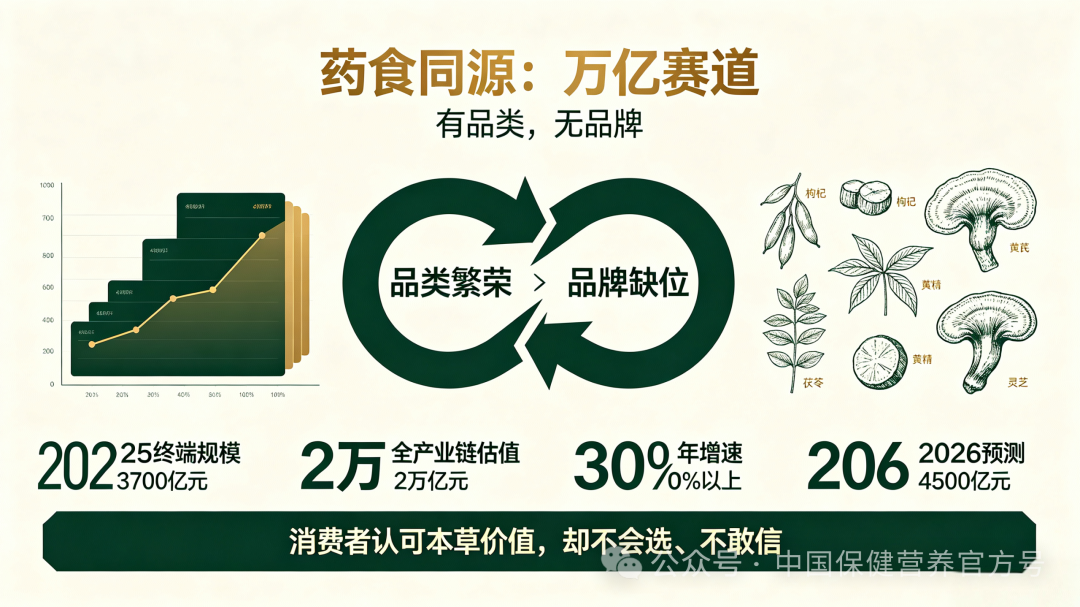
药食同源赛道正在经历一场前所未有的爆发。国内药食同源全产业链估值超2万亿元,行业年增速稳定保持在30%以上。中研普华产业研究院预测,2026年行业市场规模有望突破4500亿元。线上店铺从13.76万个增至16.03万个,入局者蜂拥而至。然而,繁荣的表象之下,一个尖锐的矛盾正在加剧——这个万亿赛道,有品类,却没有品牌。枸杞、黄芪、黄精、阿胶、茯苓、灵芝……每一个品类都有庞大的市场规模和深厚的消费认知,但当你问消费者“你信任哪个药食同源品牌”时,大多数人会陷入沉默。消费者认可本草的价值,却普遍面临“不会选、不敢信”的困境。品类繁荣的背面:低价内卷与信任透支药食同源目录已扩容至106种物质,品类不可谓不丰富。但品类的繁荣并没有转化为品牌的繁荣,反而催生了严重的同质化竞争。行业商品均价虽然从2024年的67.5元升至2025年的74.67元,但大量企业仍陷入“盲目模仿热门产品,缺乏配方、口感与功效创新,最终只能以低价恶性竞争”的泥潭。产品外观高度雷同、定价透明内卷,行业彻底陷入低质低价、有量无利的恶性循环。低价竞争的另一面,是质量底线的失守。2025年,央视曝光重大行业乱象:家住杭州的小周患痛风多年,花1196元购买了两盒宣称“天然萃取、无身体负担”“对痛风有奇效”的压片糖果,客服甚至建议他直接用食品代替处方药。服用两周后,小周出现尿液发黄起泡、心悸等异常症状。经浙江省食品药品检验研究院检测,该普通食品中检出处方药工艺废料:非布司他异丙基衍生物。长期服用可损伤肝肾、危及生命,这也是国内首次在食品中检出该违禁物质。案件由国家市场监督管理总局挂牌督办。专案组查实:涉事企业夜间隐蔽生产、即产即发、零库存规避监管。最终曝光的利润链条触目惊心:•单盒生产成本仅7.48元•经销出货价60元•终端零售价598元溢价近80倍涉事企业被吊销食品生产许可证、罚没3.8亿余元,相关责任人追究刑事责任。7元成本、近600元售价、添加处方药废料——这不是药食同源,是对消费者健康的公然掠夺,更是对整个行业信任根基的致命打击。业内共识:行业最大痛点是法律边界模糊、擦边宣传泛滥、劣质乱象频发,持续透支全行业公信力,消费者彻底陷入真伪难辨、优劣难分的信任危机。政策风向变了:从“拼价格”到“拼质量”行业野蛮生长,迎来国家级政策强力纠偏。2026年9月20日,国新办“开局起步‘十五五’”主题发布会召开。国家市场监管总局副局长束为明确定调:“十五五”时期,市场竞争将全面从拼价格,转向拼质量的良性轨道。这绝非口号,而是系统性、强落地的行业洗牌规则。1、价格监管从严加速修订《价格法》《制止低价倾销行为规定》,搭建1+1+N低价倾销规制体系,对恶意低价内卷、扰乱行业秩序的企业,开展成本稽查、从严处罚。2、质量抽检加码重点盯防低价低质、高风险、不合格高发品类,2026年国家产品质量抽检超1.6万批次,同比提升8%。截至2026年8月,全国已查办劣质低价违法案件2.9万件。官方定调掷地有声:价格战拼不出未来,质量好才能赢得市场。行业逻辑彻底改写:低价走量的野蛮时代落幕,品质立身、品牌取胜的时代正式到来。药食同源行业,必须完成从品类竞争,到品牌竞争的终极跃迁,否则将被彻底淘汰。品牌化的突破口在哪里?药食同源赛道最大壁垒,从来不是产能、不是渠道,而是消费者信任。当下头部玩家的破局思路已经清晰:用专业背书,终结大众“不敢买、不会选”的焦虑;用有据可依,打破行业同质化乱象。消费者不是不需要养生产品,而是需要一个可信的购买理由。核心破局路径集中在三点:1.道地性叙事:依托核心产区资源,建立原料差异化壁垒2.科学化验证:体感测试+动物实验双重佐证,用数据证明功效3.全链条追溯:原料、生产、成品、销售全闭环可控可查而在所有路径之上,最稀缺、最不可复制的核心突破口——宫廷古方IP。宫廷古方:药食同源品牌化的终极文化锚点宫廷古方,是当前药食同源行业最高级的品牌差异化资产,核心优势无可替代:第一:自带国家级权威背书宫廷御用方剂、百年中医药积淀,古方可溯源、选材有标准、工艺有传承。区别于市面无依据的网红配方,天然具备权威、正统、安全的心智优势。第二:构建独家差异化叙事遵循古方可考、工艺可验、质量可追的核心原则,以古籍经典方剂为根基,彻底跳出低价模仿、跟风内卷的低端竞争,完美解决消费者品质辨别难、信任建立难的核心痛点。第三:古方今制,实现标准化产业化行业产学研平台正在系统性激活宫廷古方资源:由资深中医药专家辨证审定古方,依托四性五味、君臣佐使理论科学组方;结合现代食品科技完成配方转化;通过智能数字化生产实现精准投料、恒温熟化、瞬时灭菌,让千年古方标准化、规模化、安全化落地。沉睡百年的宫廷御用良方,不再是古籍文字,而是可量产、可验证、可品牌化的高端产品。这类源自宫廷的经典方剂,选材严苛、配伍精妙、传承有序,是普通网红产品无法复刻的品牌护城河。结语药食同源行业,正站在数万亿规模的关键十字路口。一边是:数万亿市场、30%高速增长、持续扩容的品类红利一边是:同质化内卷、低价恶性竞争、全行业信任透支政策已经给出唯一标准答案:淘汰低价劣质,拥抱品质品牌。拼质量的终极形态,就是拼品牌、拼信任、拼底蕴。未来赛道的王者,一定是能给消费者稳定信任、正统依据、标准品质的品牌。宫廷古方,正是药食同源从品类红利,跃迁为品牌红利的终极文化密码。让产品不再是模糊的养生标签,而是有出处、有传承、有标准、有保障的品牌承诺。品类,是行业入场券;品牌,才是未来唯一的通行证。

在我们日常使用一瓶染发剂,打开一只气垫粉底液的外壳时,是否关注过它对环境的影响,又隐藏着多少碳排放量?——当它的数量叠以万计,千万计时。过去几年,当美妆行业谈论可持续,人们最容易看到的变化,经常在离消费者最近的地方:包装更环保,补充装被鼓励使用。但当这些环节不断向前推进,一个更加系统化的问题浮现出来:一家企业自身推动绿色产业之后,如何推动整条价值链继续向前?欧莱雅选择继续将创新基因与可持续使命相结合,通过内外部共创,赋能美妆行业的绿色未来。去年,欧莱雅集团启动的可持续创新加速器“L’AcceleratOR”,致力于在全球寻找已经具备落地条件的可持续创新方案。L’AcceleratOR来到第二载,在最新一轮的获奖名单中,两家中国企业的身影,成为欧莱雅可持续创新进入产业深水区,践行“双重卓越”的真实写照。而欧莱雅,会继续将创新的大门向外打开。 1 当可持续进入新阶段,创新成为必答题创新,始终构成欧莱雅集团百年来前进的内生动力。而今天,创新要为欧莱雅这样的全球头部美妆集团解决的问题,已经远远超出产品与商业本身,它更要直面“下一代美妆产业,应该长什么样”的议题。2020年,欧莱雅启动“欧莱雅,为明天”可持续发展项目,将引领气候转型、守护自然资源、促进循环利用和赋能社区发展作为四大核心支柱。这背后是被欧莱雅称为“双重卓越”的逻辑:追求经济效益的同时,也追求社会和环境层面的典范效应。欧莱雅北亚总裁及中国首席执行官博万尚提到,“‘双重卓越’,一方面是财务上的表现,另一方面是我们承担的社会责任。这也是为什么我们强调可持续发展,如果没有这样的双重承诺,企业或许可以成功,但很难成为百年企业。”在中国,苏州工厂是一个具体的样本。这座欧莱雅集团全球产能最大的制造基地,自2019年起实现100%使用可再生能源,与此同时,AI视觉检测、数字孪生、协作机器人等技术已经进入新的智能制造车间。欧莱雅北亚及中国运营高级副总裁柏迈昂把这种后端建设概括为“更敏捷、更安全、更绿色”的端到端智慧供应链。在欧莱雅的实践里,“可持续”和“创新”从来都是深入相融的一体两面。在企业自身运营不断减碳后,原材料隐含碳排放、复杂废塑料等上游问题如何解决?这些难题涉及能源、材料、化工等多个行业,已经超出一家美妆企业自身的能力边界。可持续越往深处走,就越需要整个产业共同创新,形成合力。创新的边界也随之打开。 2 L’AcceleratOR的背后,加速寻找绿色创新L’AcceleratOR正是在这样的逻辑下出现。2025年,欧莱雅启动L’AcceleratOR可持续创新加速器项目,计划五年投入1亿欧元,并与剑桥大学可持续发展领导力研究院(CISL)合作,在全球范围寻找、识别、试点并规模化具有突破性的可持续技术。这是“欧莱雅,为明天”进入新阶段后的重要动作之一。作为集团2030年可持续转型的重要推动力,L’AcceleratOR面向全球范围内的初创企业、中小型企业及成熟企业,征集已具备落地部署条件的可持续创新方案。项目重点聚焦七大关键领域:低碳与气候智能解决方案、水系统韧性解决方案、基于自然的解决方案、替代成分与材料、消除化石塑料使用及塑料废弃物、循环与资源管理,以及兼顾可持续和包容性的商业模式。L’AcceleratOR重点聚焦七大关键领域从首批成果看,这套筛选机制已经开始把来自不同产业的绿色技术带进美妆价值链。来自日本的BIOWORKS,就是北亚创新力量进入这一全球平台的代表之一。BIOWORKS总部位于日本京都,是专注开发植物基新一代材料的生物科技企业,与日本及全球企业合作推广可持续新材料。此次入选L'AcceleratOR项目的核心创新是旗舰产品PlaX——基于聚乳酸(PLA)、通过独家分子设计技术升级而成的新一代生物质材料,主要应用于纺织领域并拓展至注塑树脂制品。BIOWORKS与欧莱雅共创研制,为“新一代包装与材料”领域提供可持续解决方案。这意味着入选企业不只是获得行业顶尖辅导,更是借助欧莱雅全球体系寻找更大规模的应用场景,并获得商业合作。可持续创新技术,从一个微小的切面开始,经过产业场景验证,再逐渐被普适化与规模化。而一家全球美妆集团所做的,正是让这种外部的可持续创新不断规模化,并编织进美妆产业可持续网络的毛细血管中。 3 当不同技术与产业融合,可持续创新正在拥有新答案当不同技术进入产业的规模化场景,它们开始拥有了新的价值链。而最近,L’AcceleratOR又迎来了新一批创新企业获奖名单。其中,两家来自中国的企业颇具代表性。它们原本都与美妆相距甚远,却在进入L’AcceleratOR之后,与产业发生了具体的连接。远景科技集团总部位于中国上海,是全球领先的绿色科技企业和未来能源系统领域的全球领导者。公司业务涵盖可再生能源、智能能源管理、绿色氢能、可持续航空燃料及零碳产业园等领域,致力于通过创新技术推动全球绿色低碳转型。此次入选L’AcceleratOR项目,远景率先推动绿氨在染发产品中的应用,以绿氨替代传统化石基灰氨,从原料端助力美妆供应链深度脱碳。通过验证绿氨在染发产品制造中的成功应用,远景希望建立低碳原料创新的新范式,开启新一代低碳美妆原料的发展路径。另一家入选企业惠城环保,则一直在解决塑料循环问题。青岛惠城环保科技集团股份有限公司(HCpect)成立于2006年,总部位于山东青岛,是行业内领先的废物资源化循环利用上市企业。公司长期深耕固废处置、烟气治理、废水资源化以及废塑料化学循环等领域,持续推动废弃资源循环利用技术创新。塑料循环并不是一个新命题,难点在于,并非所有塑料都能轻易回收,尤其是废弃柔性复合包装等低值、混合、难分拣塑料,传统机械回收往往面临材料品质下降、应用范围受限等问题。此次入选L’AcceleratOR项目的核心创新是自主研发的混合废塑料深度催化裂解(CPDCC)技术。该技术开辟了低值混合废塑料化学循环利用的新路径,可将难回收废塑料转化为原生级化工原料,并进一步生产出性能与原生材料相当的聚烯烃产品,为美妆包装循环供应链提供高品质、高可追溯性的化学循环解决方案。对美妆行业而言,它提供了一种新的可能:那些过去只能废弃、对环境无益的塑料包装,能够重新形成高质量的绿色循环。 欧莱雅与生态圈伙伴推动创造产品“第二次生命”这些获奖企业故事,也勾勒出了L’AcceleratOR的意义:从更广阔世界里寻找能够解决绿色美妆问题的技术。这也是开放创新最有生命力的地方。如果说L’AcceleratOR是欧莱雅在全球范围内寻求成熟可持续解决方案的一张网,那2020年推出的BIG BANG美妆科技共创计划,则是欧莱雅中国在北亚发掘和培育早期本土创新的重要阵地,二者共同构筑了欧莱雅集团多维度赋能企业成长、驱动美妆科技创新、打造绿色美妆生态圈的核心引擎。欧莱雅北亚及中国首席可持续发展官朴智鲜曾谈到,可持续创新、可持续消费和可持续伙伴关系,是推动转型的重要支柱。对于BIG BANG,她强调了“规模化”的意义——不仅是业务量的规模化,也包括生态圈的规模化。睿维新材是一个例子。作为2025年BIG BANG“创变可持续”赛道获奖企业,它与欧莱雅共同开发“负碳防撞气泡膜”。方案在缓冲材料中使用通过二氧化碳捕集技术制造的负碳填料,并结合消费后再生塑料,预计每年可减少约700吨碳排放。此后,在欧莱雅持续孵化和静安区支持下,睿维新材又在美创静界设立研发分中心。欧莱雅可持续的快递包裹从一个技术方案,到真正进入包装场景,再到形成更长期的研发能力,产业链条比获奖本身更具长远意义。BIG BANG与L’AcceleratOR之间,一端深入本地创新生态,挖掘和培育能够快速测试学习的创新潜力项目,另一端则链接全球资源,让已经证明自身价值的成熟方案实现规模化,形成强大的协同效应。而这条前后衔接的开放创新路径,也是欧莱雅持续拓展“明天合伙人”生态网络的缩影。欧莱雅所提出的“明天合伙人”,不仅是欧莱雅价值链的上下游伙伴,更是参与可持续行动的消费者。起初,它更多是在集结一群认同可持续理念的同行者;如今,已经逐步成长为一个覆盖创新企业、产业伙伴与消费者的开放协作网络。正如欧莱雅北亚及中国公共事务总裁兰珍珍所说,“践行可持续不仅要使其变得有趣,点燃‘心动’;还要与生态圈更多伙伴合作共赢,汇聚‘联动’;更需要在价值链各个环节不断创新,全链‘驱动’。” 4 结语作为美妆行业的领军者,欧莱雅集团深信“转型始于行动”。新材料重新进入包装循环,低碳技术深入产品生产过程,这些改变从一个个细小环节开始,当它们进入供应链、产品和全球市场,创新便有了改变产业的力量。L’AcceleratOR可持续创新加速器与2027年BIG BANG美妆科技共创计划,也正在继续为这样的际遇敞开大门。走过六载,BIG BANG已经成为初创企业的价值赋能者。从业务深度共创,到试点孵化与商业合作,企业的创新技术在广阔的美妆产业场景中被验证和看见,并获得商业成功。而在L’AcceleratOR,更有商业化进展与规模化影响的可能性浮现出来。入选企业还将获得欧莱雅全球资源支持,启动6-9个月的试点项目,并有望将解决方案推广至集团全球业务。此外,BIG BANG与L’AcceleratOR的通道进一步打通,“创变可持续”赛道的优胜者将直接进入L’AcceleratOR候选名单。那些能够改变美妆产业的创新与可持续技术,或许正散落在千行百业中的广阔地图中。而下一代绿色美妆的范式,可以由每一个手握“创新”的你来定义。想了解或加入欧莱雅集团可持续创新加速器L’AcceleratOR项目,可点击下方阅读原文,访问官方网站。@投稿专线 微信:cyzqx2013