
本文研究了美国插电式电动汽车(PEV)车主通过处置其PEV并购买非PEV作为下一辆车来终止PEV所有权的比例,这被称为PEV“中断”
在过去十年中,网约车在全球范围内大幅扩张,并可能成为未来交通系统不可或缺的一部分。通过对网约车对能源和环境影响的文献进行系统回顾,我们得出了以下结论…

以高排放水平而闻名的航空业正面临着一个关键时刻,因为它正在努力平衡增长与环境问题。为了到2050年实现净零排放,消费者、投资者、制造商、机场、航空公司等利益相关者,…

2023年,全球海运贸易的持续需求估计占世界贸易的85.9%,需求达到120亿吨。随着需求的增长,全球航运二氧化碳排放量的持续增长,…
本评论的目的是对沙特航运业到2040年的未来出口和相应的燃料消耗进行粗略估计。为了进行估算,我们使用了两个假设:全球平均能量强度为0.078…
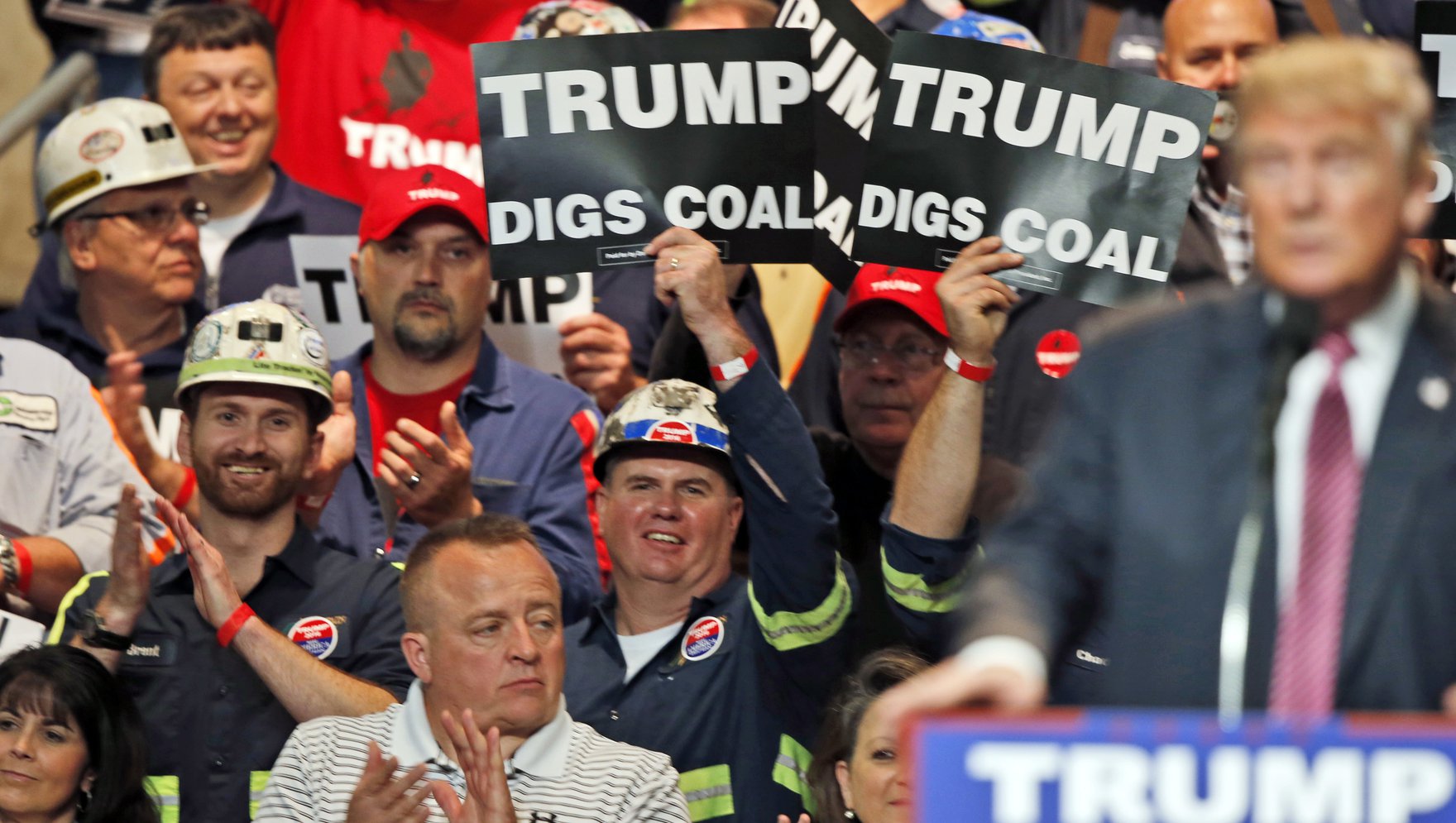
During the 2016 campaign, and immediately after his election, President-elect Donald Trump promised to revitalize the American coal industry. He proposed to do so by the promotion of “clean coal” technologies, usually referred to as carbon capture and sequestration, or CCS.,CCS involves the compression of carbon dioxide emissions from large point sources, such as power plants or industrial facilities, transport of the captured carbon, usually through pipelines, and underground terrestrial or ocean storage.,Even though the president-elect has expressed skepticism about climate change science — vowing to “cancel” the Paris Agreement, and characterizing President Barack Obama’s Clean Power Plan as “illegal” — Trump’s embrace of CCS might prove to be one of those rare “win-win” scenarios for the administration and the environmental community.,The Trump administration may find it very difficult to quickly extricate the nation from international and national climate commitments, as well as state and local regulations contributing to the coal industry’s travails. CCS might help to revive the prospects of the U.S. coal industry (both domestically and internationally), though it would continue to face brutal competition from the natural gas and renewable energy sectors. Successful deployment of CCS could also be beneficial for Norfolk, given the economic importance of coal transportation to the region.,The climate community, in turn, must acknowledge that coal will continue to play a role in both the domestic and international energy mix for decades ahead. CCS, which could sequester up to 90 percent of the carbon dioxide from power and manufacturing facilities, could help to substantially reduce coal’s climate footprint.,Moreover, CCS could play an important role in decreasing atmospheric emissions of carbon dioxide from industrial facilities, including steel, iron, cement and chemical, facilities, where few low-carbon options currently exist. Such facilities are responsible for approximately 20 percent of American carbon dioxide emissions. Addressing climate change is also particularly important to Hampton Roads, where rising seas represent an existential threat.,There are currently only 38 CCS projects worldwide, three in the United States. One of the most imposing barriers to scaling up the use of CCS is the costs of constructing and operating such facilities. The capital costs of constructing a coal plant with CCS is roughly double that of an unabated facility.,Moreover, CCS can increase the cost of electricity generation by a third of more. If the Trump administration is truly committed to making CCS viable, it must seek to foster a cost on carbon that will provide adequate incentives for power generators and other industries to embrace it. Walking away from the Paris Agreement and the Clean Power Plan would be a move in the wrong direction in terms of sending clear and strong price signals to drive CCS deployment in the United States.,The administration might also consider two other strategies to support CCS in the United States. The first would be advocacy of a revenue-neutral carbon tax. Most proposals for such taxes would not tax carbon used to produce energy or products that are permanently sequestered, or would provide a tax credit.,A carbon tax would privilege low-carbon energy and manufacturing facilities, providing a powerful incentive for deployment of CCS.,Many conservatives have embraced this approach to climate policymaking, including former Secretary of State George Shultz, former U.S. Rep. Bob Inglis, Peter van Doren at the Cato Institute and Jerry Taylor at the Niskanen Center.,Second, the administration should signal its support for a bill introduced by Sens. Heidi Heitkamp and Sheldon Whitehouse that would extend and expand the so-called “45Q” tax credit for CCS investments.,The bill would foster the use of captured carbon, such as for enhanced oil recovery or in the food and beverage, pulp and paper and metal fabrication sectors. This could reduce the cost of CCS and the pressure to find sufficient safe storage sites.,The Trump administration should also support research and development into CCS processes that might reduce the cost of deployment, as well as other potential uses of captured carbon. It should seek to allay public concerns about potential leakage of stored carbon dioxide by researching techniques to prevent it.,While many predict an upcoming “climate war” with the advent of the Trump administration, “clean coal” technology might be one ray of hope for cooperation.

U.S. Energy Secretary Steven Chu announced here today a five-year, $350 million international plan to distribute clean technology in developing countries.
