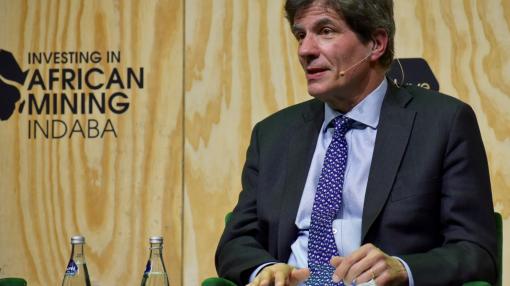
Governments, industry, and civil society organizations (CSOs) are gathering this week for Africa’s Mining Indaba, with big announcements already emerging. The splashiest thus far has been news of a collaboration between the U.S.-led Minerals Security Partnership, Congolese state mining company GECAMINES, and Japanese state agency JOGMEC for mineral exploration, production and processing.,This announcement is the latest in a spate of projects involving the Minerals Security Partnership. In today’s press briefing about the partnership, U.S. diplomat Jose Fernandez reiterated the importance of benefit sharing, value addition, and ESG protections, but shared minimal information on what this would look like in practice; such a dearth of detail characterizes many such deals.,Such next-generation state-state mineral partnerships have become a key tool for wealthier jurisdictions such as the U.S. and EU. Referred to as “buying partners” in this post, their aim is to secure the minerals needed for the solar panels, wind turbines and electric vehicles that will help the world transition away from fossil fuels (in some cases to supplement their own mineral production). But many questions remain around such partnerships, including on their overall purpose and value for lower- and middle-income mineral-rich countries, referred to as “supplying partners” in this post.,NRGI has recently updated ResourceContracts (a repository of publicly available oil, gas, and mining contracts and associated documents) with documents related to this new type of state-state mining partnership (variously labeled “strategic partnerships,” “mineral security partnerships,” “memoranda of cooperation”, and the like).,These partnerships are driven largely by the political or geostrategic needs of the buying partners. Governments in such countries are motivated by the importance of diversifying supply. The partnerships may: lay the groundwork for future cooperation between different jurisdictions, incentivize buyer-country industries to invest in a particular supplier country, and/or merely send a warning shot to international “competitors” that the buying partner has an interest in sourcing minerals from a particular country.,The implications for the supplying partner are even less clear. While buying partners emphasize the language of “partnerships” and “win-win” approaches, whether these partnerships will deliver equal benefits to both parties remains to be seen. These partnerships should be aligned with the supplying partners’ own objectives such as skills development, greater domestic value addition and economic diversification, while also encouraging international cooperation on a just energy transition.,Yet the lack of publicly available information about these partnerships means that scrutinizing them is difficult. This results in little accountability, even though contract disclosure is a well-established norm in the sector. While some memoranda of understanding have been made public, such as those signed by the European Union, these documents are scant on details despite sometimes taking months to negotiate. Others, such as those recently signed by Saudi Arabia at its January Future Minerals Forum, remain a mystery. We couldn’t find any publicly available information about 22 of the 35 partnerships of which we’re aware.,Some partnerships are backed up by a specific authority’s legislative framework, such as those in the EU—although there is still much to improve there in terms of transparency and civil society input—while others are backed by a consortium of countries. Some are agreed with one supplying partner, others with several. Some supplying partners participate in multiple concurrent partnerships, with little clarity over whether or how the relationships interact. The documents we’ve seen are not legally binding, and the relationship between these partnerships and existing trade agreements are unclear. The extent to which the agreements align with supplying partners’ mining or industrial policy frameworks is also largely unknown.,Across published documents relating to these partnerships, the parties use similar language to describe the potential benefits for supplying partners. Many partnership documents emphasize benefits such as technology transfer, value addition and “ESG,” and also include terms such as open markets. Overall, the agreements reveal little in terms of next steps.,The signing of these partnerships is an early step, rather than a complete solution. EU memoranda of understanding (MoUs), for example, commit to the development, within six months of the MoU being signed, of a “roadmap” that identifies more concrete measures on which the parties will act.,The EU-Ukraine roadmap—the first roadmap to be developed, available on ResourceContracts—provides more detail on areas of cooperation. The EU’s relationship with Kazakhstan could also be instructive, with a strategic partnership signed in November 2022. In recent months, the European Commission and European Bank for Reconstruction and Development announced funding for the Kazakh state mining company Tau-Ken Samruk for lithium exploration and tungsten processing projects. While the amount is fairly small, it may suggest one type of financial support that supplying partners could pursue from their buying partners.,But ultimately most partnerships will rely heavily on their ability to attract commercial investment from the buying partner, or its allies. These countries’ main lever will likely be preferential financing and development assistance to create more attractive conditions for that investment.,Be clear on what you want from the partnership. Supplying partners should identify ways to leverage market interest in their transition minerals to pursue their long-term strategy for the sector. Governments should target the buying partner’s political, financial and technical capacity, in a way that may be less feasible in partnerships with individual commercial investors. This could range from partners providing technical assistance on geological data management to financing to address the energy bottlenecks standing in the way of commercial investment in value addition, to gaining access to incentives offered in the buying partner’s market, such as through the U.S. Inflation Reduction Act, to increase investor interest.,Establish how the partners interact. Countries entering mining partnerships need to be clear on how they interact. Some partnerships have the potential to complement and amplify each other, such as U.S., EU and U.K. support for the Lobito Corridor—given a further boost in the Mineral Security Partnership’s latest announcement. Others have the potential to complicate the supplying partner’s pursuit of greater benefits. While Chinese authorities and companies don’t publicize their partnerships in the same way, they are not standing still. How lower- and middle-income mineral-rich countries navigate this geopolitical competition will be critical—something which greater transparency around these partnerships can support given it allows governments to learn from other countries’ experience.,Provide support for stronger governance, human rights and environmental standards. Because parties to these agreements aim to increase activity in the sector, they may exacerbate potential harms of mining, such as corruption, human rights abuses and environmental damage. To ensure benefits for people in mining countries, governments must mitigate these risks. In this way they can also meet a key partnership criterion for jurisdictions like the EU. Supplying partners could ensure strong due diligence practices are built into the partnership, require capacity building and technical assistance to strengthen the content and implementation of environmental, social and governance protections, and urge prospective buying partner governments to do more to address wrongdoing by mining companies based in their jurisdictions. Such accountability is crucial to avoid repeating the mistakes of previous commodity booms.,Involve civil society. Countries should facilitate the input of CSOs in decision-making around partnership negotiations. CSOs can serve both as a source of expertise and an accountability mechanism, to ensure that the supplying partner gets the most out of the partnership. CSOs can help define strategic priorities; play a key role in monitoring whether activities advance the country’s economic and social development plans and meet international standards set out by bodies such as the UN and OECD; and strengthen calls for a more equitable partnership. But their participation has been lacking so far, part of a broader trend of shrinking civic space in the extractives sector. If these partnerships remain largely political tools disconnected from actual mining decisions and policymaking, CSOs might find their time more usefully spent elsewhere. Yet CSOs should also look out for a lot of talk, and more importantly money; without evidence of action these are red flags for corruption risk.,We’ll keep an eye out for new partnerships and upload to ResourceContracts those that are disclosed. For those partnerships that have already been agreed, we will upload and assess new documentation as the partnerships evolve, and work with key stakeholders to push for better practices.,For now, we are left considering a key question: when the time comes to turn talk into action, will these partnerships live up to their billing?
Next week, policymakers, industry executives, civil society actors and development partners will converge on Cape Town, South Africa for the 2024 African Mining Indaba. Now in its 30th year, Indaba is an annual confab, primarily known as a venue for dealmaking and discussions between governments and mining companies.,This year’s theme—“Embracing the power of positive disruption: A bold new future for African mining”—is encouraging. As players like the U.S., EU, China and most recently Gulf oil powers scramble for the continent’s minerals, this time must indeed be different. The history of mining in Africa is riddled with economic, social and environmental injustice, often accompanied by underinvestment and supply disruptions. A triple win—for people in African mining countries, for their environment, and for the energy transition itself—is sorely needed.,Civil society organizations and activists at the Alternative Mining Indaba, a very un-corporate parallel Indaba universe, have for years made the case for a better deal for Africans. World leaders are belatedly recognizing the importance of transition mineral governance for ensuring the production of green technology needed for climate change mitigation. At the COP28 climate conference, UN Secretary-General António Guterres stated that “the extraction of critical minerals for the clean energy revolution… must be done in a sustainable, fair and just way.”,Companies must also ensure that Africans get a better deal. Only by reducing investor risks arising from disputes with governments and communities will they be able to sufficiently increase capital flows into the sector to take full advantage of booming demand. And it seems companies are beginning to realize this. At last year’s Indaba, industry executives made frequent reference to “ESG” (environmental, social and governance considerations). And at this year’s edition companies are again queuing up to speak on panels about sustainability.,However, in the last year concrete action has been sporadic at best. This year’s Indaba is a good opportunity for companies to clearly define what actions they will take. Below are some of these actions on value addition, social and environmental protection, and corruption.,Value addition—usually meaning the refining of raw commodities into something closer to their final consumable form—is increasingly sought after in most mining nations, as it brings additional revenues, jobs and, in some cases, an opportunity to produce inputs for producers’ domestic economies. African leaders reinforced their call for more value addition to take place on the continent at last year’s inaugural Africa Climate Summit.,To realize these ambitions, African governments must develop a clear and credible mineral-specific strategy. International players such as the U.S. and European Union need to convert memoranda of understanding on mineral supply cooperation with the likes of the Democratic Republic of the Congo and Zambia into concrete action to derisk financing and address other bottlenecks.,However, industry also has a critical role. Companies should:,Limiting the social and environmental harms of mining is just as crucial as maximizing the benefits. Some mining companies have taken positive, preliminary steps in this area—for example, “nature positive” commitments made by International Council of Mining and Metals (ICMM) members last month. But companies can and must do more. They should:,Corruption stands in the way of a better deal for the people and environment in African mining countries, and with it more minerals to address the climate crisis. Without action, the risk that the scramble for Africa’s minerals fuels corruption is high: corruption allegations have already emerged in relation to the race for Africa’s lithium.,To effectively tackle corruption, companies should, among other actions:,As Indaba kicks off on Monday, we hope to see companies embrace the types of positive disruption outlined above to achieve a “triple win.” It’s in everyone’s interest that they do.

El presidente de Chile, Gabriel Boric, anunció la nueva Estrategia Nacional del Litio o #LitioporChile. En esta entrevista con Juan Luis Dammert, director de NRGI para América Latina, conversamos sobre los puntos principales del anuncio, la posible ashesión de Chile a la Iniciativa para la Transparencia de las Industrias Extractivas (EITI, por sus siglas en inglés) y su impacto en la gobernanza del litio.
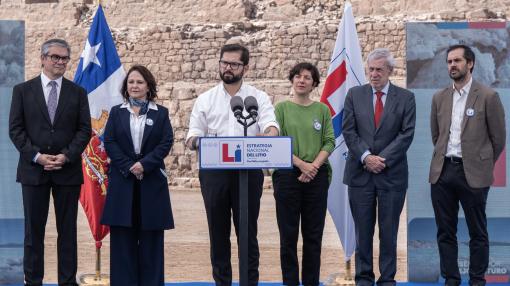
El anuncio del lanzamiento de la estrategia del litio en Chile plantea algunas interrogantes sobre el futuro de este proceso. ¿Cómo se dará el desarrollo de alianzas público–privadas? ¿Cómo se aplicarán las reglas fiscales y de transparencia, o se garantizará los procesos de participación ciudadana?
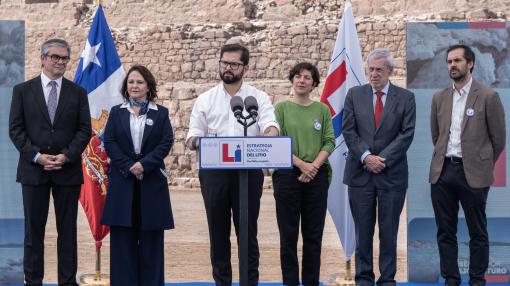
Chile's national lithium strategy seeks to improve governance, but should address key issues such as balancing economic and environmental interests and ensuring fair distribution of benefits.
