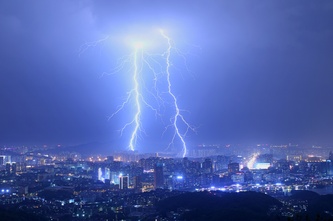
Economies already under stress respond more strongly to weather events like heat waves, river floods and tropical cyclones, a new study shows. A global economic crisis as during the Covid-19 pandemic strongly amplifies the price increases private households experience from the impacts of weather extremes, a team of researchers from the Potsdam Institute for Climate Impact Research (PIK) finds. The price impacts tripled in China, doubled in the United States and increased by a third in the European Union.
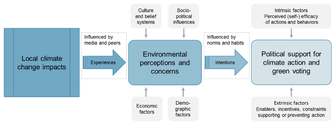
Awareness of and concern for environmental issues has risen across Europe in the past two decades, and so has the willingness to vote for green parties. A new study has looked into this correlation, collecting subnational election data for a large number of countries and combining it with environmental data.
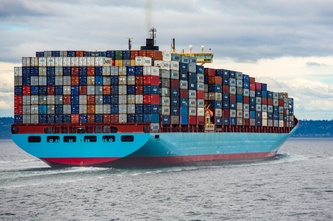
Weather extremes can cause economic ripples along our supply chains. If they occur at roughly the same time the ripples start interacting and can amplify even if they occur at completely different places around the world, a new study shows. The resulting economic losses are greater than the sum of the initial events, the researchers find in computer simulations of the global economic network. Rich economies are affected much stronger than poor ones, according to the calculations. Currently, weather extremes around the world are increasing due to greenhouse gas emissions from burning fossil fuels. If they happen simultaneously or in quick succession even at different places on the planet, their economic repercussions can become much bigger than previously thought.
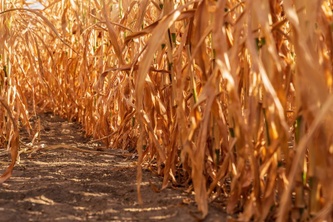
Computer simulations predict a strong increase of events in which the undulations of the jet stream in the atmosphere stop moving along and grow very large. This can favor more frequent extreme weather events on the ground: the westerly winds stop pushing forward weather systems which hence become more persistent – a few sunny days grow into heatwaves, extended rains lead to floods. An international team of scientists links this to human-caused warming specifically in the Arctic.
