Using the James Webb Space Telescope, the MPIA-led MINDS research collaboration discovered water in the inner region of a disk of gas and dust around the young star PDS 70. Astronomers expect terrestrial planets to be forming in that zone. This is the first detection of that kind in a disk that hosts at least two planets. Any rocky planets produced in the inner disk would benefit from a substantial local water reservoir, improving the chances of habitability later on. This finding offers evidence of a mechanism to supply water to potentially habitable planets already during their formation, in addition to later impacts of water-bearing asteroids.
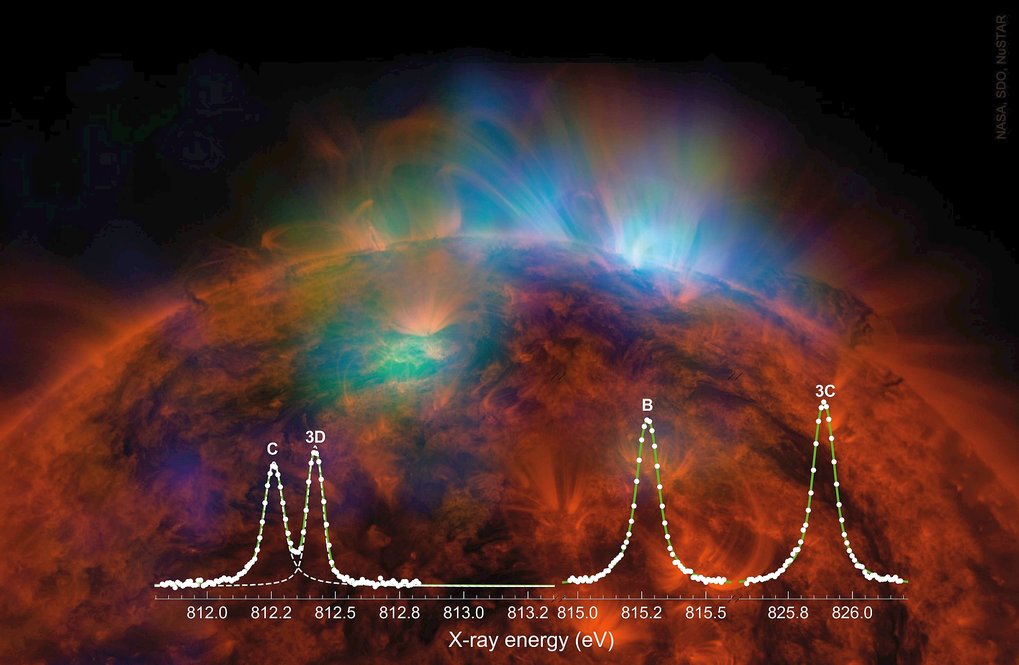
Very hot gas, as found in the sun's corona or in close proximity to black holes, emits very intense x-rays. It reveals the locally prevailing physical conditions, such as temperature and density. But there is one problem that researchers have been battling with for decades: the intensity rates of important emission lines of iron measured in the laboratory do not match those calculated. This causes ambiguity over the magnitude of the gas derived from the x-ray spectra. An international team under the leadership of the Max Planck Institute for Nuclear Physics in Heidelberg has now solved the problem using an exceptionally accurate experiment: theory and experiment finally concur. In future, this will allow x-ray data from deep-space telescopes to be analysed in the underlying atomic models with a high degree of reliability.
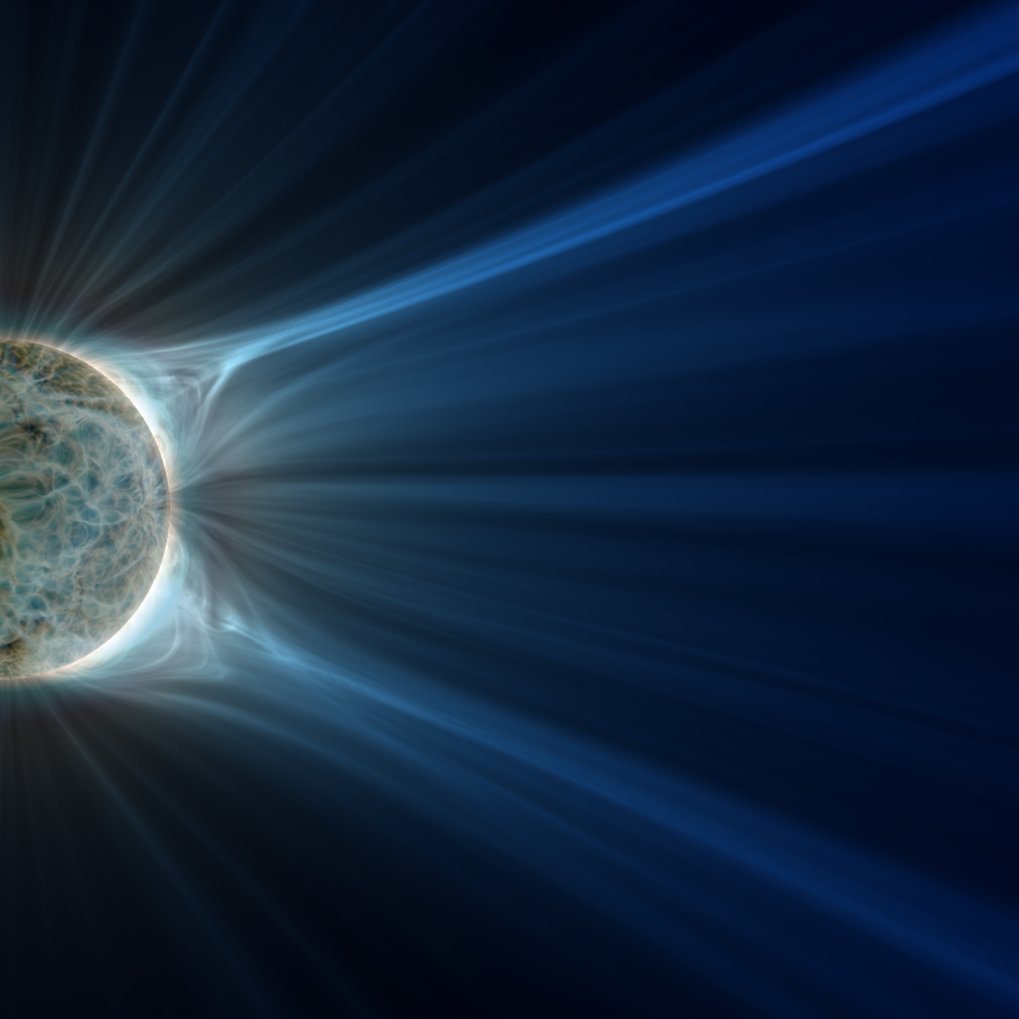
Using observational data from the U.S. weather satellites GOES, a team of researchers led by the Max Planck Institute for Solar System Research (MPS) in Germany has taken an important step toward unlocking one of the Sun’s most persevering secrets: How does our star launch the particles constituting the solar wind into space? The data provide a unique view of a key region in the solar corona to which researchers have had little access so far. There, the team has for the first time captured a dynamic web-like network of elongated, interwoven plasma structures. Together with data from other space probes and extensive computer simulations, a clear picture emerges: where the elongated coronal web structures interact, magnetic energy is discharged - and particles escape into space.
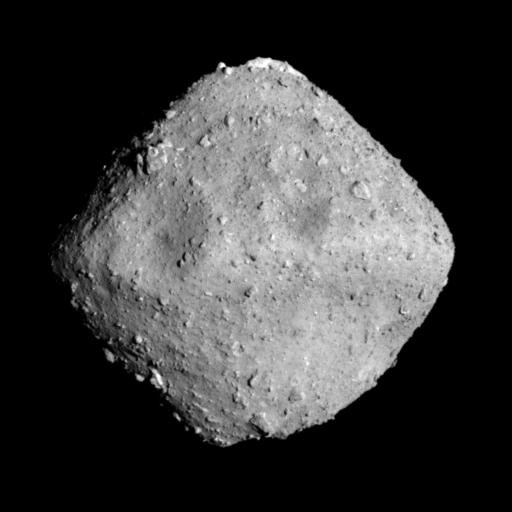
The asteroid Ryugu likely formed at the outer edge of the Solar System beyond the orbits of Jupiter and Saturn, as high-precision measurements that determine the ratio of iron isotopes in rock samples from Ryugu suggest. The Japanese space probe Hayabusa 2 had taken the samples and brought them back to Earth two years ago. An international group of researchers with participation of the Max Planck Institute for Solar System Research (MPS) in Göttingen and the Georg-August-University Göttingen describes these results in today’s issue of the journal Science Advances. According to their findings, Ryugu's “list of ingredients” differs significantly from that of typical carbon-rich meteorites in one crucial point. Instead, everything indicates a close kinship to a rare group of meteorites that is likewise associated to the outer Solar System. The study is one of three publications that the journals Science and Science Advances today dedicate to asteroid Ryugu.
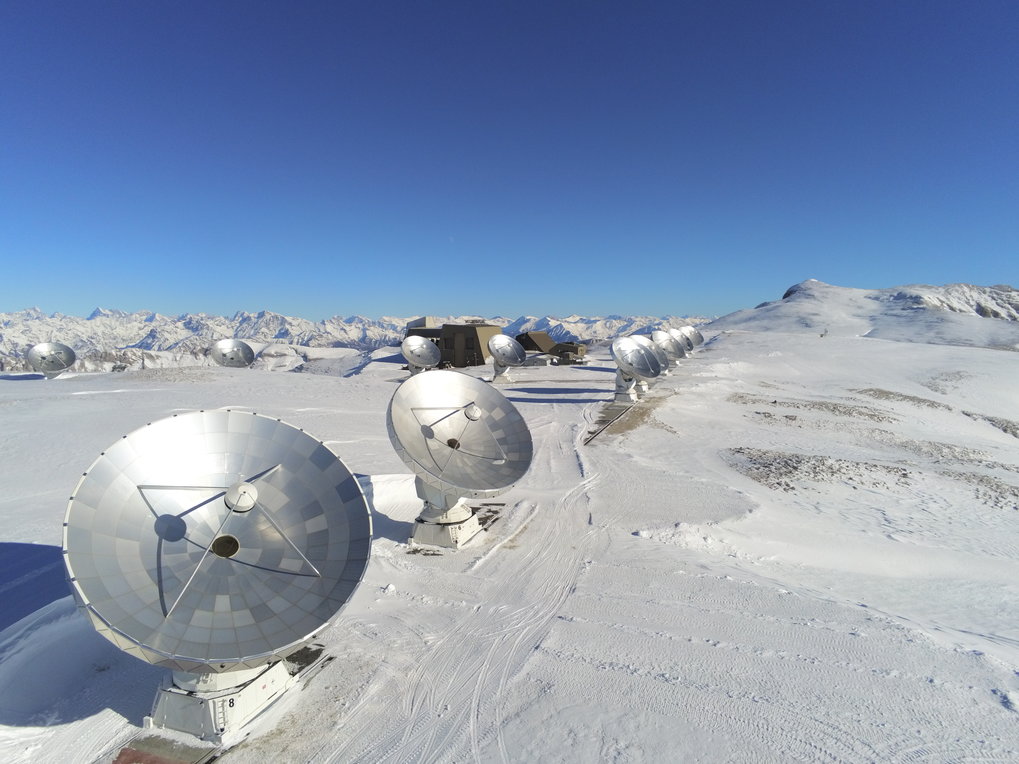
The NOEMA radio telescope, located on the Plateau de Bure in the French Alps, is now equipped with twelve antennas, making it the most powerful radio telescope of its kind in the northern hemisphere. It is operated by the international institute IRAM, in which the Max Planck Society is involved. Max Planck President Martin Stratmann was among the guests at the telescope's inauguration ceremony on September 30.
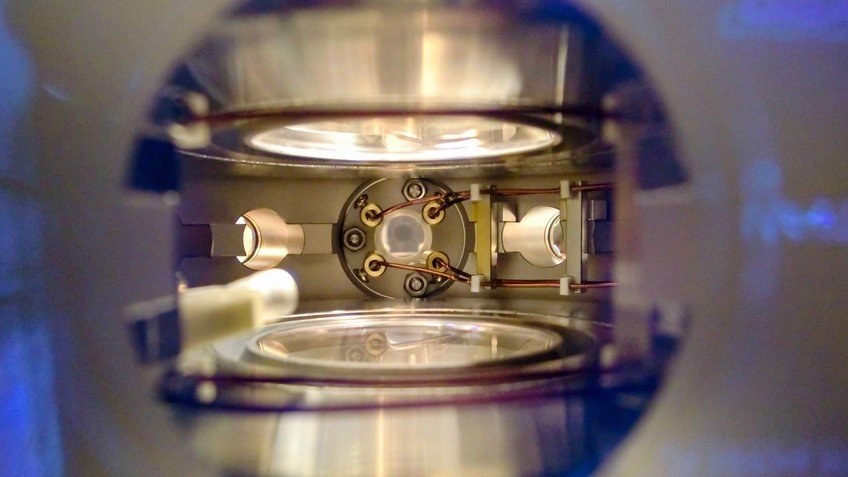
Researchers at the Max Planck Institute of Quantum Optics have developed a novel cooling technique for molecular gases. It makes it possible to cool polar molecules down to a few nanokelvin. The trick used by the team in Garching to overcome this hurdle is based on a rotating microwave field. It helps to stabilise the collisions between the molecules during cooling by means of an energetic shield. In this way, the Max Planck researchers succeeded in cooling a gas of sodium-potassium molecules to 21 billionths of a degree above absolute zero. In doing so, they set a new low-temperature record. In the future, the new technique will allow to create and explore many forms of quantum matter that have not been experimentally accessible until now.
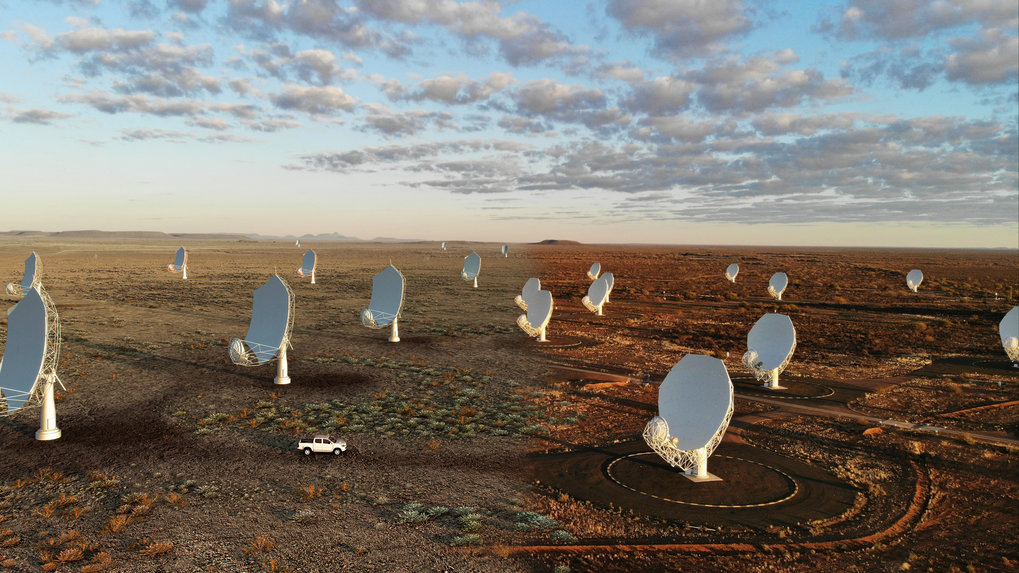
An international team of researchers has demonstrated that the Square Kilometre Array Observatory (SKAO) is capable of detecting radio emissions from normal spiral galaxies in the early universe. The SKAO, whose construction began this year, will soon be the largest radio telescope in the world. The astronomers, who are part of the SKAO's “Extragalactic Continuum” working group, are looking for a way to study a cosmic era in which star-forming activity suddenly decreased after an epoch known as “Cosmic Noon”. To this end, they simulated the physical properties of the interstellar medium of galaxies similar to the Triangulum Galaxy (M 33) and the Whirlpool Galaxy (M 51) in an early age of the Universe. The results show that potential surveys should be sensitive enough to detect galaxies already in SKAO’s first deployment phase.
