The German Weather Service (Deutscher Wetterdienst, DWD) has presented its 2023 summer report. PIK researcher Fred Hattermann comments: "This year's precipitation cannot compensate for the precipitation deficit that has accumulated over the past years."

Thomas Hertel, Professor of Agricultural Economics at Purdue University, Indiana, USA, will be visiting PIK on a Humboldt Research Award for the second half of 2022. An expert in international trade, food and environmental security, he will add to PIK's expertise in Research Department 2 on Climate Resilience and integrated modelling.
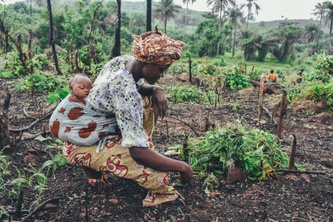
A world that combats climate change while simultaneously improving on all 17 Sustainable Development Goals (SDGs) is possible, a new study finds. Scientists from the Potsdam Institute for Climate Impact Research (PIK) and the German Development Institute have developed a new integrated strategy that combines ambitious climate action with dedicated policies for development, food and energy access, global and national equity, and environmental sustainability. It sheds new light on bottlenecks, but also synergies for boosting progress towards climate and sustainable development targets.
Training programs on environmental peacebuilding, pooling international expertise to deal with acute risks of violence, and an even stronger focus on gender roles in crisis regions - these are some of the concrete recommendations for action made by the German government's advisory council for civilian crisis prevention and peacebuilding in its latest study on the interactions between climate impacts and security.F
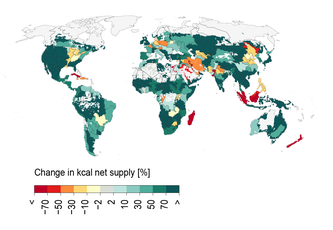
Almost half of current food production is harmful to our planet – causing biodiversity loss, ecosystem degradation and water stress. But as world population continues to grow, can that last? A study led by researchers from the Potsdam Institute for Climate Impact Research (PIK) now suggests a comprehensive solution package for feeding 10 billion people within our planet’s environmental boundaries. Supplying a sufficient and healthy diet for every person whilst keeping our biosphere largely intact will require no less than a technological and socio-cultural U-turn. It includes adopting radically different ways of farming, reduction of food waste, and dietary changes. The study's publication coincides with the World Economic Forum in Davos and the International Green Week in Berlin, the world's biggest food and agriculture fair.

Hundreds of thousands of people are currently exploring the International Green Week in Berlin, a leading global trade fair for agriculture and food with featuring more than 1800 exhibitors from 72 countries. According to the organizers, the International Green Week 2020 is focusing on climate change like never before, with numerous exhibitions and events. This year's trend topics include sustainability, resource conservation and environmentally friendly production processes. Experts from the Potsdam Institute for Climate Impact Research (PIK) will also be present at events at the Green Week from 17-26 January.
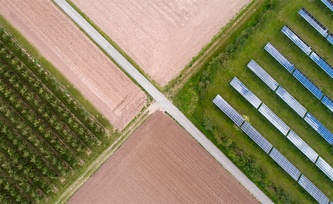
Electricity supply is one of the biggest CO2 emitters globally. To keep global warming well below 2°C, several paths lead to zero emissions in the energy sector, and each has its potential environmental impacts - such as air and water pollution, land-use or water demand. Using a first-time combination of multiple modelling systems, an international team of researchers led by the Potsdam Institute for Climate Impact Research (PIK) has now quantified the actual benefits and downsides of three main roads to decarbonisation. They show that relying mainly on wind and solar would bring most co-benefits for the health of people and planet. Switching to carbon capture and storage in combination with fossil and biomass resources, in turn, is likely to convey significant environmental costs by devouring large areas at the cost of biodiversity, and by releasing pollutants to the environment.

The Potsdam Institute for Climate Impact Research (PIK) is the world's most influential environmental policy think tank, as the "Global Go To Think Tank Index Report 2018" just published by the University of Pennsylvania shows. On top of this, three PIK scientists are among the "most important German-speaking intellectuals" according to the new Cicero ranking: Ottmar Edenhofer, Director of PIK, Hans Joachim Schellnhuber, Director Emeritus, and Stefan Rahmstorf, Chair of PIK's research department "Earth System Analysis".
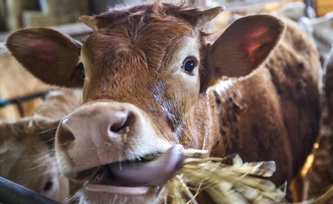
Deforestation, greenhouse gas emissions, biodiversity loss, nitrogen pollution – today’s agricultural feed cultivation for cattle, pigs and chicken comes with tremendous impacts for the environment and climate. Cultivating feed in industrial facilities instead of on croplands might help to alleviate the critical implications in the agricultural food supply chain. Protein-rich microbes, produced in large-scale industrial facilities, are likely to increasingly replace traditional crop-based feed. A new study now published in the journal Environmental Science & Technology for the first time estimates the economic and environmental potential of feeding microbial protein to pigs, cattle and chicken on a global scale. The researchers find that by replacing only 2 percent of livestock feed by protein-rich microbes, more than 5 percent of agricultural greenhouse gas emissions, global cropland area and global nitrogen losses could each be decreased.
