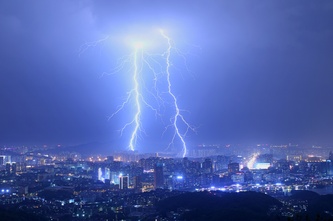
Economies already under stress respond more strongly to weather events like heat waves, river floods and tropical cyclones, a new study shows. A global economic crisis as during the Covid-19 pandemic strongly amplifies the price increases private households experience from the impacts of weather extremes, a team of researchers from the Potsdam Institute for Climate Impact Research (PIK) finds. The price impacts tripled in China, doubled in the United States and increased by a third in the European Union.

Abrupt climate changes have affected rainfall patterns worldwide in the past, especially in the tropical monsoon region, a new study shows. An international team of scientists used dripstones from globally distributed caves together with model simulations to analyse the global impacts of rapid Northern-Hemisphere temperature increases, the widely studied Dansgaard-Oeschger events, that repeatedly occurred during the last ice age. The comparison of stalagmite and model data shows in unprecedented detail how these abrupt changes and the associated modifications of the Atlantic overturning circulation, AMOC for short, have affected global atmospheric circulation.
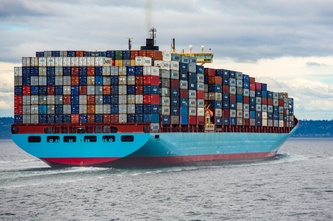
Weather extremes can cause economic ripples along our supply chains. If they occur at roughly the same time the ripples start interacting and can amplify even if they occur at completely different places around the world, a new study shows. The resulting economic losses are greater than the sum of the initial events, the researchers find in computer simulations of the global economic network. Rich economies are affected much stronger than poor ones, according to the calculations. Currently, weather extremes around the world are increasing due to greenhouse gas emissions from burning fossil fuels. If they happen simultaneously or in quick succession even at different places on the planet, their economic repercussions can become much bigger than previously thought.
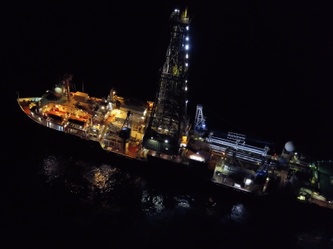
Researchers have analyzed data from deep-sea sediments in order to reconstruct Earth’s climate with an unprecedented temporal resolution. To achieve this, the international team, led by Dr. Thomas Westerhold of MARUM – Center for Marine Environmental Sciences at the University of Bremen and Dr. Norbert Marwan of the Potsdam Institute for Climate Impact Research (PIK), compiled and analyzed a comprehensive dataset obtained from sediment cores from the ocean floor. Innovative statistical methods for studying complex dynamical systems were applied revealing fundamental climate states. They show the deterministic nature of climate changes over very long periods of time. The team’s new climate reference curve have been published in the prestigious journal Science.
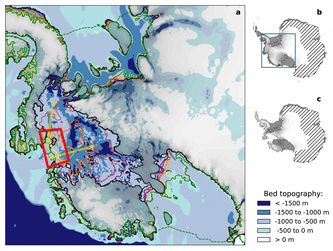
The ice sheet covering West Antarctica is at risk of sliding off into the ocean. While further ice-sheet destabilisation in other parts of the continent may be limited by a reduction of greenhouse gas emissions, the slow, yet inexorable loss of West Antarctic ice is likely to continue even after climate warming is stabilised. A collapse might take hundreds of years but will raise sea levels worldwide by more than three meters. A team of researchers from the Potsdam Institute for Climate Impact Research (PIK) is now scrutinising a daring way of stabilising the ice sheet: Generating trillions of tons of additional snowfall by pumping ocean water onto the glaciers and distributing it with snow canons. This would mean unprecedented engineering efforts and a substantial environmental hazard in one of the world’s last pristine regions – to prevent long-term sea level rise for some of the world’s most densely populated areas along coastlines from the US to China.

The Potsdam Institute for Climate Impact Research (PIK) is the world's most influential environmental policy think tank, as the "Global Go To Think Tank Index Report 2018" just published by the University of Pennsylvania shows. On top of this, three PIK scientists are among the "most important German-speaking intellectuals" according to the new Cicero ranking: Ottmar Edenhofer, Director of PIK, Hans Joachim Schellnhuber, Director Emeritus, and Stefan Rahmstorf, Chair of PIK's research department "Earth System Analysis".

Climate change related risks for public health are one of the most important challenges of today. However, the science communities on both sides of the fence have so far not sufficiently interacted to reflect the critical nexus of climate change and health. Taking the first mover advantage, a workshop of the German National Academy of Sciences Leopoldina at the Potsdam Institute for Climate Impact Research (PIK) now brought together renowned scientists from climate sciences, health and medicine, psychology, environmental sciences, social sciences and economics. They will develop a publication offering stakeholder and decision-makers orientation on public health and climate policy.

When anonymity between people is lifted, they more likely cooperate with each other. Playing nice can thereby become a winning strategy, an international team of scientists shows in a study to be published in Science Advances. The findings are based on experiments with a limited number of participants but might have far-reaching implications, if confirmed. Reducing anonymity could help social networks such as Facebook or Twitter that suffer from hate and fake news. It might also help in conflicts about environmental resources.
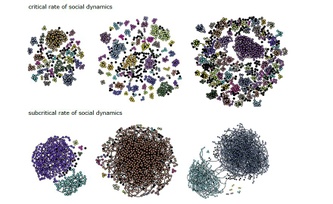
From the Earth System to the human brain, from families to Facebook – complex networks can be found everywhere around us. Describing the structure of socio-economic systems, the analysis of complex networks can improve our understanding of interactions and transformations within our society. A team of researchers now used this approach to explore the development of large coalitions in a network of acquaintances, when cooperation promises the highest economic or social advantages. For the first time, they focused on how social relations interact with this process. Published in the journal Scientific Reports of the renowned Nature group, their results show that full cooperation is most probable when the network adapts only slowly to new coalition structures. If the network adapts faster than new coalitions form, its fragmentation might prevent the formation of large-scale coalitions.
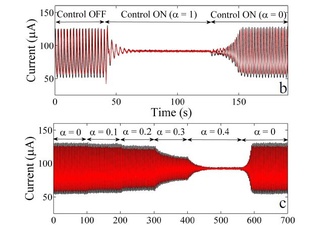
When a rhythm stalls, the effect can be fatal – in a power grid it can mean a blackout, and in the human heart even death. An international team of scientists has now developed a new approach for revoking these undesired quenching states. They use an advanced mathematical methodology, building on complex networks analysis, and demonstrate it in experiments with chemical reactions. This could one day help to stabilize the flow of electricity in power grids challenged by the variable input from renewable energy sources. Future research could apply it to other complex networks, including processes within body cells and even the human cardiovascular system.
