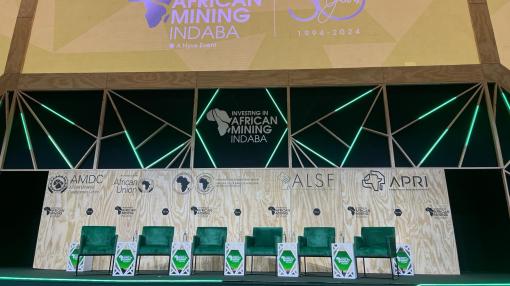
At Mining Indaba in Cape Town this week we heard countless references to mining-affected citizens of African countries. The word “communities” steadily fell from the mouths of mining executives and government officials. Most suggested that maximizing benefits and minimizing harms for community members was a sacrosanct priority.,But absent from almost all of the rooms where this word was repeatedly invoked were…members of mining-affected communities. The Indaba agenda did include one invitation-only engagement session, between the International Council on Mining and Metals and community representatives. And Indaba organizers graciously accommodated some international non-governmental organizations, including NRGI. But if communities’ perspectives are as crucial as executives and officials imply, then community members and activists must be present in a sustained way at Indaba and equivalent forums—and not just as featured guests. (NRGI president and CEO Suneeta Kaimal raised this issue last year in connection to the International Energy Agency's Critical Minerals Summit.),My colleague Tengi George-Ikoli shared with me an African adage: “A man’s head should not be shaved in his absence.” Community voices are essential in spaces like Indaba to ensure that decisionmakers account for the social, economic and environmental impacts of mining and minimize them.,In that vein the deep-pocketed mining companies and rich-country governments that sponsor Mining Indaba could contribute to a pooled fund that grants admission and travel bursaries to community activists and reporters from Africa’s mineral-rich nations. One such journalist who was able to self-fund a trip to Cape Town this week told us that they were the only reporter from their country in attendance. “No media houses back home can pay for journalists to come here,” they said.,One place that was replete with community stakeholders was Alternative Mining Indaba, which has operated in distant parallel to the main Indaba for 15 years. (Many AMI attendees are funded by larger non-profits to undertake the trip.),There, we heard searing accounts of the impacts on communities. A young woman from Zambia, speaking out against child labor in the industry, implored her listeners: “How can we children build a future for ourselves from inside of a mine?” She received enthusiastic applause—from people who on their own can do little to address her concerns. The power brokers were all at the main Indaba site six kilometers away.,While mining companies do invest in outreach to communities, and have provided valuable services in many instances, at the continent’s biggest mining confab those directly affected by extraction are scarce.,Community relations are just one facet of the work that remains for the influencers and decision-makers connected to the mining sector. State-state deals and the ways in which African countries might add value to raw commodities were also hot themes in Cape Town. (Though one industry lawyer said the quiet part out loud when he intoned from an Indaba stage that “governments really should have no role in mining.”) But until communities and civil society have a more fixed and prominent seat at the table, and agendas reflect the importance of their voices, progress on any of these challenges will be difficult.

当社区从一种形式的能源生产和消费过渡到另一种形式时,人们和地方会发生什么?不平等的影响如何分布在受影响的人群中?人口本身是如何通过能源转型而变化的?随着能源生产社区远离煤炭、石油和天然气生产,社区生活、家庭、社会网络、学校、地方组织和社会规范的基本结构如何转变?
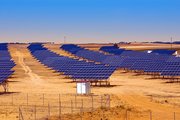
Research paper analyses the development of the NOORo I solar power plant in Morocco

Article published in "Environmental Impact Assessment Review"
