
这份证词讨论了我们长期以来对美国食品药品监督管理局监督全球药品供应链的担忧,这是自2009年以来我们的高风险名单上的一个问题。供应美国市场的药品制造商中,50%以上在海外
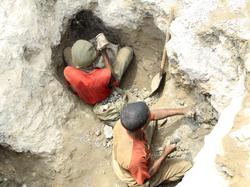
In the developing world, mineral extraction and processing has historically caused not just environmental contamination but also corruption and displacement of local livelihoods. There are opportunities to improve the way companies from the Global North approach critical mineral projects there.
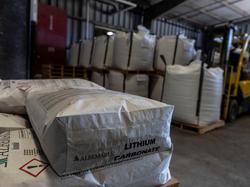
The initial slate of electric vehicles qualifying for the new $7,500 federal tax credit in the U.S. Inflation Reduction Act was announced earlier this month. Key to eligibility is the source of critical minerals used in their batteries. While the list of acceptable nations of origin is still being worked out, there's an important practical question the IRS should ask: Do carmakers really know where their critical minerals come from? This is not the first time U.S. companies have been required to trace the origins of minerals. Section 1502 of the landmark Dodd-Frank Wall Street Reform Act requires electronics manufacturers to disclose whether their products contain “conflict minerals,” that is, tantalum, tin, tungsten, or gold from the Democratic Republic of the Congo or adjoining countries. It turns out that meeting this requirement has been fraught with uncertainty. Six years after implementation, some 80 percent of companies reporting to the SEC were still “unable to determine their raw materials' country of origin,” according to a 2017 study in Harvard Business Review. Even now, Fortune 500 companies produce vague statements like, “we found no reasonable basis for concluding that ()” their products contain conflict minerals. .
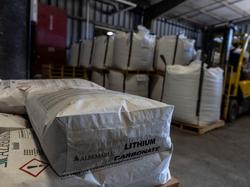
The initial slate of electric vehicles qualifying for a new federal tax credit was announced in April. Key to eligibility is the source of critical minerals used in their batteries. While the list of acceptable nations of origin is still being worked out, there's an important practical question the IRS should ask: Do carmakers really know where their critical minerals come from?
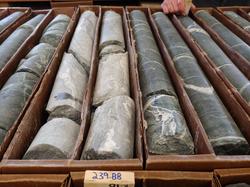
Securing access to supply, increasing global and domestic capacity, and diversifying supply chains for critical minerals should be at the top of the agenda for both nations and private industry. Failure could jeopardize climate mitigation strategies and U.S. military readiness.
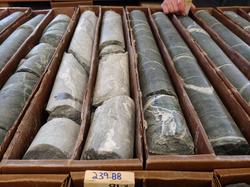
Securing access to supply, increasing global and domestic capacity, and diversifying supply chains for critical minerals should be at the top of the agenda for both nations and private industry. Failure could jeopardize climate mitigation strategies and U.S. military readiness.
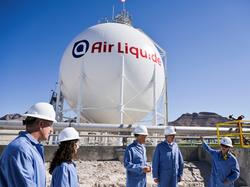
Hydrogen (H2) plays a key role in the decarbonization plans of the European Union and the United States. Both have launched aggressive hydrogen strategies to increase the generation of H2 and deployment of related technologies. But these bold ambitions may face headwinds due to the acceleration of China's energy transition.

Hydrogen (H2) plays a key role in the decarbonization plans of the European Union and the United States. Both have launched aggressive hydrogen strategies to increase the generation of H2 and deployment of related technologies. But these bold ambitions may face headwinds due to the acceleration of China's energy transition.
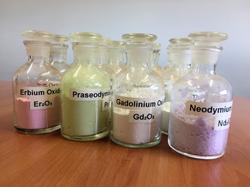
China's domination of the rare earth market is a matter of economic and national security concern. Existing plans to diversify the market and help the United States break its reliance on China likely don't go far enough or fast enough, and the clock is running.
