
The current geopolitical environment is turbulent, dangerous, torn loose from the anchor of a rules-based international order and the optimism that attended the end of the Cold War. In searching for a descriptor, the phrase gaining traction among political leaders in the English-speaking world is “inflection point.” US President Joe Biden most recently used it in an address in Vilnius on July 12, following the North Atlantic Treaty Organization (NATO) summit. He told his Lithuanian audience that “we stand at an inflection point, an inflection point in history, where the choices we make now are going to shape the direction of our world for decades to come. The world has changed.”
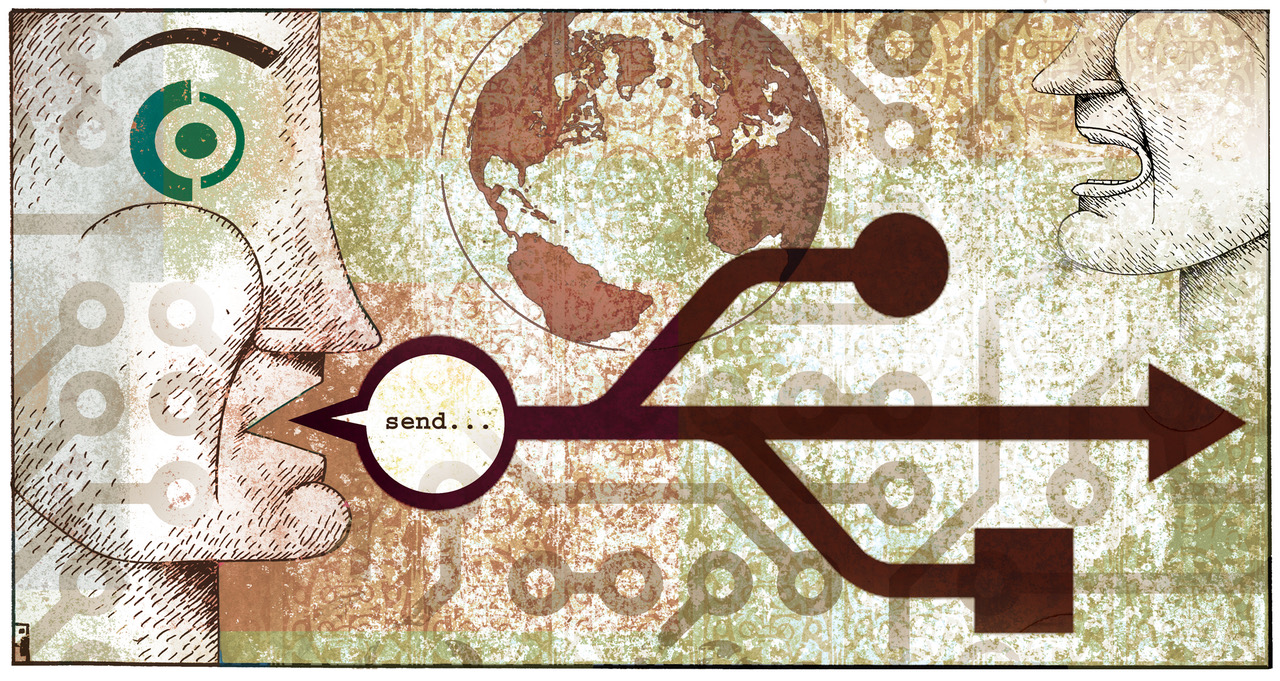
In the late 2000s, a set of connected technological innovations resulted in the generation of truly astronomical amounts of data and provided the tools to exploit it. As the world emerged from the global financial crisis of 2008–2009, data was decisively transformed from what had once been a mostly valueless by-product of commercial transactions — “data exhaust” — to the “new oil,” the essential capital asset of the qualitatively changed data-driven economy.,The United States and China were on a confrontational path long before the dawn of this new era, given the long-standing US policy of slowing China’s rise as an economic and military power. However, even as late as 2008, the relationship was one of “tacit allies.” In his 2008 State of the Union address, President George W. Bush mentioned China only once, in the same breath as India, in a statement on the importance of large emerging markets for environmental policy. While President Barack Obama’s “pivot to Asia” in 2009 at the dawn of the data-driven economy signalled American wariness of China’s rise, the main practical move was to advance US interests in having Beijing increase its IP protection — which, according to US analysis, would greatly improve returns to US capital.,In effect, the technological and economic conditions of the data-driven economy transformed geopolitics. The wave was at first modest, but grew rapidly. Since February 24, 2022 (one could perhaps backdate this to February 4, 2022, when the Xi-Putin “no limits” pact was announced), the cumulative impact has been epochal.

“Impossible to monitor and manage.” Those were the words spoken by the national security and intelligence adviser to the prime minister, Jody Thomas, in a recent interview on CBC radio. Thomas was referring to the tide of false information that courses through our information environment. She might have added: “impossible in a democracy.”,O’Toole’s fourth category of threats involved what he called “an active campaign of voter suppression against me, the Conservative Party of Canada and a candidate in one electoral district during the 2021 general election.” What, precisely, O’Toole was told about voter suppression is unclear. But the candidate mentioned appears to have been Kenny Chiu, an incumbent MP who was defeated in his Vancouver riding and whose electoral struggles were referenced in later media stories. The controversial report delivered by former governor general David Johnston, in his capacity as independent special rapporteur on foreign interference (he has since resigned), discussed the Chiu case and noted that, while there was online misinformation about Mr. Chiu during the 2021 election campaign, it “could not be traced to a state-sponsored source.” Again, the crucial distinction between misinformation and disinformation is at issue.

The challenge of co-existence with artificial intelligence (AI) is a growing concern for governments worldwide. The environmental, societal and personal harms that such systems can cause, and have caused, are prompting governments to intervene with policy and legislation. Guardrails are being quickly developed.,Andrew Selbst, assistant professor of law at University of California, Los Angeles, observes that the most common current use of AI is in “decision assistance” to humans, rather than in fully autonomous robots. The use of AI tools, he argues, replaces or augments “human decision processes with inscrutable, unintuitive, statistically derived, and often secret code.” While replacing human decision processes may in certain cases enhance safety, it can also obscure the foreseeability of harm, as automation may dull human intuition and experiential learning. Aircraft autopilots, for instance, have been linked to the de-skilling of pilots. De-skilling can hamper their ability to handle crisis situations.

Over the past few months, generative artificial intelligence (AI) has undergone a boom, with the arrival and widespread availability of tools such as Midjourney, DALL-E 2 and, most impressively, ChatGPT. As big companies such as OpenAI, Google and Microsoft rush to develop machine intelligence tools, governments, businesses and artists are taking stock and frantically debating how AI will impact their work and environment.,Consider some further examples. In an ongoing research experiment, the United Nations Development Programme (UNDP) Accelerator Lab tested two AI image generators’ view of the STEM (science, technology, engineering and mathematics) fields with respect to the representation of women. When the researchers asked DALL-E and Stable Diffusion, a product of Stability.AI, for visual representations of an engineer, a scientist and an IT expert, between 75 and 100 percent of the generated results portrayed men.

In a few short months, generative artificial intelligence (AI) tools such as OpenAI’s ChatGPT have spread like wildfire, spawning an entirely new market of products and services that leverage the technology. At the same time, high-profile AI researchers continue to caution against the speed of these commercial deployments, citing a wide range of unchecked risks to people in the present and future. Those future risks, in particular, recently prompted a number of AI researchers, academics and tech leaders, such as Elon Musk and Steve Wozniak, to sign a controversial letter calling for a “pause” on the development of more powerful AI systems.,Its signatories advocate for “new and capable regulatory authorities dedicated to AI” and “well-resourced institutions for coping with the dramatic economic and political disruptions…that AI will cause.” In a recent article in The Economist, Professor Gary Marcus, a leading AI critic who also signed the letter, similarly calls for “the immediate development of a global, neutral, non-profit International Agency for AI (IAAI), with guidance and buy-in from governments, large technology companies, non-profits, academia and society at large, aimed at collaboratively finding governance and technical solutions to promote safe, secure and peaceful AI technologies.”,Even those skeptical of a “pause” seem to be pushing for a similar strategy. For example, Dr. Rumman Chowdhury, a data scientist and former lead of Twitter’s ethical machine-learning team has openly criticized the letter. She recently penned an opinion piece in support of a new “generative AI global governance body [to be] funded via unrestricted funds” from tech companies, citing the International Atomic Energy Agency and Meta’s Oversight Board as precedents. And former Federal Communications Commission chair and Brookings fellow Tom Wheeler has proposed a “specialized and focused federal agency staffed by appropriately compensated experts.”,In the United States, four federal agencies recently issued a joint statement to remind companies that there is no “AI exemption to the laws on the books.” Similarly, Federal Trade Commission (FTC) chair Lina Khan argued in a recent op-ed that although AI tools are novel, they are not exempt from existing rules, adding, “the FTC is well equipped with legal jurisdiction to handle the issues brought to the fore by the rapidly developing A.I. sector, including collusion, monopolization, mergers, price discrimination and unfair methods of competition.” Unfortunately, the FTC and other federal agencies are even more thinly staffed and resourced than their European counterparts, and face additional cuts to government spending.,So, it’s not necessarily the case that new technologies are outpacing existing laws and regulations, rendering them obsolete. Rather, it’s that technological advancements demand additional resources for their governance. And with each new legal framework or governance mechanism we introduce, the resource problem only gets worse. We also risk losing important institutional knowledge and perspective about how these laws and regulations were applied to earlier technologies. That can encourage a myopic view based merely on the technology du jour.,In other words, with each technology hype cycle, there are calls for new laws, regulations and institutions, despite authorities not having adequately enforced existing laws or invested sufficient resources in established institutions. What makes us think that the new mechanisms will fare any better? Might they just further subdivide limited public resources across a more complicated landscape of actors and rules? This may be the fastest way to ensure that our existing governance infrastructure becomes obsolete.

Does generative artificial intelligence (AI) pose a threat to society and humanity? In the wake of ChatGPT’s stunning release, many have been asking this question. On March 22, led by the Future of Life Institute (FLI), a group of prominent tech leaders and researchers called for a temporary pause in the development of all systems more powerful than GPT-4 (“Generative Pre-Trainer Transformer-4”).,The open letter — signed by billionaire tech innovators Elon Musk and Steve Wozniak, among thousands of others — cites an absence of careful planning and management. “Recent months have seen AI labs locked in an out-of-control race to develop and deploy ever more powerful digital minds that no one — not even their creators — can understand, predict, or reliably control,” the letter states.,But this argument misses a critical point — the genie is already out of the bottle. ChatGPT is estimated to have reached 100 million monthly active users as of January 2023. And its website already generates one billion visits per month. Beyond its record-breaking status as the fastest-growing consumer application in history, OpenAI’s ChatGPT has transformed the AI landscape. That can’t be undone.

In its federal budget on March 28, alongside a new five-year tax credit worth $4.5 billion for Canadian clean tech manufacturers, Canada introduced a plan to implement a “right to repair” for electronic devices and home appliances in 2024. The federal government will begin consultations this summer in this regard.,This movement toward a Canadian right to repair is a welcome step with tangible economic, social and environmental benefits. For this is a fundamental element of ownership. It establishes that consumers have the right to repair goods themselves or to have them repaired by either original equipment manufacturers (OEMs) or at independent repair shops. A key element of the right is that repair manuals, tools, replacement parts and services must be available at competitive prices.,Right-to-repair movements have sprung up in the United States, Europe, South Africa, Australia and Canada, encompassing a range of products. Most familiar might be efforts to allow consumers to choose independent shops to repair their phones and computers. But the right to repair also involves battles over who should be able to fix Internet of Thing devices, as well as other products that function via embedded software systems, such as vehicles, agricultural equipment and medical equipment.,Battles over the right to repair have particular relevance for Canada. Major manufacturers, often headquartered in the United States or Europe, set rules regarding repair that privilege their business models, favouring their branded suppliers and authorized repair technicians to maximize control over repair services. These actions not only shut out Canadian third-party businesses that supply replacement parts and repair services, but also disadvantage Canadian consumers.,Given these challenges, how should we prepare for consultations this summer? I offer several suggestions:,First, policy makers should build upon right-to-repair efforts being made elsewhere, particularly those in Australia, the European Union and the United States. Australia appears to be moving toward a right to repair, and its consumer watchdog agency, the Australian Competition and Consumer Commission, studied the effects of restrictive repair practices on the agricultural machinery and the after-sales market in that country in 2020.
The fire that tragically killed seven people in a historic building in Old Montreal, Quebec, on March 16 again focused critical attention on Airbnb’s operations. According to reports, several units in the building had been marketed through the service, in contravention of a 2018 municipal ordinance banning short-term rentals in that part of the city.,An investigation into the fire’s cause continues. However, questions should be asked about whether provincial and city authorities could have done more to detect and address any safety problems, as well as about any role played by Airbnb. In the meantime, the case raises broader questions about how governments should regulate data companies so that their treatment is not substantially different from their analog counterparts (consider Airbnb and hotels, or Uber and taxis). Further, as these companies operate by commodifying data, often from the public realm, governments need to consider what the loss of public control over now-private data sets may have on public regulatory activities and policy making.,Of course, unscrupulous landlords existed prior to Airbnb, as did unsafe housing. By design, however, Airbnb withholds data essential to city officials, because the company’s business model prioritizes the extraction and monetization of housing data, which it does not share. Airbnb also styles itself as a “platform,” strategically separating itself from its analog counterparts in the hotel industry.,The problem of governments struggling to effectively enforce rules predates data companies. The complicating factor for Montreal, indeed cities everywhere, is that Airbnb withholds data that cities need to enforce existing policies and craft new policies. This finding is echoed in multiple academic studies of Airbnb, including by legal scholar Teresa Scassa and urban scholar Geoff Boeing and colleagues.,The public might reasonably expect that cities have all the data they need to regulate a sector as important as housing. It isn’t so. City regulators can be stymied in their ability to detect illegal listings because Airbnb listings do not include addresses or the volume of activity. While omitting addresses may be designed to protect the privacy and safety of hosts, it does not enable effective regulation, a critique Montreal Mayor Valérie Plante levelled against Airbnb following the fire.,I examine how cities are on the front lines of battles with data companies like Airbnb and Uber in a forthcoming book, co-authored with Brock University’s Blayne Haggart: The New Knowledge: Information, Data and the Remaking of Global Power. Data companies can impede governance by cities when they withhold data critical to regulating core public services and public planning. It’s a practice that causes “data deficits,” to use Teresa Scassa’s term. Some cities, such as Vancouver and San Francisco, have resorted to legal action to compel access to privately held data. But suing companies for data essential to cities’ planning and regulatory duties is costly, time-consuming and unfeasible in the long term, not to mention a waste of resources.

In early February, it seemed that one of the most durable digital moats was finally about to be breached. Following the announcement of a US$10 billion investment in OpenAI, the developer of large language model chatbot ChatGPT, Microsoft made public its intention to rapidly roll out a version of its Bing search engine with the chatbot incorporated and usher in a new era of search on the internet.,There are few things more emblematic of the competitive challenges in digital markets than Google’s dominance in search. In many countries Google holds a search market share of more than 90 percent, and it has maintained this grip for well over a decade. Its hold persists despite what some observers suggest has been a steady degradation of the company’s core service. With the steady creep of increasingly camouflaged ads in organic search results and complaints about a reduction in quality of the search results themselves, the time seems ripe for a competitor to step in and knock the giant off balance.,Beyond its worsening service quality, Google’s search engine has also been the subject of charges of anti-competitive conduct. Concerns have focused primarily on the company’s efforts to maintain its dominance in the search space, as well as on its alleged self-preferencing — that is, its steering of users to Google’s own content, and free riding on the content of others.,Beyond overcoming Google’s anti-competitive efforts to reinforce its dominant position, potential competitors will need to overcome the degree of personalization Google is able to achieve through its place as the go-to search engine for much of the planet, storing and learning from past user searches. As the increasing prominence of ads in search results shows, the success Google has achieved both in throttling competition and through its dominance in search has generated a substantial competitive moat for the company, allowing it to degrade service quality without incurring a substantial loss in users. This is not just an expression of Google’s market power in the space but also an indication that the proportion of ads to organic search results, at least up to a point, does not necessarily deter users from the underlying search product.,To date, whether through willingness or a lack of alternatives, users have been ready to trade away individual privacy, increasingly seen as a relevant dimension of competition in digital markets, for this personalization. In contrast to Google, competitors such as DuckDuckGo have sought to create space for themselves by building a search product that does not collect or share the personal data of their users at the cost of personalization. While DuckDuckGo represents an important source of diversification for privacy-minded users, it has to date not been able to unstick Google’s hold on the search market.,But even assuming a future disruption of Google’s search monopoly, whether by a competitor or ongoing antitrust action, important questions about the limits on gatekeeper power would still exist. Should search products increasingly rely on chatbot-style methods of delivering information, concerns about the power of these corporations to keep users within their own walled gardens will intensify.
