
Farmers in many low- and middle-income countries face a major financial gap, with available resources often insufficient to enable them to increase production—and putting many higher-value products with the greatest potential to increase incomes out of reach. Yet banks and other formal financial institutions shy away from lending to smallholder farmers.
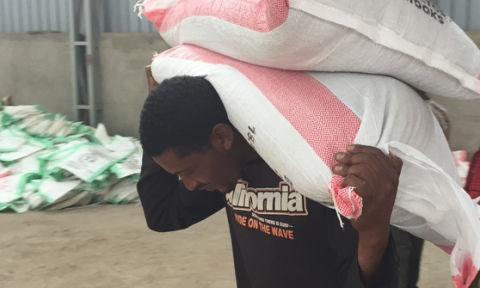
Achieving efficient and effective fertilizer usage in agricultural production is a critically important economic and environmental policy objective for countries at all stages of economic development, although the nature of the policy problem may vary radically in different contexts.
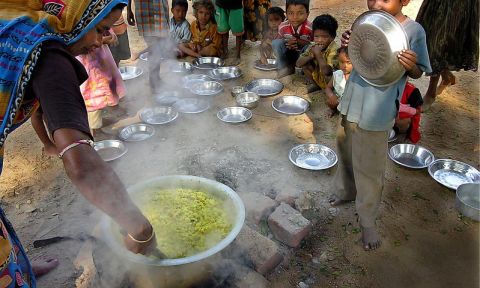
Evidence suggests a strong link between the quality of school meals, children’s health, and both nutrition and education outcomes. School meal programs also have broad food system impacts, and thus are increasingly being designed to include objectives related to smallholder agriculture and environmental sustainability—a topic explored in a new White Paper from the School Meals Coalition on Unlocking Opportunities of Planet-Friendly School Meals, presented at the COP28 Climate Conference in Dubai on December 8.

Policymakers have incredibly complex decisions to make, and they rely on a broad range of information to support that process. Which policies and programs work best for their constituents? What is the best use of limited resources, especially in times of crisis?
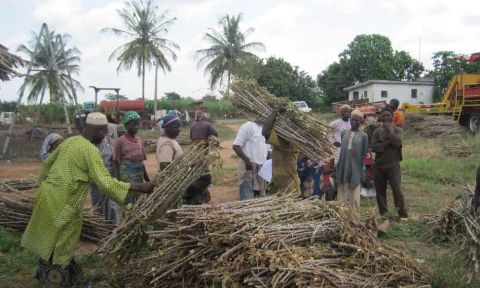
Agricultural extension services play a crucial role in supporting 570 million small-scale farmers worldwide, contributing to food security and rural development through the dissemination of technical advice and best practices. These vital services, however, often face significant challenges, including weak institutional capacity, inadequate reach, and limited access to up-to-date scientific knowledge. Language is also a significant barrier. Advisories provided only in the world’s predominant languages cannot easily be understood in many communities speaking regional or local languages and dialects. Many information and communication technologies have been piloted to address these systemic challenges, such as videos, texting/short message services, and interactive voice response services. And, what about artificial intelligence (AI) chatbots?
Since peaking in April 2022, global agricultural food commodity prices have declined by almost 25% as of October 2023, according to the UN Food and Agriculture Organization’s (FAO) food price index (Figure 1). Contributing to the decrease were strong harvests in large food producing countries, steep declines in shipping costs, and more affordable energy and fertilizer prices (Figure 2). This broad-based easing of food price pressures occurred across markets for cereals, vegetable oils, meat, and dairy products (Figure 3). Sugar and rice were notable exceptions, as their world market prices have risen by double digits in recent months due to production disruptions caused in part by the El Niño phenomenon, as well as new trade restrictions and producer country stockpiling amid concerns over potential shortages.
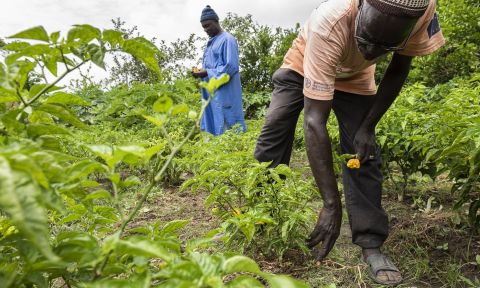
Urgent action is needed in the food and agriculture sectors to achieve the Paris Climate Agreement goals, as food systems contribute one third of total global greenhouse gas (GHG) emissions. Reaching net zero GHG emissions, or carbon neutrality, by 2050 requires food systems to significantly reduce their carbon footprints. However, a major challenge lies in ensuring a just transition to net zero—a transition that wouldn’t compromise food security for vulnerable groups, particularly in the global south, where most farms are small-scale.
The global food system is particularly vulnerable to the growing disruptions of climate change. Rising temperatures, large-scale shifts in rainfall patterns, and extreme weather events are challenging humanity’s ability to produce, distribute, and access food. Not only does this affect what's on our plates, but it also has profound implications for public health, livelihoods, and the well-being of vulnerable populations.
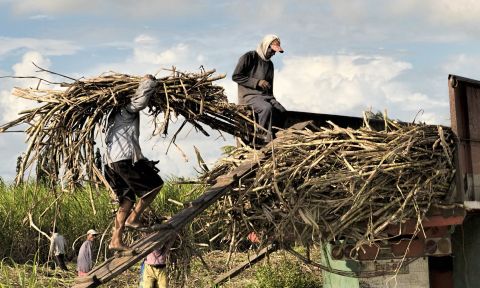
As with other commodity markets such as rice, the global sugar market has seen large increases in prices due to El Niño-related production shortfalls in major exporting countries in South and Southeast Asia. At the same time, other factors are also constricting supplies. Port bottlenecks have tied up exports in Brazil, the world's largest sugar exporter, despite a large increase in production over last year's levels. Domestic biofuel policies in key exporting countries are diverting sugar production to biofuel production and thus limiting exports. rice markets, export restrictions—here, in India and Thailand—have exacerbated these shortages as well.

This blog post is part of a special monthly series entitled “Making a Difference,” documenting the impact of IFPRI's projects and initiatives. These stories reflect the wide breadth of the Institute's research, communications, and capacity-strengthening activities around the world, in fulfillment of its mission. The blog series has been peer-reviewed by IFPRI's Impact Committee members
