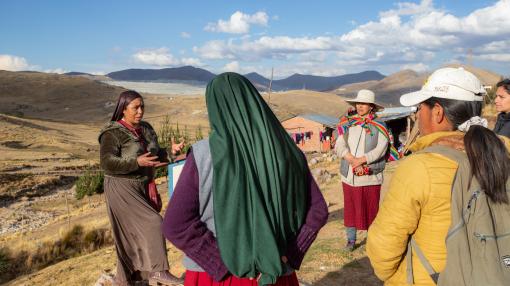
In the global pursuit of a sustainable energy future, the voices and experiences of women and marginalized groups often remain unheard and overlooked. Despite playing pivotal roles in driving the energy transition, women face barriers that hinder their inclusion and full participation in decision-making processes.,Yet, there is a growing urgency to amplify these voices, signaling the need for a more inclusive approach. Here, in observance of this year’s International Women’s Day theme of inclusion, we explore the key challenges and opportunities faced by different stakeholders in advancing gender equality within the extractives sector.,In 2023, NRGI engaged with diverse partners and stakeholders on gender-focused projects. Discussions from these events underscore three key factors in advancing gender equality in the energy transition.,Across NRGI’s different engagements, including a workshop on gender and the energy transition with participants from the executive course on "Oil, Gas, and Mining Governance" in Oxford, United Kingdom, a clear consensus emerged: achieving a gender-equitable energy transition requires the inclusion of gender considerations in every stage of policymaking. This begins with ensuring women's active participation in decision-making processes, as emphasized by Georgette Barnes, an alumna of NRGI's executive course and president of Women in Mining, Ghana, and Winnie Mirembe, an alumna of NRGI's advanced course and executive director of Global Rights Alert, Uganda, during a recent just transition workshop hosted by NRGI in Accra, Ghana.,In Nigeria, NRGI conducted a series of just energy transition workshops in collaboration with the BudgIt Foundation to address the positive and negative impacts of the transition away from fossil fuels in the Niger Delta region, calling on government actors to include women at every step of decision-making processes. This involves engaging them in discussions around energy policies and around energy transition at government, subregional government, or at community levels.,Given the direct impact of energy transition plans on women's livelihoods and environments in resource-rich countries, government officials and civil society organization (CSO) staff should prioritize inclusive decision-making processes that involve communities, extractive companies and public bodies. They should also effectively communicate these plans at local levels to foster responsive and varied actions toward gender-just transition processes.,Unlocking the power of gender-relevant and gender-disaggregated data is vital for advancing gender equity and women's rights within the extractive industries. By directly collecting critical data from women, CSOs, governments and extractive companies can assess and map socio-economic circumstances and potential impacts before extractive projects begin.,During an NRGI’s workshop around gender-just natural resources governance in Oxford, participants emphasized the challenge of data accessibility, addressing the lack of gender-disaggregated data and its inadequate use.,Efforts by grassroots actors to collect and share gender-disaggregated data are essential. They help local governments and extractive companies to better understand the true impact of their actions on women and communities. In addition, they enable communities, CSOs, public authorities and private companies to more accurately assess the progress of women-centered policies.,However, decision-makers at governmental or corporate level often exclude women from discussions around extractives; when women do participate, their role is often informal and undervalued. NRGI research in Uganda, which involved consultation with 70 community stakeholders, underscored this disparity, highlighting the need for early assessment of communities' socioeconomic circumstances by local authorities and extractive companies.,Investing in gender-disaggregated data is crucial, as it exposes inequalities, informs women and communities about social and economic opportunities, and can help communities and local CSOs hold elected representatives accountable. CSOs and governments can advocate for extractive companies and investors to create effective funds that target gender-transformative action plans. Extractive companies’ social and environmental funds can include allocations for community consultations and gender-disaggregated data collection. This helps create sustainable and context-specific gender action plans for just transitions.,Governments, companies and CSOs conducting consultations within extraction-impacted communities must ensure the meaningful participation of women, particularly indigenous women.,Empowering women through safe and inclusive consultation enables them to identify opportunities and advocate for transparency in negotiation around energy policies and extractive investment plans. However, despite the importance of community consultations play in every phase of extractive industry operations—from initial exploration to compensation —women often face exclusion from these discussions. Various factors contribute to this exclusion, including cultural norms, constraints imposed by formal community leaders, lack of formal land tenure, economic disparities, language barriers, and limited access to information about the consultation process.,Additionally, many women may not realize that they are directly being disadvantaged by external decisions, further hindering their active engagement in consultations that influence significant community-level decisions. We have also observed this through an ongoing NRGI analysis of a Colombian coal-producing region undergoing production phaseout. The analysis revealed challenges in assessing the different dynamics and gendered impacts on men and women in the region.,But change can happen. NRGI initiatives, such as establishing an experts committee and local civil society actors in Tunisia, resulted in improved decision-making at community level, as well as at government and corporate level, leading to increased phosphate production. This was achieved through constructive dialogue and openness between communities and local authorities. Similarly, collaborations in Colombia provided valuable insights into civil society participants’ views on energy transition plans. Replicating these collaborations to amplify women’s voices through community consultations can help civil society actors to influence decision-making processes in the energy transition.,As challenges and opportunities faced by women vary depending on their country’s natural resource and energy context, CSOs, governments and extractive companies should engage in participatory community consultations. They should also ensure that women have adequate spaces for obtaining information about and express concerns around transition processes that directly impact them.
At Mining Indaba in Cape Town this week we heard countless references to mining-affected citizens of African countries. The word “communities” steadily fell from the mouths of mining executives and government officials. Most suggested that maximizing benefits and minimizing harms for community members was a sacrosanct priority.,But absent from almost all of the rooms where this word was repeatedly invoked were…members of mining-affected communities. The Indaba agenda did include one invitation-only engagement session, between the International Council on Mining and Metals and community representatives. And Indaba organizers graciously accommodated some international non-governmental organizations, including NRGI. But if communities’ perspectives are as crucial as executives and officials imply, then community members and activists must be present in a sustained way at Indaba and equivalent forums—and not just as featured guests. (NRGI president and CEO Suneeta Kaimal raised this issue last year in connection to the International Energy Agency's Critical Minerals Summit.),My colleague Tengi George-Ikoli shared with me an African adage: “A man’s head should not be shaved in his absence.” Community voices are essential in spaces like Indaba to ensure that decisionmakers account for the social, economic and environmental impacts of mining and minimize them.,In that vein the deep-pocketed mining companies and rich-country governments that sponsor Mining Indaba could contribute to a pooled fund that grants admission and travel bursaries to community activists and reporters from Africa’s mineral-rich nations. One such journalist who was able to self-fund a trip to Cape Town this week told us that they were the only reporter from their country in attendance. “No media houses back home can pay for journalists to come here,” they said.,One place that was replete with community stakeholders was Alternative Mining Indaba, which has operated in distant parallel to the main Indaba for 15 years. (Many AMI attendees are funded by larger non-profits to undertake the trip.),There, we heard searing accounts of the impacts on communities. A young woman from Zambia, speaking out against child labor in the industry, implored her listeners: “How can we children build a future for ourselves from inside of a mine?” She received enthusiastic applause—from people who on their own can do little to address her concerns. The power brokers were all at the main Indaba site six kilometers away.,While mining companies do invest in outreach to communities, and have provided valuable services in many instances, at the continent’s biggest mining confab those directly affected by extraction are scarce.,Community relations are just one facet of the work that remains for the influencers and decision-makers connected to the mining sector. State-state deals and the ways in which African countries might add value to raw commodities were also hot themes in Cape Town. (Though one industry lawyer said the quiet part out loud when he intoned from an Indaba stage that “governments really should have no role in mining.”) But until communities and civil society have a more fixed and prominent seat at the table, and agendas reflect the importance of their voices, progress on any of these challenges will be difficult.
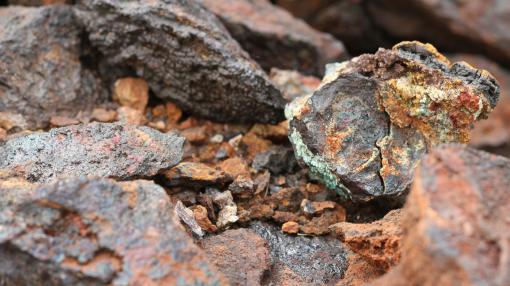
The global supply of minerals that are essential to cleaner energy production, transmission, and storage technologies—minerals such as lithium, cobalt, nickel, copper, rare earths and graphite—will help determine how fast the world can transition to a low-carbon future. But are countries rich in these minerals prepared to manage the revenues they earn from mining them?,Managing extractives revenues well is key to benefiting from them. According to one estimate from GIZ and Econias Consulting, resource-rich countries as a group could stand to gain a total of $100 billion to $500 billion in additional government revenues by 2040. While unpredictable changes in technology and markets make the scale of revenues uncertain and therefore risky for countries to count on, countries must still prepare to manage revenues.,According to The Economist, Australia, Chile, China, Democratic Republic of the Congo, Indonesia and Peru stand to gain the most from transition minerals. This aligns with the GIZ/Econias analysis, which suggests that the same countries (plus Russia) will have the highest sales of energy transition minerals under the IEA’s Stated Policies (STEPS) energy transition scenario. In another group of countries and territories, the “transition minerals” mentioned above already play an important role relative to the size of economies (or are likely to do so as the energy transition progresses); these include Cuba, New Caledonia, Mongolia and Zambia.,While Australia and China have large, diversified economies, in most of the other countries listed, transition minerals could provide a sizeable share of government revenue. Figures 1 and 2 below set out the value of transition minerals in selected countries, in aggregate and per capita. On average, governments tend to collect tax revenues equal to around 16 percent of the value of mineral sales revenues. So, the value of reserves gives an idea of what these reserves could mean for countries, in terms of public revenues, if the reserves were ultimately extracted.,In this post we focus on the countries and territories where transition minerals could provide a sizeable share of government revenue, and the challenges that they may face in managing transition mineral revenues based on their current track records of mining revenue management.,Figure 1. Estimated value of transition mineral reserves, selected countries,Figure 2. Estimated transition mineral reserves value per capita, selected countries, USD thousands,Some of these countries or territories with smaller absolute levels of reserves—such as Cuba or New Caledonia—might only experience a decade or two of a mineral boom. Production in others may last longer, though it is unclear how long high demand for some transition minerals will last, given advances in technology. It will therefore be crucial for producers to take full advantage of their respective windfalls.,Nauru, an island nation in the South Pacific, provides a cautionary tale. Once a phosphate giant—with a GDP per capita of USD 39,000 (2023 dollars) in 1973—today Nauru is one of the world’s poorest countries. Much of the phosphate income was consumed rather than invested. Luxury goods were imported, and it was common for residents to go on shopping sprees abroad. Government hiring and salaries increased dramatically. At its peak, the Nauru Phosphate Royalties Trust had a balance of USD 1.3 billion, but eventually lost all of its assets to the state’s creditors. As the resource neared depletion in the early 1990s, Nauru began to borrow heavily to finance its fiscal deficit. The education system collapsed in the early 2000s when schools largely closed due to lack of funding; half of the schools never reopened.,Mining revenues also tend to be volatile. Conflict and natural disaster can halt production at a moment’s notice, costs of production can change from year to year, and the most important revenue determinants—prices—fluctuate unpredictably. If mineral revenues represent a significant portion of overall fiscal revenues, as is already the case in Chile, the DRC and Mongolia, volatility can negatively affect public spending decisions. Governments tend to spend on prestige items (e.g., airports, stadiums) in good times, and make harmful cuts to public services or indebt themselves in lean times. Thus, governments should smooth public spending, either through debt management or by saving in peak revenue years and drawing down on savings during tough times. Some transition minerals can have particularly volatile revenues, making it all the more important for authorities to save or invest them. For instance, over the last five years, cobalt prices were over 60 percent more volatile than those of copper. (Authors’ analysis based on S&P Capital IQ Pro. Period covered is 20 September 2018 to 19 September 2023. The measure of volatility used is the coefficient of variation.),Countries can manage such short- and long-term booms and busts by setting clear rules for how much the government can increase spending year-on-year and by setting limits on the non-mineral fiscal deficit. In practice, this implies controlling public debt or saving some money in a special fund, though only in higher-income and lower debt environments. Escape clauses—like in Peru’s Fiscal Prudence and Transparency Law—can allow governments to increase spending in times of crisis. Countries where such minerals play a significant role should use revenues to diversify their economies so that they don’t suffer declines after the resources run out (as happened in Nauru) or demand declines.,Investing resource revenues back into transition mineral extraction, as Ghana has recently proposed, may not achieve diversification, unless it can provide a springboard to the development of other economic sectors. These principles apply equally to the management of revenues from non-transition minerals; but many of the countries about to experience transition mineral revenue booms have little experience or success in managing significant resource revenues and are therefore at greater risk of mismanaging their windfalls.,Historically, Chile has managed its resource windfalls relatively well, thanks to a counter-cyclical fiscal rule for managing revenues from copper that enjoys multiparty and popular support. The rule reduces the impact of mineral price volatility on the economy, keeps public debt levels low, and generates some fiscal savings for the future. It also allows for adjustments depending on economic circumstances which can help avoid such rules being abandoned in economically difficult times. There is currently a discussion as to how to manage the country’s revenues from lithium.,Unfortunately, some countries’ mineral revenue management does not meet the standard set by Chile. For example, in NRGI’s 2021 Resource Governance Index, revenue management was rated as “good” in only 3 of 13 national mining sectors assessed.,For example, the DRC’s mineral revenues—USD 1.4 billion in 2021, or 29 percent of government revenues—are largely channeled to government salaries and politically-motivated projects. A recent IMF assessment of the public investment management system concluded that, “[P]ublic investment management in the DRC suffers from weaknesses all along the project cycle, both on paper…and in practice.” The DRC has no fiscal rules to manage volatility and no holistic medium-term costed national development plan to guide public spending. At the subnational level, significant amounts of revenue go to subnational governments that have neither the technical nor the financial capacity to effectively manage these revenues.,DRC’s neighbor, Zambia, also faces challenges with critical minerals. Although it has had some success in marketing itself as a source of critical minerals, the country faces another debt crisis. Despite being heavily dependent on volatile copper revenues, authorities have never implemented a counter-cyclical fiscal rule to manage boom-bust cycles nor increased public spending sustainably. Instead, the government has made a series of medium-term commitments, most recently to run a primary fiscal surplus of 3.2 percent by 2024 to be enforced by an IMF program.,There are also lessons in Mongolia’s management of mineral revenues. The country has repeatedly postponed implementation of its fiscal rules and has teetered from one macroeconomic crisis to the next. Despite massive copper, coal, iron and gold revenue windfalls, the government neither saved in its Fiscal Stability Fund nor paid down its public debt during the boom years. Today, the country is at high risk of debt distress, giving the government little room to expand investment in public services or provide support during future crises.,Increased interest in transition minerals in other countries raises concerns about whether governments are prepared to benefit from these minerals and manage the resulting revenues. Several of the countries where exploration or production is ongoing lack some, or any, of the elements of an effective extractives revenue management framework. Yet good practices from Botswana, Chile, Peru and other countries that have done better in managing mining revenues provide inspiration upon which countries can draw.
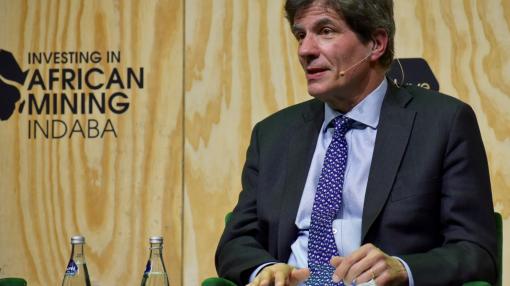
Governments, industry, and civil society organizations (CSOs) are gathering this week for Africa’s Mining Indaba, with big announcements already emerging. The splashiest thus far has been news of a collaboration between the U.S.-led Minerals Security Partnership, Congolese state mining company GECAMINES, and Japanese state agency JOGMEC for mineral exploration, production and processing.,This announcement is the latest in a spate of projects involving the Minerals Security Partnership. In today’s press briefing about the partnership, U.S. diplomat Jose Fernandez reiterated the importance of benefit sharing, value addition, and ESG protections, but shared minimal information on what this would look like in practice; such a dearth of detail characterizes many such deals.,Such next-generation state-state mineral partnerships have become a key tool for wealthier jurisdictions such as the U.S. and EU. Referred to as “buying partners” in this post, their aim is to secure the minerals needed for the solar panels, wind turbines and electric vehicles that will help the world transition away from fossil fuels (in some cases to supplement their own mineral production). But many questions remain around such partnerships, including on their overall purpose and value for lower- and middle-income mineral-rich countries, referred to as “supplying partners” in this post.,NRGI has recently updated ResourceContracts (a repository of publicly available oil, gas, and mining contracts and associated documents) with documents related to this new type of state-state mining partnership (variously labeled “strategic partnerships,” “mineral security partnerships,” “memoranda of cooperation”, and the like).,These partnerships are driven largely by the political or geostrategic needs of the buying partners. Governments in such countries are motivated by the importance of diversifying supply. The partnerships may: lay the groundwork for future cooperation between different jurisdictions, incentivize buyer-country industries to invest in a particular supplier country, and/or merely send a warning shot to international “competitors” that the buying partner has an interest in sourcing minerals from a particular country.,The implications for the supplying partner are even less clear. While buying partners emphasize the language of “partnerships” and “win-win” approaches, whether these partnerships will deliver equal benefits to both parties remains to be seen. These partnerships should be aligned with the supplying partners’ own objectives such as skills development, greater domestic value addition and economic diversification, while also encouraging international cooperation on a just energy transition.,Yet the lack of publicly available information about these partnerships means that scrutinizing them is difficult. This results in little accountability, even though contract disclosure is a well-established norm in the sector. While some memoranda of understanding have been made public, such as those signed by the European Union, these documents are scant on details despite sometimes taking months to negotiate. Others, such as those recently signed by Saudi Arabia at its January Future Minerals Forum, remain a mystery. We couldn’t find any publicly available information about 22 of the 35 partnerships of which we’re aware.,Some partnerships are backed up by a specific authority’s legislative framework, such as those in the EU—although there is still much to improve there in terms of transparency and civil society input—while others are backed by a consortium of countries. Some are agreed with one supplying partner, others with several. Some supplying partners participate in multiple concurrent partnerships, with little clarity over whether or how the relationships interact. The documents we’ve seen are not legally binding, and the relationship between these partnerships and existing trade agreements are unclear. The extent to which the agreements align with supplying partners’ mining or industrial policy frameworks is also largely unknown.,Across published documents relating to these partnerships, the parties use similar language to describe the potential benefits for supplying partners. Many partnership documents emphasize benefits such as technology transfer, value addition and “ESG,” and also include terms such as open markets. Overall, the agreements reveal little in terms of next steps.,The signing of these partnerships is an early step, rather than a complete solution. EU memoranda of understanding (MoUs), for example, commit to the development, within six months of the MoU being signed, of a “roadmap” that identifies more concrete measures on which the parties will act.,The EU-Ukraine roadmap—the first roadmap to be developed, available on ResourceContracts—provides more detail on areas of cooperation. The EU’s relationship with Kazakhstan could also be instructive, with a strategic partnership signed in November 2022. In recent months, the European Commission and European Bank for Reconstruction and Development announced funding for the Kazakh state mining company Tau-Ken Samruk for lithium exploration and tungsten processing projects. While the amount is fairly small, it may suggest one type of financial support that supplying partners could pursue from their buying partners.,But ultimately most partnerships will rely heavily on their ability to attract commercial investment from the buying partner, or its allies. These countries’ main lever will likely be preferential financing and development assistance to create more attractive conditions for that investment.,Be clear on what you want from the partnership. Supplying partners should identify ways to leverage market interest in their transition minerals to pursue their long-term strategy for the sector. Governments should target the buying partner’s political, financial and technical capacity, in a way that may be less feasible in partnerships with individual commercial investors. This could range from partners providing technical assistance on geological data management to financing to address the energy bottlenecks standing in the way of commercial investment in value addition, to gaining access to incentives offered in the buying partner’s market, such as through the U.S. Inflation Reduction Act, to increase investor interest.,Establish how the partners interact. Countries entering mining partnerships need to be clear on how they interact. Some partnerships have the potential to complement and amplify each other, such as U.S., EU and U.K. support for the Lobito Corridor—given a further boost in the Mineral Security Partnership’s latest announcement. Others have the potential to complicate the supplying partner’s pursuit of greater benefits. While Chinese authorities and companies don’t publicize their partnerships in the same way, they are not standing still. How lower- and middle-income mineral-rich countries navigate this geopolitical competition will be critical—something which greater transparency around these partnerships can support given it allows governments to learn from other countries’ experience.,Provide support for stronger governance, human rights and environmental standards. Because parties to these agreements aim to increase activity in the sector, they may exacerbate potential harms of mining, such as corruption, human rights abuses and environmental damage. To ensure benefits for people in mining countries, governments must mitigate these risks. In this way they can also meet a key partnership criterion for jurisdictions like the EU. Supplying partners could ensure strong due diligence practices are built into the partnership, require capacity building and technical assistance to strengthen the content and implementation of environmental, social and governance protections, and urge prospective buying partner governments to do more to address wrongdoing by mining companies based in their jurisdictions. Such accountability is crucial to avoid repeating the mistakes of previous commodity booms.,Involve civil society. Countries should facilitate the input of CSOs in decision-making around partnership negotiations. CSOs can serve both as a source of expertise and an accountability mechanism, to ensure that the supplying partner gets the most out of the partnership. CSOs can help define strategic priorities; play a key role in monitoring whether activities advance the country’s economic and social development plans and meet international standards set out by bodies such as the UN and OECD; and strengthen calls for a more equitable partnership. But their participation has been lacking so far, part of a broader trend of shrinking civic space in the extractives sector. If these partnerships remain largely political tools disconnected from actual mining decisions and policymaking, CSOs might find their time more usefully spent elsewhere. Yet CSOs should also look out for a lot of talk, and more importantly money; without evidence of action these are red flags for corruption risk.,We’ll keep an eye out for new partnerships and upload to ResourceContracts those that are disclosed. For those partnerships that have already been agreed, we will upload and assess new documentation as the partnerships evolve, and work with key stakeholders to push for better practices.,For now, we are left considering a key question: when the time comes to turn talk into action, will these partnerships live up to their billing?

Next week, policymakers, industry executives, civil society actors and development partners will converge on Cape Town, South Africa for the 2024 African Mining Indaba. Now in its 30th year, Indaba is an annual confab, primarily known as a venue for dealmaking and discussions between governments and mining companies.,This year’s theme—“Embracing the power of positive disruption: A bold new future for African mining”—is encouraging. As players like the U.S., EU, China and most recently Gulf oil powers scramble for the continent’s minerals, this time must indeed be different. The history of mining in Africa is riddled with economic, social and environmental injustice, often accompanied by underinvestment and supply disruptions. A triple win—for people in African mining countries, for their environment, and for the energy transition itself—is sorely needed.,Civil society organizations and activists at the Alternative Mining Indaba, a very un-corporate parallel Indaba universe, have for years made the case for a better deal for Africans. World leaders are belatedly recognizing the importance of transition mineral governance for ensuring the production of green technology needed for climate change mitigation. At the COP28 climate conference, UN Secretary-General António Guterres stated that “the extraction of critical minerals for the clean energy revolution… must be done in a sustainable, fair and just way.”,Companies must also ensure that Africans get a better deal. Only by reducing investor risks arising from disputes with governments and communities will they be able to sufficiently increase capital flows into the sector to take full advantage of booming demand. And it seems companies are beginning to realize this. At last year’s Indaba, industry executives made frequent reference to “ESG” (environmental, social and governance considerations). And at this year’s edition companies are again queuing up to speak on panels about sustainability.,However, in the last year concrete action has been sporadic at best. This year’s Indaba is a good opportunity for companies to clearly define what actions they will take. Below are some of these actions on value addition, social and environmental protection, and corruption.,Value addition—usually meaning the refining of raw commodities into something closer to their final consumable form—is increasingly sought after in most mining nations, as it brings additional revenues, jobs and, in some cases, an opportunity to produce inputs for producers’ domestic economies. African leaders reinforced their call for more value addition to take place on the continent at last year’s inaugural Africa Climate Summit.,To realize these ambitions, African governments must develop a clear and credible mineral-specific strategy. International players such as the U.S. and European Union need to convert memoranda of understanding on mineral supply cooperation with the likes of the Democratic Republic of the Congo and Zambia into concrete action to derisk financing and address other bottlenecks.,However, industry also has a critical role. Companies should:,Limiting the social and environmental harms of mining is just as crucial as maximizing the benefits. Some mining companies have taken positive, preliminary steps in this area—for example, “nature positive” commitments made by International Council of Mining and Metals (ICMM) members last month. But companies can and must do more. They should:,Corruption stands in the way of a better deal for the people and environment in African mining countries, and with it more minerals to address the climate crisis. Without action, the risk that the scramble for Africa’s minerals fuels corruption is high: corruption allegations have already emerged in relation to the race for Africa’s lithium.,To effectively tackle corruption, companies should, among other actions:,As Indaba kicks off on Monday, we hope to see companies embrace the types of positive disruption outlined above to achieve a “triple win.” It’s in everyone’s interest that they do.
